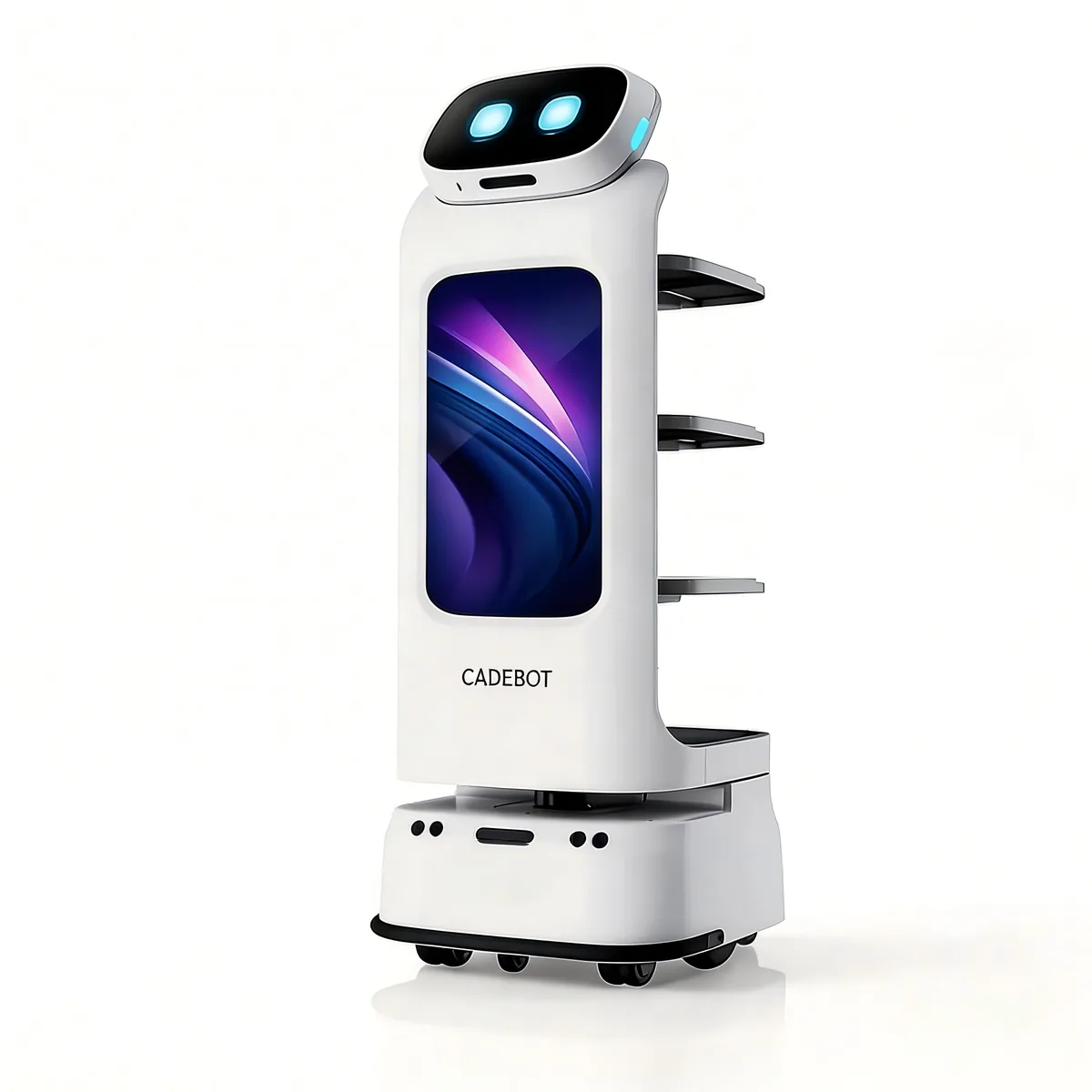
A 3,000 m² soundstage in Shenzhen runs its day in setups, not hours. The production manager's call sheet scheduled six setups across three stages, and between each one the floor crew had 40 minutes to sweep, mop and reset before the grip team moved in with the next dolly track. A time study on the lot found the same three costs every studio runs: 2.5 hours of floor-cleaning labour per stage per day, 47 minutes per day per crew member spent walking props and equipment between stages and the prop store, and a security desk that processed 90 badge checks a day at the gate and 60 visitor check-ins at the lobby. Studios are content factories with a hospitality-grade facility problem, and the performing arts centers guide documents the adjacent pattern for venues that must stay silent while they work; this guide covers the studio-specific version, where soundstage floor care, set delivery logistics and visitor control are the three highest-value robot roles.
The Setup-Window Rule: Soundstage Floors Cleaned in Silence
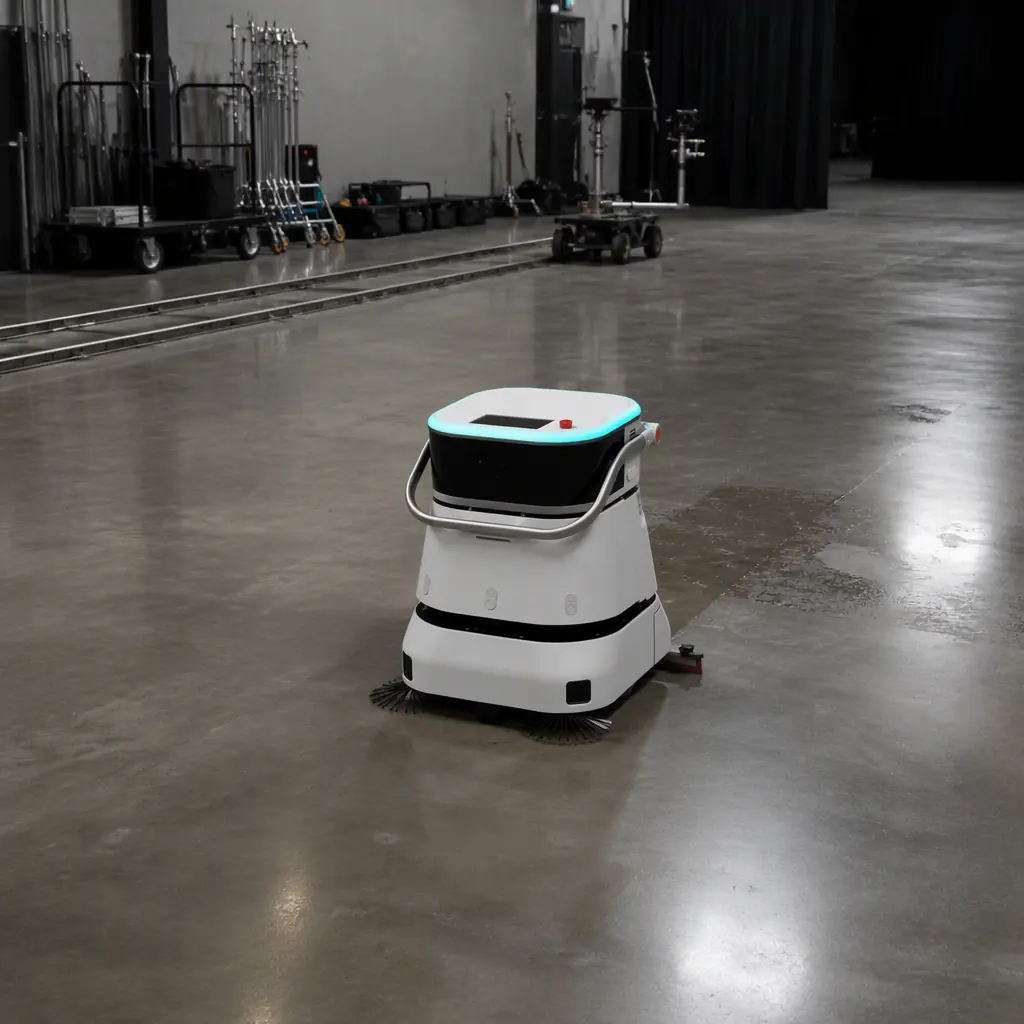
The floor of a working stage is a production surface: it carries dolly track, camera cranes, cable runs and the grip team's traffic, and it gets swept, mopped and buffed between every setup. The CLEINBOT C2 Pro covers the stage-floor loop: a 65 dB scrub mode that stays under the noise threshold of a working stage — the same quiet-operation logic the performing arts guide documents for concert halls, applied to a floor that is live until the AD calls "picture up" — with IP54-rated chassis sealing, a squeegee system that leaves hard floors 90% dry within 90 seconds, and electrostatic microfiber pads that capture 94% of particulate matter down to PM2.5, which matters on a stage where a fine dust haze reads on camera in the backlight. The setup-window rule is the studio version of the scheduling discipline the commercial cleaning robot buyers guide lays out: the C2 Pro runs the stage floor in the 40-minute window between setups, the corridor and green-room floors during the lunch break, and the grip-equipment storage floor overnight — so no stage ever loses a setup to cleaning, and the camera never catches a dust mote in the key light.
Set Delivery Runs: Props, Scripts & Camera Gear That Move Themselves
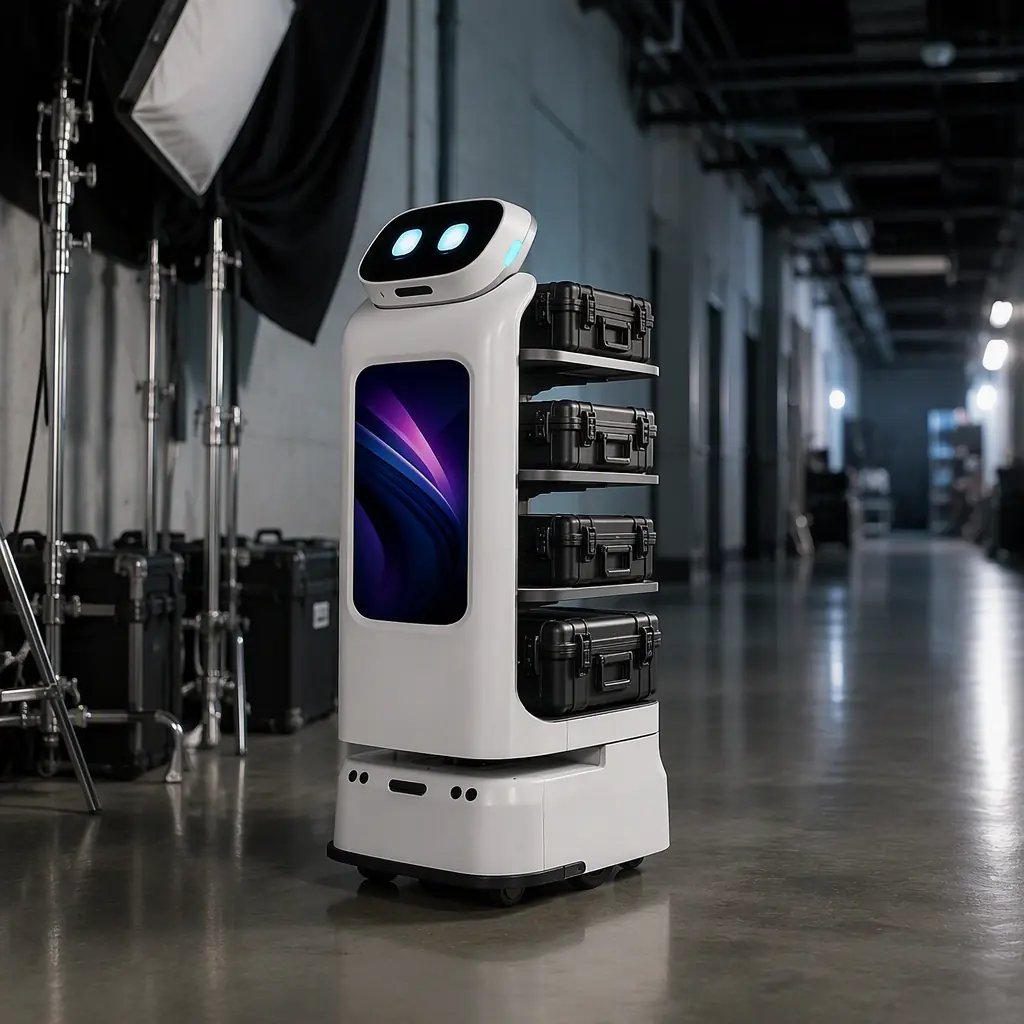
The most expensive walking on a studio lot is done by crew members carrying things: props from the vault to the stage, script revisions to the director's monitor, camera accessories between the gear room and the dolly, craft-service runs to the set. The CADEBOT L100 covers the delivery loop: a 400 mm platform with four trays rated for 15 kg each and a 40 kg total payload that clears the 700 mm corridors between stages, returning 6–8 trips per hour — the same pattern the hospital delivery robots guide documents for pharmacy and lab runs, applied to a lot where the "pharmacy" is the prop vault and the "lab" is the stage. The studio-specific rule is the stage-access protocol: L100 routes are mapped to avoid live stages — the robot waits at the stage door while a runner takes the load the final few metres, so delivery traffic never crosses a shot. Every run is logged by the fleet dashboard, which gives production accounting a per-episode delivery record the fleet management guide describes as the operational layer of any multi-robot deployment.
Studio Lobby & Visitor Control: Reception That Knows Who Is On Lot
A studio lot is a controlled facility with a hospitality front door: vendors, talent, agency reps and couriers arrive all day, and every one of them needs to be checked, badged and routed without slowing the people who work there. The CRUZR covers the lobby loop: RGB-D face recognition that identifies individuals in under 0.3 seconds at 99.7% accuracy, 50+ language support with sub-second switching for international crews, and the visitor pattern the reception & concierge robots guide documents for corporate lobbies — visitor processing dropping from 4.1 minutes to 55 seconds per guest. The studio-specific rule is the NDA layer: CRUZR checks pre-registered visitors against the day's access list before issuing a badge, logs every entry to the gate system, and routes unapproved visitors to the security office instead of the stage floor — the same controlled-access logic the data centers guide applies to server rooms, applied to the more social problem of a working production lot. For facilities that need a patrol layer on top of reception, the security surveillance guide covers the autonomous patrol pattern for after-hours stage areas and equipment yards.
Post-Production & Broadcast Centers: 24/7 Floors, Controlled Access
Post-production facilities and broadcast centers run the inverse schedule of a shooting stage: the edit bays and color suites are busiest at night, the control rooms never go dark, and the carpeted floors of the office wings sit next to hard-floor technical spaces. The C2 Pro covers both surfaces on the facility's quiet-hours schedule — the 65 dB mode makes it invisible in an edit bay corridor where a conventional scrubber would force a session pause — and the L100 runs the same delivery loop for drive backups, reference monitors and craft services that it runs on the lot. Broadcast centers add the redundancy requirement: a station that never stops transmitting treats its robots like its other production infrastructure, running the cleaning and delivery loops on fixed schedules with the multi-site deployment guide covering the operator who runs several facilities — stages, post houses and broadcast centers — from one cloud dashboard.
Deployment Table for Facility Types
| Facility type | Floor-care fleet | Delivery fleet | Monthly cost (RaaS) | Staff hours returned |
|---|---|---|---|---|
| TV studio (2–4 stages) | 1 × C2 Pro (stage floors + corridors) | 1 × L100 (set delivery) | $2,200–3,600 | 180–300/month |
| Film production lot (5+ stages) | 2 × C2 Pro (stages + support buildings) | 2 × L100 (props + craft services) + 1 × CRUZR (lobby) | $4,600–7,400 | 380–640/month |
| Post-production facility | 1 × C2 Pro (quiet-hours floors) | 1 × L100 (suite deliveries) | $1,800–2,800 | 140–240/month |
| Broadcast center / media campus | 2 × C2 Pro (24/7 schedule) | 2 × L100 + 1 × CRUZR (lobby) | $4,200–6,800 | 340–560/month |
A studio's margins live in the schedule: the setups per day, the crew hours available for creative work, and the control over who is on the lot. The C2 Pro keeps stage floors production-ready in silence between setups, the L100 keeps props and equipment moving so crew stay with the camera, and the CRUZR keeps the front door secure and fast — all on schedules that survive the chaos of a production day. That is the automation pattern that fits a studio budget, and it starts with the same step every successful deployment starts with: a walk-around audit of where the floor time, the walking time and the badge-check time actually are.