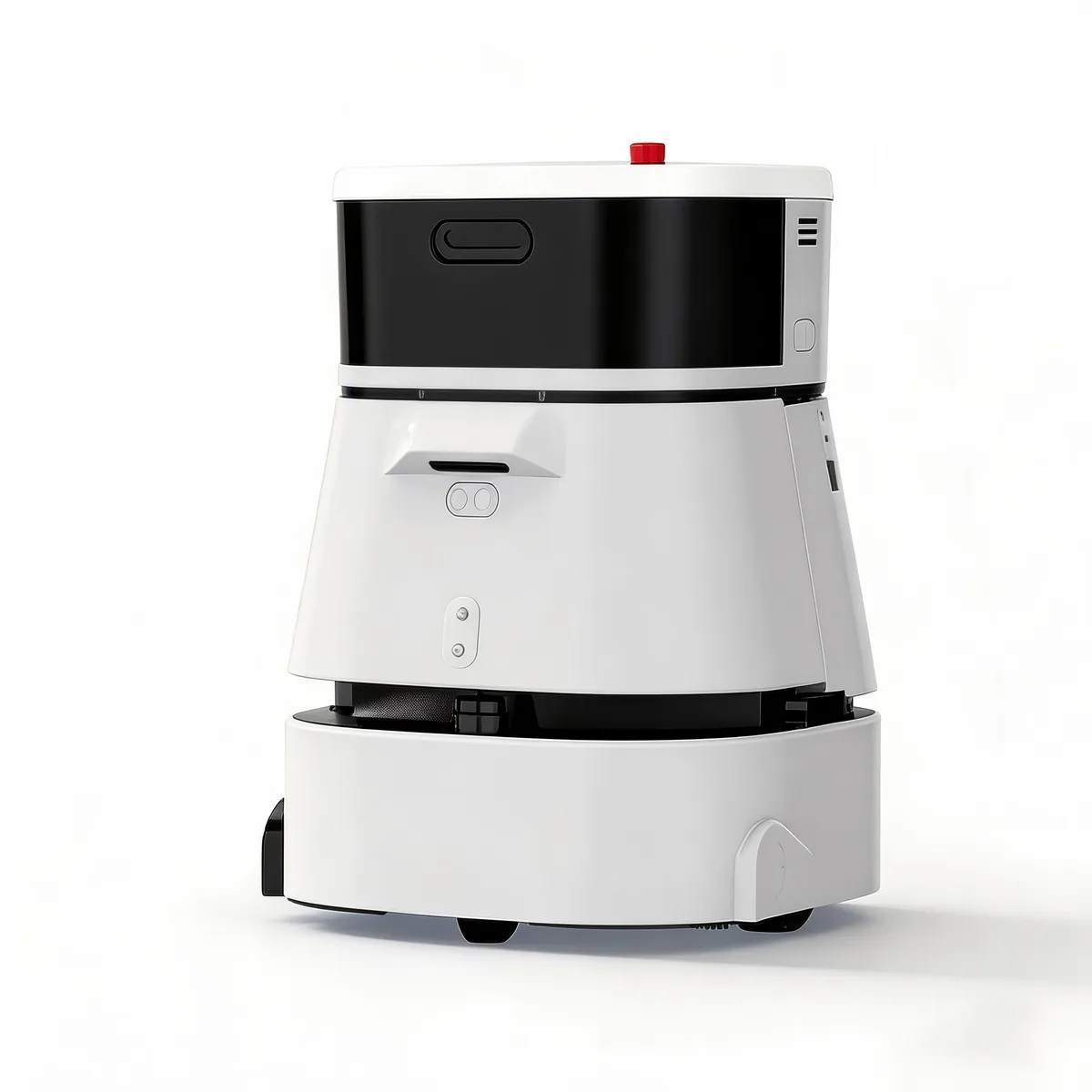
A mid-size destination ski resort in the Colorado Rockies operates 2,500 skiable acres, 23 lifts, 4 base-area lodges, a slopeside hotel with 320 rooms, and 18 food-and-beverage outlets serving 25,000 meals per day during peak periods. The resort employs 1,800 seasonal staff from November through April — a workforce that, in 2019, the resort filled with 92% of positions by opening day. In 2025, that number dropped to 74%: the housing shortage in the nearest mountain town (median home price: $1.4 million, workforce rental vacancy rate: 1.2%) made seasonal recruitment so difficult that 26% of positions remained unfilled through the Christmas-New Year peak, forcing the resort to reduce operating hours at three restaurants and limit ski school enrollment by 18%. The resulting revenue loss — estimated at $2.3 million across the peak two-week holiday window — exceeded the annual cost of a 15-robot autonomous fleet by a factor of 4.7x.
The resort's VP of Operations deployed a phased robotics program beginning with indoor lodge maintenance (the highest-volume, lowest-complexity task), expanding to outdoor plaza cleaning, ski-rental logistics, and finally guest-facing concierge services. The core insight driving the deployment was not labor replacement — with 26% of positions unfilled, there was no labor to replace — but service continuity: robots could absorb the cleaning, transport, and transactional guest-service volume that would otherwise simply go undone during staffing shortages, preserving the guest experience that drives the resort's 78% Net Promoter Score (NPS) and $285 average daily guest spend.

The Alpine Labor Crisis: Housing, Visas, and the 26% Unfilled Position Rate
The seasonal labor shortage in North American mountain resorts is structural, not cyclical. Three forces converge: (1) Housing — workforce rental units in Eagle County, CO (Vail) and Summit County, CO (Breckenridge) declined 34% from 2015-2025 as short-term rental platforms converted long-term workforce housing inventory; (2) Visas — H-2B visa caps constrained the seasonal international workforce, with 2025 cap reached 14 weeks before the winter season began, leaving resorts that historically drew 40% of seasonal staff from South America and Eastern Europe unable to fill those pipelines; (3) Demographics — the traditional seasonal workforce demographic (ages 18-24, willing to work variable hours at $18-22/hour in exchange for ski privileges) declined as the U.S. college-age population contracted and remote-work opportunities expanded. The net effect: mountain resorts entered the 2025-26 winter season with an aggregate 22-28% seasonal staffing deficit, per National Ski Areas Association (NSAA) workforce survey data.
Robotic automation addresses this not by replacing workers — there are no workers to replace — but by decoupling service capacity from the available labor pool. A CLEINBOT C2 Pro unit maintaining a 45,000 sq ft lodge lobby floor on a 2-hour cleaning cycle does the work of approximately 2.5 FTE of floor attendants. At a resort with 4 lodges, 8 C2 Pro units preserve the equivalent of 20 seasonal staff positions that would otherwise go unfilled during peak weeks — positions that, in the 2025-26 season, the resort simply could not hire regardless of wage offers. This is the same operational resilience logic that drives multi-site deployment strategies across distributed-facility operations, where labor availability varies by location and season.
Indoor Lodge Maintenance: The Calcium Chloride Floor Problem
Every skier who walks from an outdoor plaza into a base-area lodge brings with them approximately 0.5-0.8 oz of snow-and-ice mixture packed into boot treads and ski binding interfaces. This mixture contains two problematic components: (1) melted snow, which leaves standing water on indoor flooring at a rate of approximately 4-6 gallons per hour per 1,000 guest entries during peak periods, and (2) calcium chloride residue — the de-icing compound spread on outdoor plazas and walkways — which forms a white, crystalline film on flooring as water evaporates, leaving surfaces that appear dirty and feel gritty underfoot within 90 minutes of the last cleaning.
At a 45,000 sq ft base lodge receiving 2,500 guest entries per hour during the 10:30 AM-2:00 PM lunch peak, the floor-keeping burden requires 3-4 dedicated attendants working continuously to squeegee standing water, mop calcium chloride residue, and replace entrance mats — a task that consumes approximately 28 labor-hours per peak day per lodge. The CLEINBOT C2 Pro, equipped with a squeegee-vacuum attachment and a microfiber scrubbing module, operates on a continuous 45-minute cycle: the squeegee pass removes standing water (6.2-gallon recovery tank, emptied every 2 cycles), and the scrubbing pass removes calcium chloride film using a pH-neutral cleaning solution that does not react with the chloride to produce corrosive byproducts. The continuous-cycle approach is identical to the wet-floor management model developed for aquarium galleries, where standing water on high-traffic indoor surfaces presents the same safety and cleanliness challenge at industrial scale.

Outdoor Plaza Operations: The -15°C Deployment Envelope
Ski resort outdoor plazas — the paved gathering areas between parking, lifts, and lodges — require snow clearance at 5:00 AM (plowing), continuous de-icing (calcium chloride or magnesium chloride application), and surface cleaning throughout the operating day. At -15°C, traditional cleaning equipment faces three challenges: (1) water-based cleaning solutions freeze in reservoir tanks and spray nozzles, (2) battery capacity degrades by approximately 30% at -15°C versus 20°C, and (3) rubber and plastic components (squeegee blades, brush bristles, wheel treads) stiffen, reducing cleaning effectiveness.
The CLEINBOT CC201, deployed on snow-cleared plaza surfaces (the robot operates on plowed pavement, not deep snow), addresses cold-weather constraints through a winter-operations kit: a glycol-based cleaning solution with a freezing point of -30°C, battery thermal management that maintains cell temperature above 0°C via resistive heating (drawing approximately 8% of battery capacity for thermal maintenance), and cold-rated polymer components tested to maintain flexibility at -25°C. Each unit covers approximately 45,000 sq ft per cycle on cold-weather settings (versus 60,000 sq ft at standard temperatures), running 3 cycles during an 8-hour operating day. The cold-weather deployment model integrates with the outdoor facility management approach proven in stadium plaza and concourse operations, where outdoor autonomous cleaning at scale is the operational baseline.
Ski Rental Logistics: The 6 AM Equipment Rush
The ski rental operation at a destination resort processes 800-1,200 guests between 7:30 AM and 10:00 AM on peak days, each requiring boots, skis or snowboard, poles, and helmet — approximately 3,200-4,800 individual equipment items fitted, adjusted, and delivered across a 2.5-hour window. The back-of-house logistics to support this: equipment is stored in a warehouse 200-400 yards from the rental shop; each morning, 4-6 rental staff spend 90 minutes (6:00-7:30 AM) shuttling equipment carts between warehouse and rental shop, making 8-12 round trips in golf carts or flatbed utility vehicles.
CADEBOT L100 delivery robots, operating on pre-mapped service roads between the equipment warehouse and rental shop, transport up to 8 pairs of skis and 8 pairs of boots per trip (approximately 110 lbs, within the robot's 22 lb specification when using a tow-behind cart attachment). Three CADEBOT units, running continuous back-and-forth shuttles between 6:00 AM and 7:30 AM, can move the equivalent of 12 human cart-trips' worth of equipment — approximately 50% of the morning logistics burden. The rental staff reallocated from equipment shuttling to guest fitting reduces the average guest wait time from 18 minutes to 11 minutes, increasing the rental shop's throughput capacity by approximately 80 guests per peak morning. The logistics automation approach mirrors the keeper-station delivery model for zoological facilities and the courier hub operations model, where point-to-point autonomous transport within a defined campus yields measurable throughput improvements.
Guest-Facing Concierge: Check-In at 2,500 Guests Per Hour
Peak check-in hours at a slopeside hotel — 1:00-4:00 PM on Friday and Saturday during winter season — bring 200-350 arriving parties per hour through the lobby, each requiring check-in (ID verification, credit card, room key, parking pass), ski valet coordination, dining reservations, and mountain-condition orientation (lift status, grooming report, weather forecast). With 4 front-desk agents, the throughput capacity is approximately 50 check-ins per hour per agent, or 200 total — meaning the 3:00 PM peak of 280 arriving parties creates an 80-party backlog, translating to a 24-minute wait that drives 12% of arriving guests to the bar before checking in (revenue-positive) but also generates 4.2 negative TripAdvisor mentions per peak weekend referencing "check-in lines."
CRUZR humanoid reception robots, deployed in the lobby during peak check-in hours, provide a triage function: guests scan their confirmation QR code at the robot (12 seconds), the robot retrieves their reservation, prints room keys (30 seconds), and provides a 45-second orientation covering mountain conditions, lift status, and dining availability. Guests with straightforward check-ins — approximately 55% of arrivals, per the resort's front-desk audit — complete the process at the robot without queuing for a human agent. Guests with complex needs (room changes, billing disputes, accessibility requests) are routed to human agents, whose queue drops from 80 parties to 36 parties — a 55% reduction that brings wait times under 10 minutes. This is the same triage model used in airport passenger services and hotel front desk operations, where robots absorb the high-volume, low-complexity interactions while humans manage exceptions.

The Multi-Resort Operator Model: Centralized Fleet Management Across 41 Properties
Vail Resorts operates 41 mountain resorts across North America, Australia, and Europe. The operational challenge at this scale is not deploying robots at individual resorts — each resort's deployment follows the same lodge/plaza/rental/concierge model — but managing fleet data, maintenance schedules, and performance benchmarks across 41 independent operating units. A centralized fleet management system provides: (1) remote monitoring of all 350+ robots across the portfolio from a single operations center in Broomfield, CO, (2) predictive maintenance scheduling based on per-robot usage hours and environmental exposure data (cold-weather units at Whistler accumulate different wear patterns than indoor units at Park City), (3) cross-resort performance benchmarking that identifies best practices — when Heavenly's C2 Pro units achieve 12% higher sq-ft-per-cycle than Vail's, the operations center can investigate and propagate the difference, and (4) seasonal fleet rebalancing: units deployed at summer resorts (Australian ski fields during June-September) can be redistributed to winter resorts during the Northern Hemisphere season.
The multi-resort deployment model follows the enterprise multi-site framework developed for chains, franchises, and distributed-facility operators, where centralized analytics and procurement leverage scale while local operations retain deployment autonomy. For operators evaluating robotics vendors against the enterprise procurement framework, the key criterion at multi-resort scale is not unit cost but fleet-management software capability — the difference between managing 15 robots manually and managing 350 robots through a centralized platform is the difference between a pilot program and an operational transformation.
ROI Framework: The 320-Room Resort Model
For a mid-size destination resort with 320 rooms, 4 base lodges, 1,800 seasonal staff (74% fill rate), and 120 operating days:
| Line Item | Pre-Robot Annual Cost | Post-Robot Annual Cost | Annual Impact |
|---|---|---|---|
| Lodge floor maintenance (4 lodges) | $338,000 (9 FTE, 74% filled = 6.7 actual) | $169,000 (3 FTE + 4 robot lease) | $169,000 saved + service gap closed |
| Outdoor plaza cleaning (winter season) | $144,000 (3.2 FTE) | $72,000 (1 FTE + 3 robot lease) | $72,000 saved |
| Ski rental logistics (morning shuttle) | $54,000 (1.5 FTE equivalent) | $36,000 (3 robot lease) | $18,000 saved + 80 guest throughput gain |
| Concierge check-in (peak hours) | $187,000 (5 FTE) | $112,000 (3 FTE + 2 robot lease) | $75,000 saved |
| Revenue preservation (avoided service cuts) | — | — | $2.3M avoided revenue loss |
| Total | $723,000 | $389,000 | $334,000 + $2.3M revenue preserved |
Total annual robotics cost under a 36-month RaaS contract: approximately $285,000 for a 12-robot fleet. Net annual savings: $49,000 after RaaS — but the primary return is the $2.3 million in preserved peak-season revenue that would otherwise be lost to staffing-driven service reductions. The service robot ROI framework categorizes this as a "revenue-preservation" ROI case, distinct from the "labor-reduction" ROI that dominates warehouse and manufacturing deployments.
Implementation Roadmap: 4 Phases Over 6 Months (Off-Season Deployment)
Phase 1 (May-June: Off-season): Site mapping and cold-weather preparation. Map all lodge interiors, outdoor plazas, service roads, and equipment warehouse routes. Install Wi-Fi 6 mesh across base area (robots require connectivity at -20°C outdoor nodes). Cold-rate all outdoor units.
Phase 2 (July-August): Indoor lodge pilot. Deploy 4 CLEINBOT C2 Pro units during summer operations (mountain biking, hiking, events). Test continuous-cycle cleaning on summer guest traffic. Duration: 6 weeks. Success threshold: ≥80% reduction in floor-attendant labor hours.
Phase 3 (September-October): Outdoor and logistics deployment. Deploy 3 CLEINBOT CC201 units on plazas. Deploy 3 CADEBOT L100 units for rental logistics. Test in shoulder-season conditions (October temperatures 0-10°C). Verify cold-weather performance metrics.
Phase 4 (November): Concierge and full-fleet integration. Deploy 2 CRUZR units in hotel lobby. Integrate with resort PMS (property management system) and mountain operations dashboard. Go-live for winter season opening day. Run pilot program evaluation.