A 312-site RV park on the Oregon coast ran a full summer season in 2025 with a facilities crew of four: two people on the morning site-prep loop, one on bathhouse cleaning, and one floating between the dump station, the trash run and the camp store. By mid-July the crew was burning 6.5 hours a day on the site loop alone — pine needles and gravel reset every tide-driven breeze — and the bathhouse schedule had slipped to "clean when the line at the showers gets long." The park's online reviews told the story: 14 of its 41 summer reviews mentioned shower room conditions, and the two one-star reviews were both bathhouse complaints. The owner's cost model showed 1,180 labor-hours a season on cleaning that produced a negative review stream instead of a revenue stream.
RV parks are a seasonal hospitality property with an outdoor logistics problem, and the outdoor autonomous cleaning guide documents the exterior-space pattern; this guide covers the campground-specific version, where site turnover speed, bathhouse hygiene and seasonal peak swings are the three highest-value robot roles — the roads and sites outside, the bathhouse and store floors inside, and the amenity delivery loop that keeps the front desk staff at the desk.
The Site Loop: Turnover Speed Is the Revenue Metric
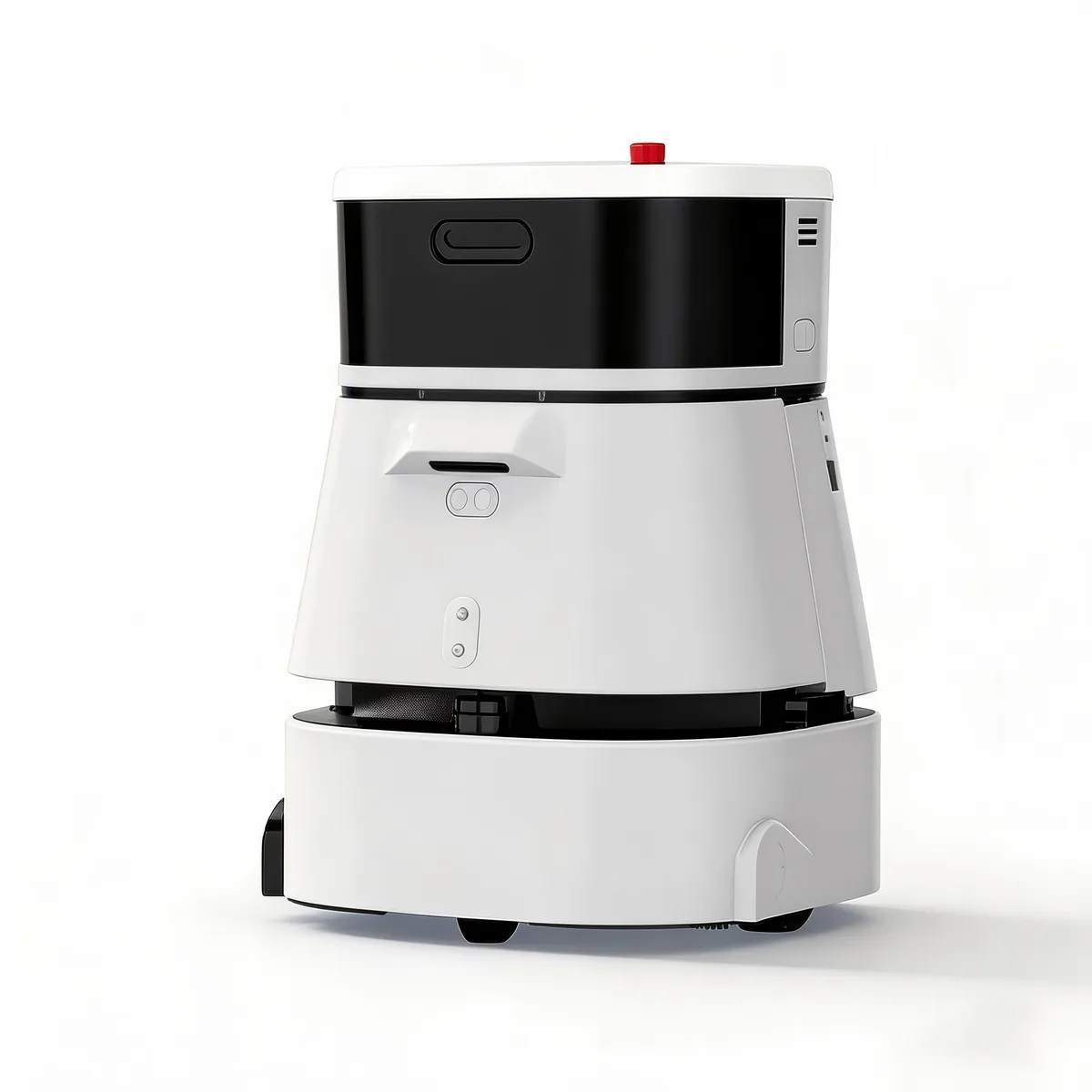
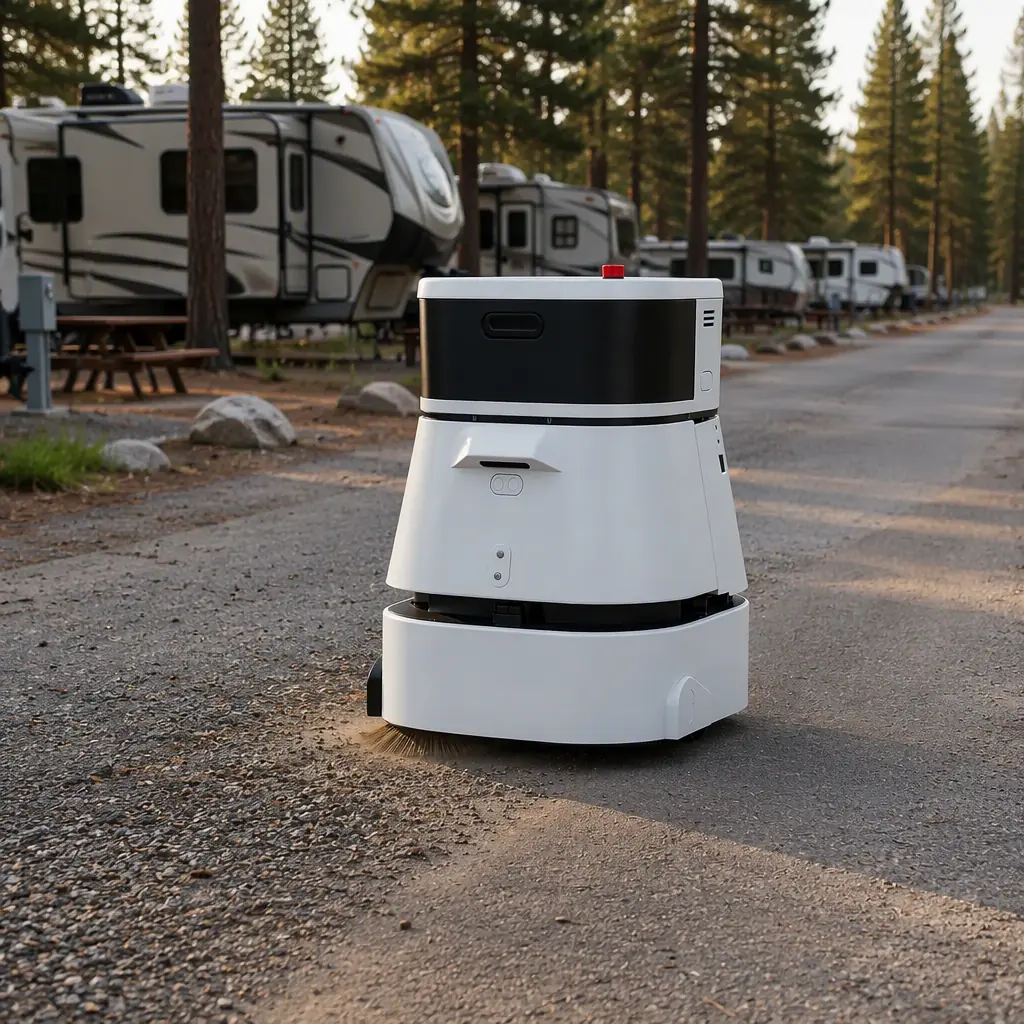
The campsite pad is what a guest books, and its condition is judged in the first five minutes after parking. Needles, gravel, acorns and trash reset continuously — trees drop litter on a daily schedule, and every checkout leaves a fresh layer of tire-tracked debris. The CLEINBOT CC201 outdoor sweeper holds the site loop: a 1,020 mm sweeping width at 3,000 m²/h, a 130L dust container that auto-empties into an 800L docking station for full-day unattended operation, and IP67 sealing with a rain sensor that reroutes around puddles instead of pushing them — the water-handling rule that matters on a coastal site where drizzle is the default forecast. GPS + LiDAR + IMU navigation covers open field layouts, its 10-hour battery runs the dawn loop before the first 8 a.m. check-in, and its -10°C to 50°C operating range keeps it working from the spring opener to the late-fall closing weekend.
The Oregon operator's math: the morning site loop cost 6.5 hours of crew time daily, about 780 hours across the 120-day peak season at $16/hour — roughly $12,500 of labor — and it still slipped whenever the crew was short. The CC201 runs the same loop daily on a documented log, and the pattern the parking facilities guide documents for underground garages applies above ground: the robot works the off-hours program, and the crew goes back to what guests actually see — greeting arrivals and answering questions at the front desk.
The Bathhouse: The Review Engine Nobody Automates
The bathhouse is the highest-leverage cleaning asset in a campground, because it is the only amenity every guest uses and the only one whose failure produces one-star reviews. A shower floor that holds standing water past mid-morning, a soap-scum ring on the tile, or a trash can that overflows at 9 p.m. all register instantly in the review stream. The CLEINBOT M79 scrubber handles the interior loop: single-pass scrub, vacuum and mop at up to 2,000 m²/h — a 1,000 m² bathhouse in about 30 minutes — with adjustable water output for the transition from tiled shower rooms to carpeted office areas, and a 45L tank with auto-return docking that lets it run the full cleaning circuit without a dedicated operator. The commercial cleaning robot buyers guide covers the specification framework; the campground-specific rule is to schedule the robot on a documented bathhouse turn — three passes a day in peak season — because a cleaning log is what a reviewer's complaint gets compared against.

The same hygiene logic the senior living guide documents for shared bathing facilities applies here: a documented cleaning schedule is the difference between a facility that can prove its hygiene and one that argues with reviewers.
The Camp Store & Amenity Loop: Front Desk Staff Stay at the Desk
Every campground has the same friction point: the front desk sells firewood, ice, propane accessories and forgotten toiletries, and every delivery to a site pulls staff away from the desk during check-in windows. The CADEBOT L100 covers the amenity loop: a 400 mm-wide platform that clears 50 cm doorways and standard screen doors, four independent trays rated for 15 kg each, and a 40 kg total payload that handles a full firewood-and-ice run in one trip — 6–8 deliveries per hour across a 15,000 m² park. The same delivery pattern the residential apartment guide documents for multi-tenant buildings applies to site deliveries: guests order at the desk or by QR code, the robot runs the route, and the desk staff stay at the desk where the revenue is.
Seasonal Peaks: Robots Are the Staff You Don't Hire and Lay Off
Campgrounds are the most seasonal property in hospitality — a park that runs 120 full days a year still carries the same cleaning load as a year-round facility during those days, and the staffing swing between a 4-person July crew and a 1-person November crew is a hiring and training treadmill every owner knows. The ski resort guide documents the seasonal-peak pattern for winter properties; the campground version is identical in structure: robots carry the cleaning load through the peak, the human crew concentrates on guest-facing work, and the fleet is serviced and stored in the off-season with a documented maintenance plan from the maintenance & TCO guide. The RaaS financing guide covers the subscription structure that fits seasonal cash flow — most parks start with one CC201 on the site loop and one M79 on the bathhouse, measure the review-stream delta across one season, and add the L100 delivery loop when the front desk becomes the bottleneck.
Deployment Table for Campground Formats
| Park format | Outdoor fleet | Interior fleet | Monthly cost (RaaS) | Labor hours returned |
|---|---|---|---|---|
| Family campground (100–200 sites) | 1 × CC201 (site loop) | 1 × M79 (bathhouse + store) | $1,800–2,800 | 400–600/season |
| RV resort (200–400 sites, pool + clubhouse) | 1–2 × CC201 | 1 × M79 + 1 × L100 | $2,900–4,400 | 900–1,400/season |
| Destination park (500+ sites, multiple bathhouses) | 2 × CC201 | 2 × M79 + 1–2 × L100 | $5,500–8,500 | 2,000–3,500/season |
An RV park's reputation lives in the site pad and the shower floor, not the brochure. The CC201 holds the sites that sell the first night, the M79 holds the bathhouse that generates the five-star reviews, and the L100 keeps the front desk staff at the desk where the revenue is — all on documented schedules that become part of the park's operating file. That is the automation pattern that fits a campground P&L, and it starts with the same step every successful deployment starts with: a walk-around audit of where the needles, the standing water and the unanswered front-desk questions actually are.