A 40-attorney mid-size firm in a metro office tower ran its 2025 operations audit and found its billable-hour leak in the support layer: legal assistants logged 2.7 hours a day each walking documents, mail and print jobs between floors — the firm occupies three floors, and a single signed-document run from the 14th-floor partners' corridor to the 12th-floor mailroom cost 11 minutes round trip, repeated 8–12 times a day per assistant. The second finding was the after-hours cleaning problem: the firm's cleaning crew could not enter the building until 7 p.m. — the building's access policy — which meant the 6:30 p.m. client-signing room was never cleaned before the next morning's 8 a.m. meeting, and the partners' corridor mopping happened after the staff had already arrived, with the bucket and sign disrupting the first billable hour. The third was reception: the two-person front desk handled check-in, phone routing and conference-room coordination simultaneously, and client intake wait times peaked at exactly the 9 a.m. and 2 p.m. windows.
Law firms are a billable-hour business with a confidentiality overlay, and the smart office buildings guide documents the office-tower pattern; this guide covers the legal-specific version, where document logistics, after-hours floor care and client reception are the three highest-value robot roles — the delivery loop that keeps legal assistants at their desks, the quiet overnight cleaning that respects both the building's access policy and the firm's schedule, and the reception layer where the robot meets the client before the matter does.
Confidential Document Delivery: The Billable-Hour Ledger
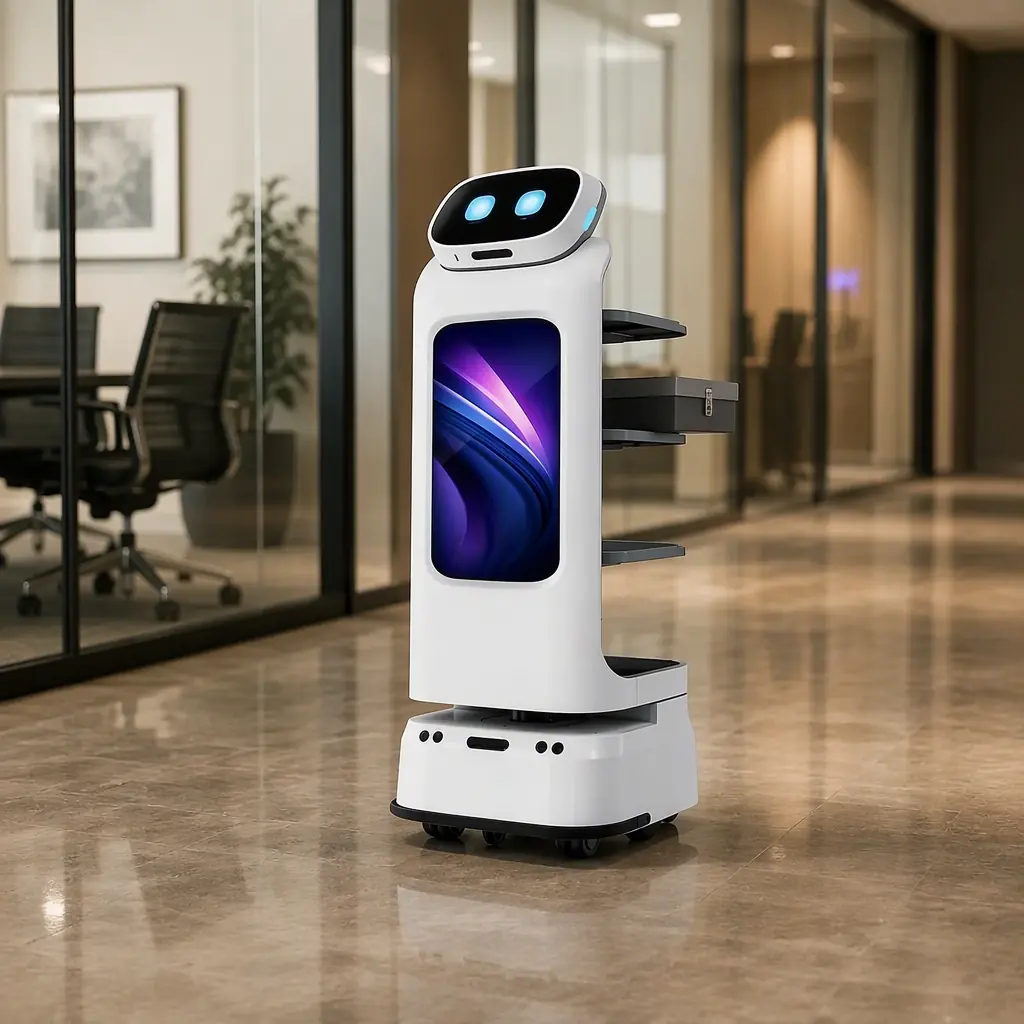
The most expensive walking in a law firm is done by the people whose time is the firm's product: legal assistants walking signed documents, discovery binders, mail and print jobs between floors and offices. The CADEBOT L100 covers the delivery loop: a 400 mm-wide platform that clears standard office doorways and passes through elevator integration, four independent trays rated for 15 kg each, and a 40 kg total payload that carries a full document-and-mail run in one trip — 8–12 deliveries per hour across the floors, including the signed-document run that used to cost an assistant 11 minutes per trip. The same pattern the delivery robot elevator integration guide documents for multi-floor buildings applies at firm scale: the robot rides the elevator with access-controlled floor permissions, and every delivery is logged with a timestamped receipt — the chain-of-custody record that matters when the document is a signed engagement letter or a discovery production.
The confidentiality design rule is the one managing partners ask about first: the L100's delivery log records the trip, the tray and the handoff, but not the document contents — the firm's document-management system owns the matter-level chain of custody, and the robot provides the physical-transport audit trail that connects to it. Delivery destinations are locked by floor permission: the partner corridor and the mailroom are authorized stops, and the robot will not deliver to an unauthorized floor even with a manual override request — the access-control pattern the security & surveillance guide documents for commercial facilities, applied to document logistics instead of perimeter monitoring.
After-Hours Floor Care: Clean Without Disrupting Billable Time
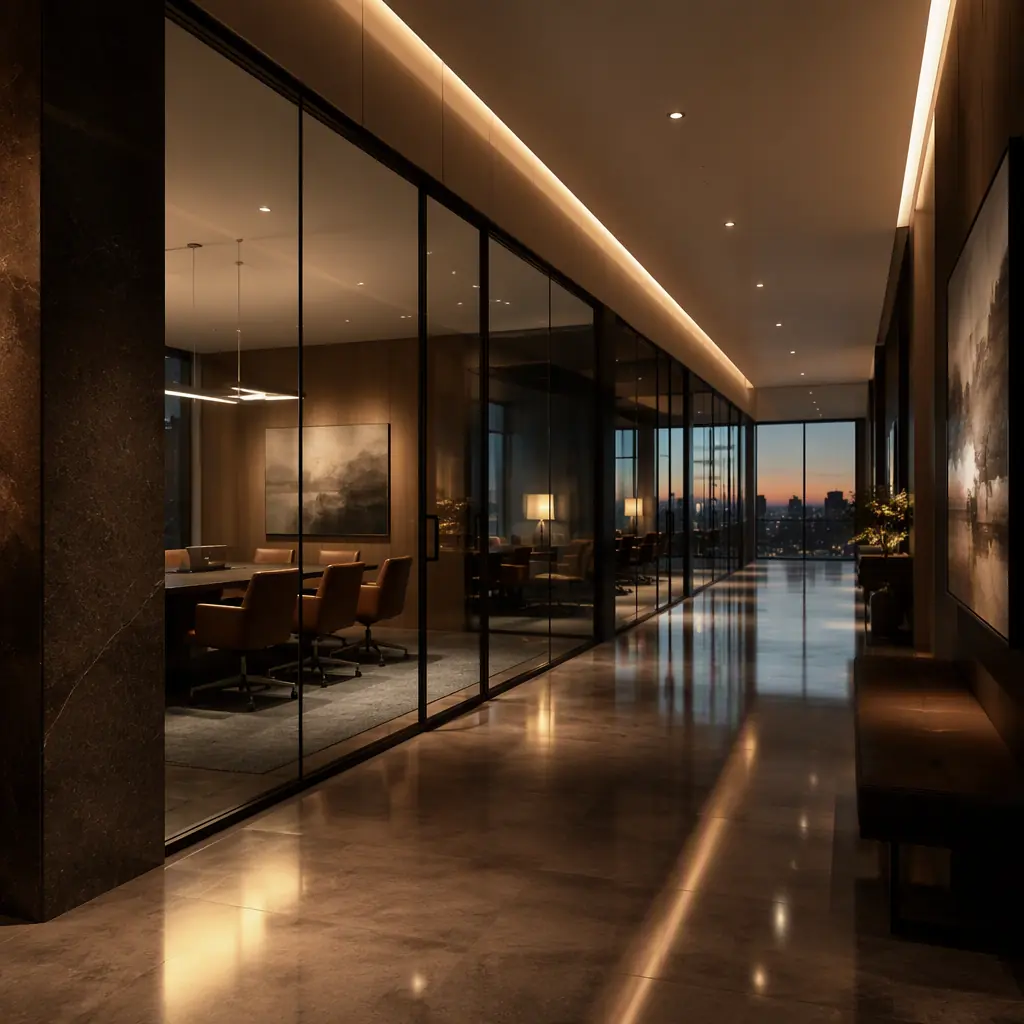
Law firm floors carry a specific profile — carpet in the corridors and offices, hard flooring in the kitchen and reception areas, and a 24/7 schedule where every cleaning minute competes with either a meeting or a billable hour. The CLEINBOT M79 scrubber covers the hard-floor loop: single-pass scrub, vacuum and mop at up to 2,000 m²/h — a 900 m² floor plate in under 30 minutes — with a 45L tank and auto-return docking that lets it run the full overnight program between the building's 7 p.m. access window and the next morning's first meeting. The specification framework in the commercial cleaning robot buyers guide applies; the legal-specific rule is the schedule: the M79 runs the kitchen and reception hard floors first, then the corridors, so the firm's 8 a.m. arrival finds the public-facing surfaces clean and the cleaning crew never needs to enter before the building's access window — the scheduling pattern the hotels & resorts guide documents for occupancy-driven cleaning, applied to an office where the "occupancy" is billable hours.
Client Reception: The First Impression Is Logged
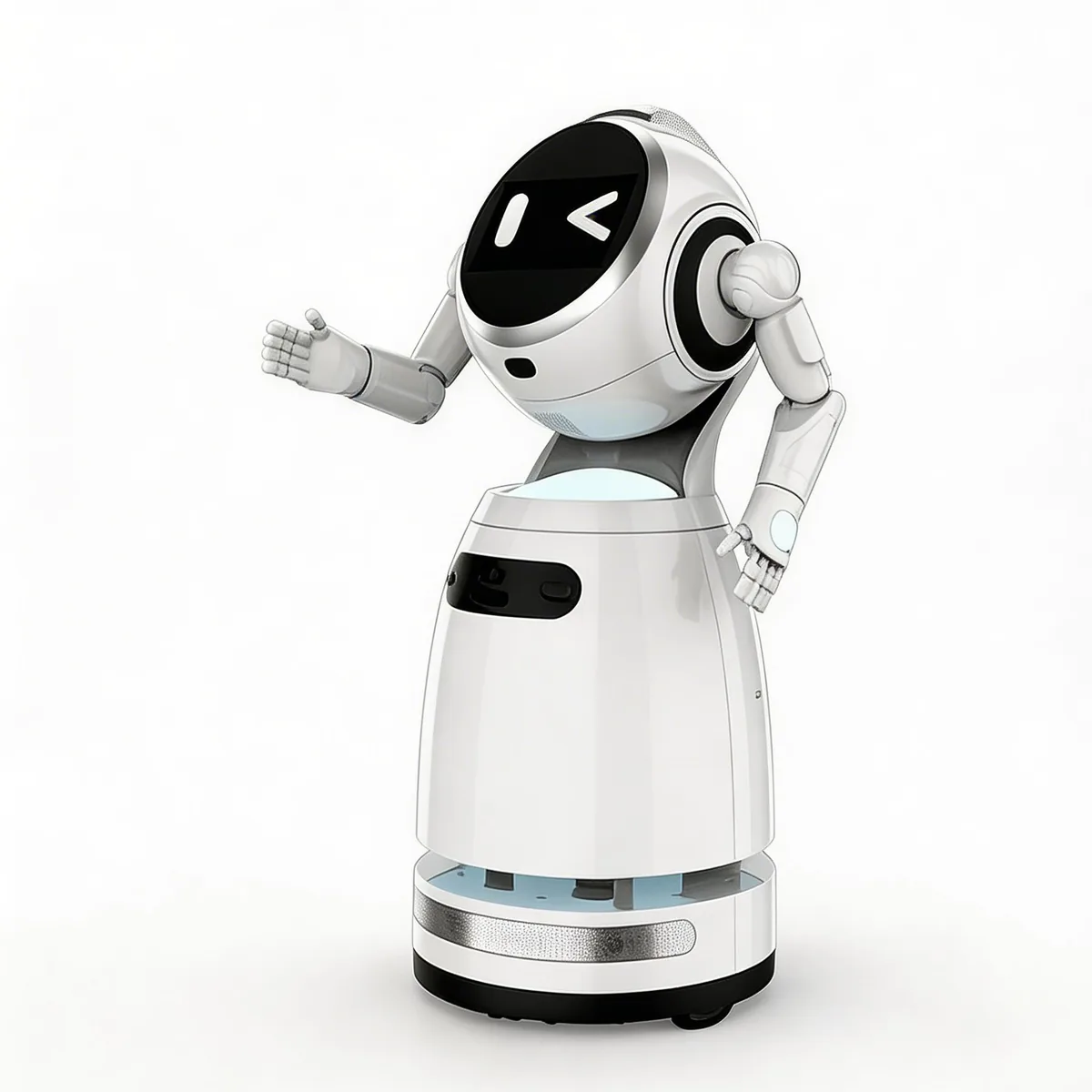
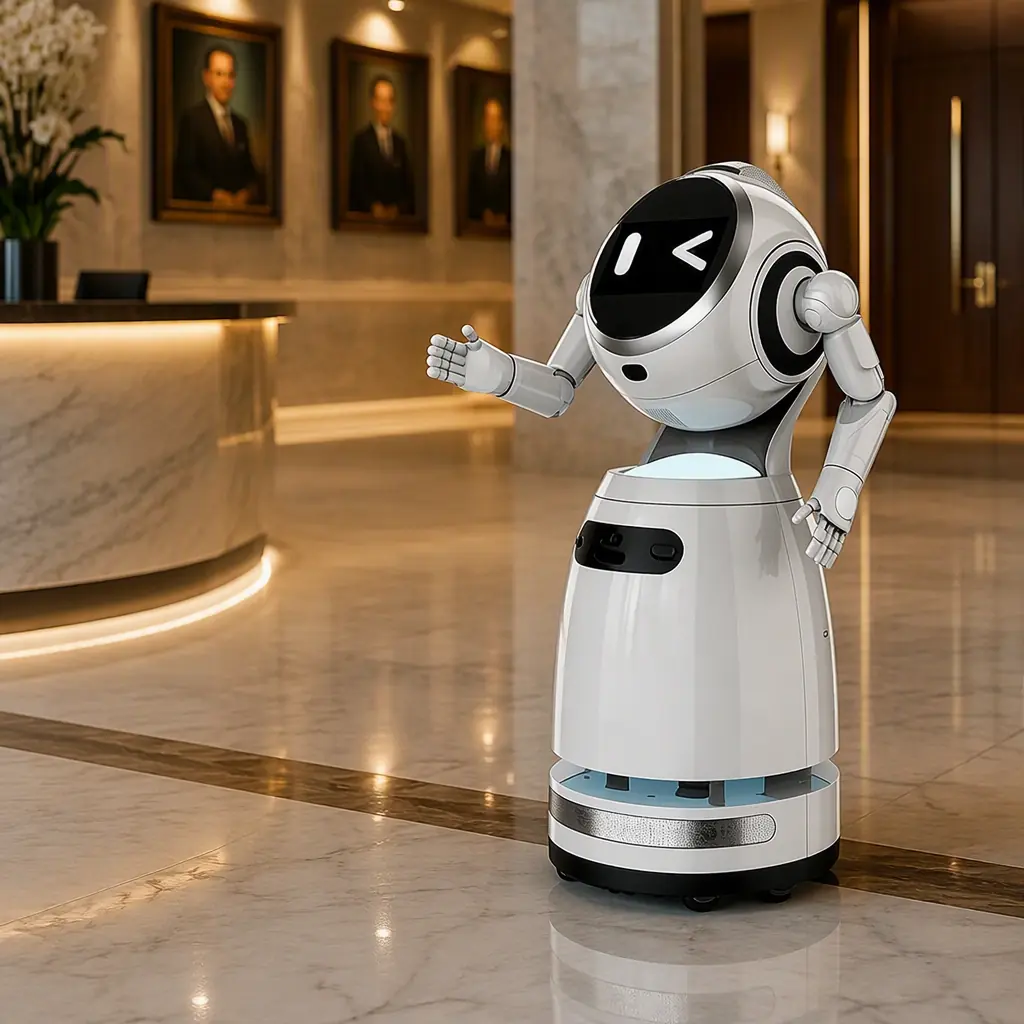
The reception desk is the first and last impression a client has of the firm, and it carries the double load of hospitality and security: greeting clients, verifying appointments, coordinating conference-room access and routing calls. The CRUZR concierge robot works the reception loop: 50+ languages for the client population, a 14-inch facial LED array that displays the appointment confirmation and the conference-room floor, and 0.3-second face recognition that lets returning clients complete check-in against the docket without holding the desk. It answers the three most common questions — where to wait, which conference room, whether the partner is available — and hands off to the front-desk team at the moment of verification, the same engagement pattern documented in the reception & concierge guide, applied to a professional-services lobby where the desk staff are also the phone router and the calendar coordinator. The vendor evaluation framework covers the procurement-side decision for firms evaluating their first robot deployment.
Multi-Floor & Multi-Office Firms: One Dashboard, Every Floor
Firms with multiple floors or multiple offices run the same document, cleaning and reception pattern everywhere, and the multi-site deployment guide documents the fleet pattern: every L100, M79 and CRUZR reports to one cloud dashboard, floor permissions and delivery routes are configured remotely by the office manager, and a firm with three floors runs the same delivery loop, the same overnight cleaning program and the same reception flow on every floor — with the fleet management guide covering the operational layer and the staff training guide documenting how legal-ops teams build the internal expertise to run the fleet. The RaaS financing guide covers the subscription structure that fits professional-services budgets: most firms start with one L100 on the document loop and one M79 on the overnight cleaning program, run one quarter of logged deliveries and clean floors, and add the CRUZR when reception throughput becomes the client-experience bottleneck.
Deployment Table for Firm Types
| Firm type | Interior fleet | Delivery fleet | Monthly cost (RaaS) | Billable hours returned |
|---|---|---|---|---|
| Solo / small firm (2–5 attorneys) | 1 × M79 (overnight hard floors) | 1 × L100 (document + mail loop) | $1,500–2,300 | 60–100/month |
| Mid-size firm (20–60 attorneys, multi-floor) | 1–2 × M79 | 1–2 × L100 + 1 × CRUZR (reception) | $3,500–5,800 | 250–450/month |
| Multi-office firm (5+ locations) | 1–2 × M79 per office | 1–2 × L100 per office + CRUZR at flagship offices | $16,000–30,000 | 2,500–5,000/month |
A law firm's capacity is measured in billable hours, not square footage. The L100 keeps documents and mail moving so legal assistants stay at their desks, the M79 cleans the hard floors overnight without disrupting a single billable hour, and the CRUZR turns client arrival into a logged, frictionless handoff — all on schedules that fit the firm's access policy and its confidentiality rules. That is the automation pattern that fits a legal practice's economics, and it starts with the same step every successful deployment starts with: a walk-around audit of where the document trips, the cleaning disruptions and the reception handoffs actually are.