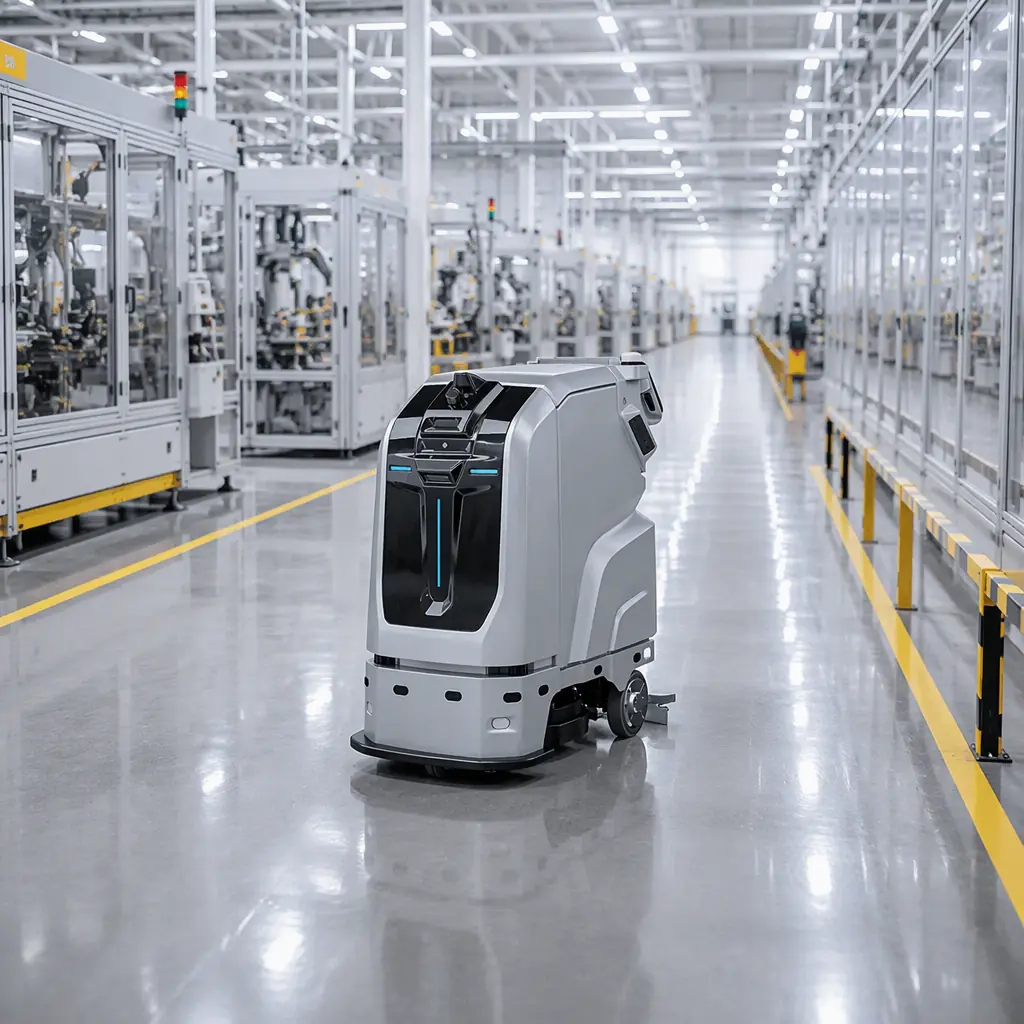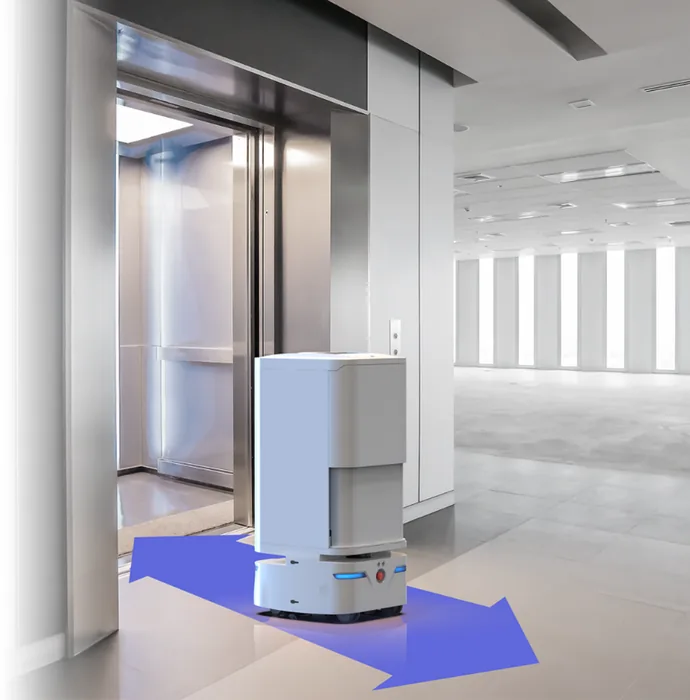
A 40 GWh lithium-ion battery plant in the southeastern United States operates 480,000 sq m of production floor across four zones: electrode coating and slitting, cell assembly, formation and aging, and pack assembly. At full ramp the plant moves roughly 1.2 million electrode rolls and 18 million cells through its process flow per year, and the material movement between zones — WIP carts, cell trays, electrode roll racks, component kits — is handled by a fleet of 70 electric tugger trains running fixed routes. The plant's operations team ran a line-balancing study in late 2025 and found the fixed routes were the constraint: every layout change, every zone expansion and every equipment move required re-programming routes, re-painting floor lines and re-training drivers, at a cost of $40,000–90,000 per change event, with three change events in the prior nine months.
The gigafactory is the fastest-scaling manufacturing environment in industrial history, and its logistics problem is structural: the process equipment is highly automated, but the movement between process islands still runs on people and fixed-path vehicles. The warehouse delivery robot guide documents why self-navigating robots replace fixed-path logic at scale, and the AMR vs AGV guide covers the technology decision. This guide covers the battery-plant-specific version: what service robots do in a gigafactory, where they are deployed, and the contamination argument that makes floor care a process-quality function rather than a janitorial one.
Gigafactory Scale Breaks Manual Material Flow
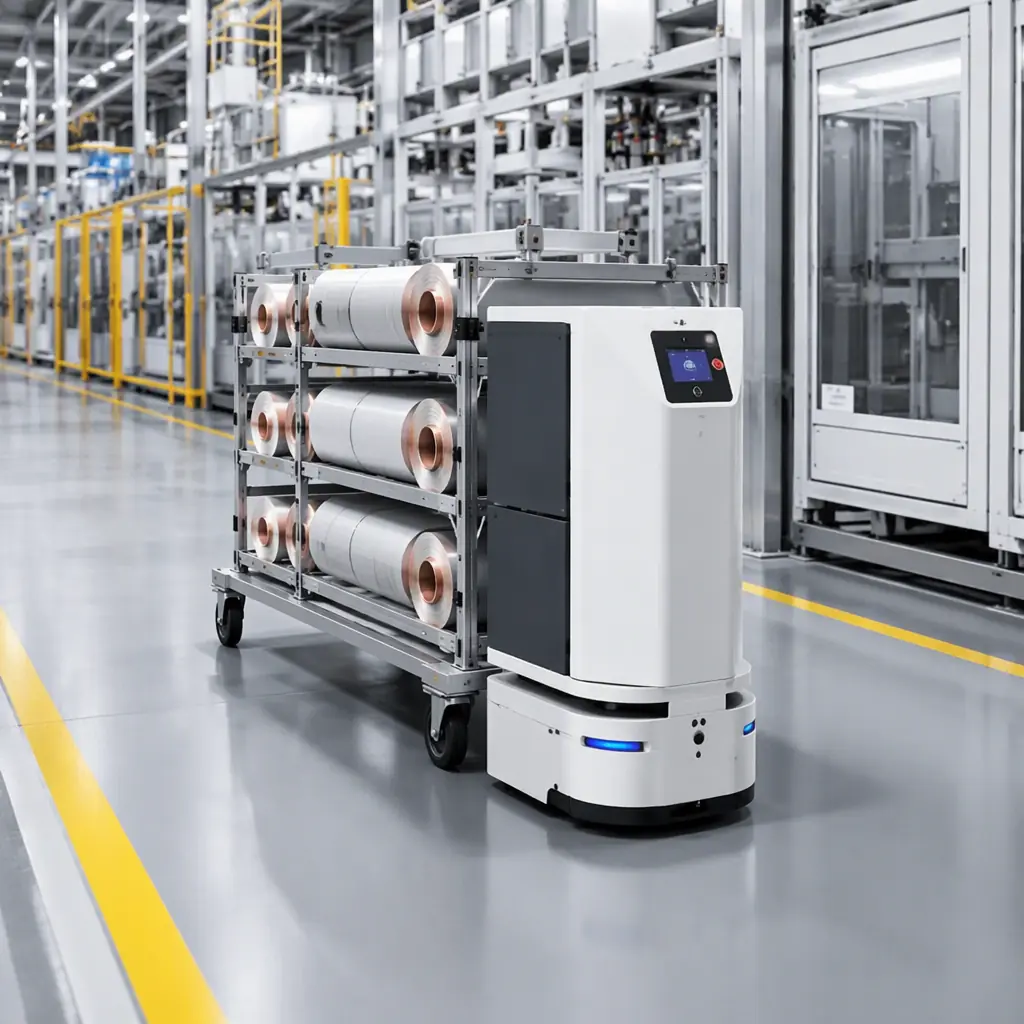
The numbers that break conventional material flow in a gigafactory are volume and distance. A single electrode coating line produces a roll every 20–30 minutes; the rolls move to slitting, then to cell assembly, then to formation — a journey of 400–900 meters across zone boundaries, repeated thousands of times per day. Manual tugger trains handle the volume but lock the plant into fixed routes; forklift movement adds traffic conflict in aisles designed for people and AMRs.
The AOMAN DOUBLE 70L delivery robot fits the gap between the tugger train and the forklift: a 420 mm-wide, 70L dual-cabin platform that carries electrode roll cart trays, cell tray stacks and component kits on-demand between process islands, navigating by LiDAR with no floor infrastructure. Its 55 cm minimum passing width clears the equipment aisle standard in modern battery plants, and its 25 mm hurdle / 13° slope ratings handle dock level transitions at zone boundaries. The delivery robot selection guide covers the specification framework; the gigafactory-specific point is that each robot replaces roughly 4–6 km of walking or tugger-attendant time per shift per zone — and the manufacturing service robot guide documents the same pattern in electronics plants, where inter-process material movement was the first workflow automated.
Contamination Control Beyond the Dry Room
Battery plants obsess over contamination for a specific electrochemical reason: metallic particle contamination in the cell is a direct cause of internal short circuits, self-discharge and capacity fade. The industry threshold is unforgiving — particles above roughly 50 µm in critical process areas are treated as defect events — and the contamination sources are not all in the dry room. Electrode slitting produces metallic dust, cell assembly generates aluminum and copper fines, and every gram of debris tracked in from the yard becomes a contamination vector in the aisle.
This is why the clean-aisle discipline — the corridor network outside the process envelope — is a production-quality function. The CLEINBOT M79 scrubber maintains that discipline: single-pass scrub, vacuum and mop at up to 2,000 m²/h covers a 40-meter-wide cross-aisle in minutes, the 0–300 mL/min adjustable water output handles the transition from epoxy-sealed aisles to dock-level concrete, and the 45L tank with auto-return docking keeps the machine on a continuous schedule without dedicated operators. The commercial cleaning robot buyers guide covers the specification comparison, and the laboratory and cleanroom guide documents the class-of-cleanliness logic — the gigafactory version of the same argument is that aisle cleanliness is measured in particles per cubic meter, and scheduled autonomous scrubbing is the only program that holds the number between shifts.
Formation and Aging: The Logistics of Waiting Cells
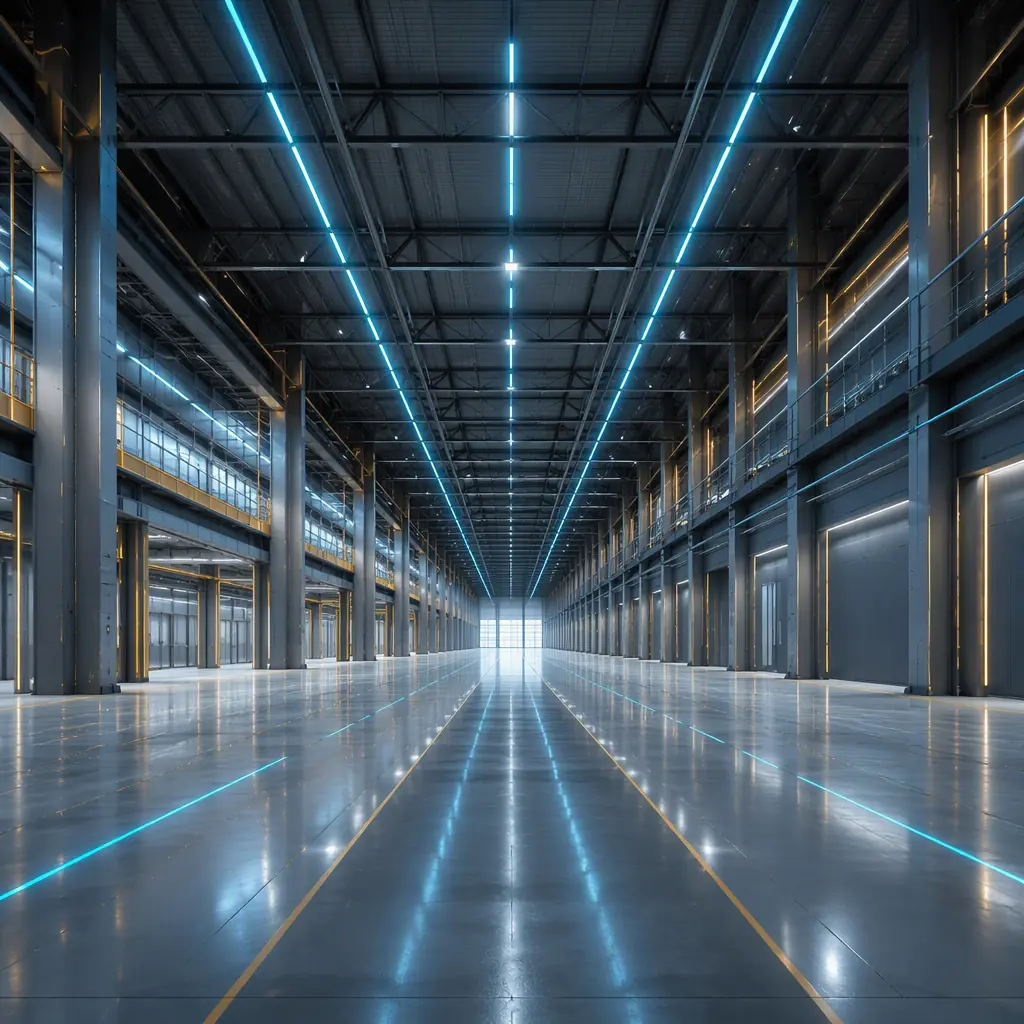
Formation and aging halls are the gigafactory's bottleneck-by-design: cells rest on racks for days while formation cycling and aging tests run, and the trays of cells must be staged, moved and retrieved on a schedule tied to test completion. The staging area is a logistics problem disguised as a waiting room — 18 million cells per year means 50,000+ tray moves annually, each one currently performed by a worker walking a rack aisle with a hand cart.
Delivery robots stage and retrieve cell trays in formation halls on a dispatch schedule, which removes the walking from a job that is otherwise pure walking. The pattern mirrors the cold chain guide — a facility where the product waits in controlled conditions and the value is in moving it on schedule — and the elevator integration guide for the multi-level plants that stack formation halls vertically.
Yard and Dock Discipline
The gigafactory's loading docks and delivery yards handle electrode foil, separator rolls and pack components around the clock, and yard debris — cardboard scraps, strap fragments, gravel — is a contamination vector the moment it is tracked through the dock doors. The CLEINBOT CC201 outdoor sweeper runs the dock aprons and delivery yard on a scheduled pass, sweeping the same route the outdoor autonomous cleaning guide documents for industrial sites, so the inbound-material path starts clean.
Fleet Economics at Gigafactory Scale
| Robot role | Product | Typical fleet (40 GWh plant) | Monthly cost (RaaS) | Primary return |
|---|---|---|---|---|
| Inter-zone material transport | AOMAN DOUBLE | 8–15 | $1,300–1,900 each | Eliminates 4–6 km walking/shift/zone |
| Clean-aisle scrubbing | CLEINBOT M79 | 3–6 | $1,000–1,600 each | Holds aisle particle count between shifts |
| Yard & dock sweeping | CLEINBOT CC201 | 2–3 | $1,100–1,700 each | Keeps debris out of the inbound path |
| Cell tray staging (formation) | AOMAN DOUBLE / CADEBOT L100 | 4–8 | $1,300–1,900 each | Removes 50,000+ manual tray moves/year |
At gigafactory scale the fleet is a management problem in itself, which is why the fleet management guide and the maintenance and TCO guide matter as much as the hardware selection. The RaaS financing guide covers the subscription structure that fits gigafactory capex discipline — robots enter as operating expense, scale with the ramp curve, and avoid the capital-approval cycle that slows equipment acquisition in battery plants. The multi-site deployment guide documents the pattern for operators running multiple gigafactories: the first plant establishes the route map and the cleanliness baseline, and subsequent plants deploy the same fleet configuration in weeks.
A gigafactory's competitive metric is ramp speed — how fast the plant reaches nameplate capacity — and every hour of material-flow constraint or contamination event delays that curve. The service robot layer removes the walking, holds the aisle cleanliness, and keeps the yard debris out of the process envelope, all on a documented schedule the quality team can audit. That is the deployment pattern that scales with the ramp, and it is the same pattern the budget planning framework turns into a board-ready number.