A 24-station dialysis clinic in Shenzhen runs 72 treatments a day across three shifts, and its operations audit found the same three leaks every center runs: station turnover took 30–45 minutes between patients because the floor, the chair arms and the side tables all needed attention before the next patient sat down; the lab specimen run from the treatment floor to the on-site lab cost the head nurse 20 minutes of walking per trip, six trips a day; and the front desk processed 90 check-ins a morning, most of them patients who had been coming for years but still needed weight, blood-pressure and machine-assignment coordination. Chronic kidney disease patients are immunosuppressed by the disease and its treatment, which makes floor hygiene a clinical input, not a housekeeping line item — the hospital delivery robots guide documents the adjacent acute-care pattern; this guide covers the outpatient-ESRD version, where chairside cleanliness, specimen logistics and reception automation are the three highest-value robot roles.
The Station-Turnaround Rule: 30 Minutes Between Patients, Every Shift
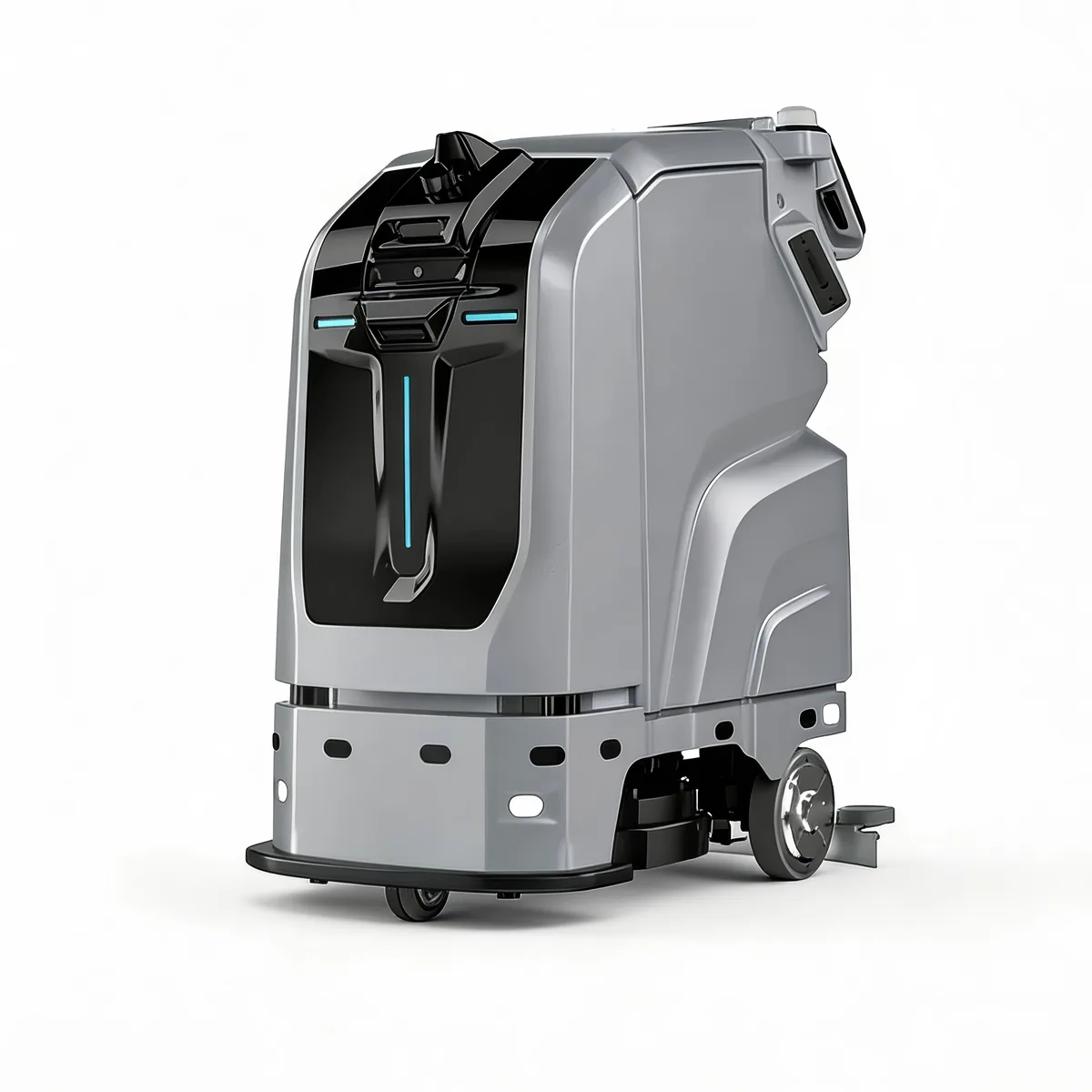
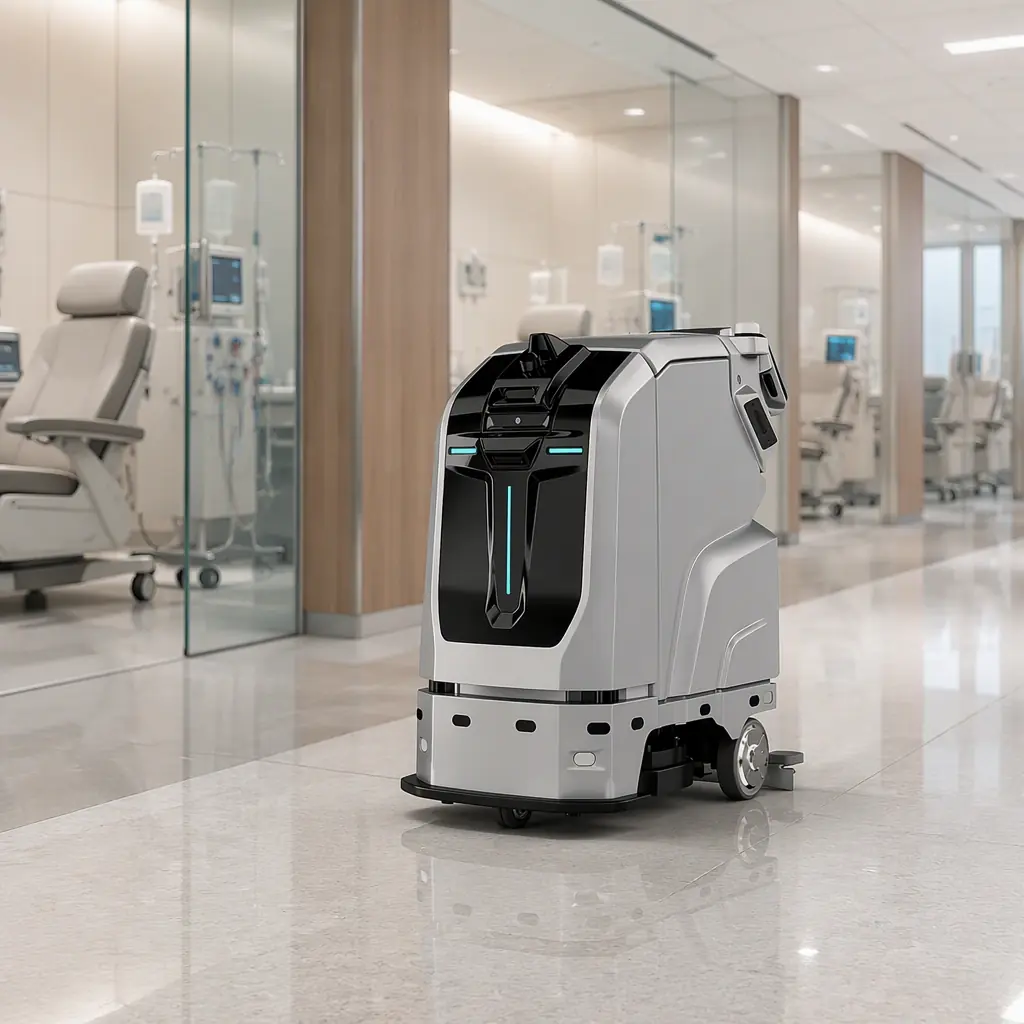
A dialysis station turns over three times a day, and the floor between the chair, the machine and the door carries the center's infection-control reputation. The CLEINBOT M79 covers the treatment-floor loop: a 720 mm cleaning width at 2,000 m²/h, a quiet scrub mode that stays under the noise threshold of an active treatment session — the same silent-operation logic the medical clinics guide documents for outpatient centers — and a disinfection-grade scrub cycle that runs between shifts when the floor is empty. The station-turnaround rule is the scheduling discipline that makes it work: the M79 runs the chair-side lanes during the 30-minute turnover windows, the corridors and waiting areas during the middle of each shift, and the full floor with a disinfecting pass after the last patient leaves — so no station ever opens without a cleaned floor, and the housekeeping audit stops being a repeat finding. The cleaning-chemistry side of the decision (which disinfectants the robot's water tank and pad system can carry) is covered in the commercial cleaning robot buyers guide, which is the right companion read for facilities that want to standardize the floor-care protocol across multiple sites.
Specimen, Meal & Supply Logistics: Closed-Top Runs That Protect the Staff
The most expensive walking in a dialysis center is done by licensed staff carrying things: lab specimens to the on-site lab, meal trays to patients mid-treatment, dialyzer packs and saline from the supply room to the stations, and linen between the utility room and the chairs. The CADEBOT L100 covers the delivery loop: a 400 mm platform with four trays rated for 15 kg each and a 40 kg total payload, clearing the 1.8 m corridors between treatment bays and returning 6–8 trips per hour. The center-specific rule is the closed-top transport protocol: specimen runs use a sealed containment tray so the biohazard chain of custody is visible in the delivery log, meal runs use a separate sanitized tray, and the two never share a robot run — the same segregation logic the laboratories & cleanrooms guide applies to cleanroom logistics, scaled to a facility where the "cleanroom" is a treatment floor and the contamination risk is clinical rather than particulate. Every run is logged by the fleet dashboard, which gives the infection-control committee a documented transport record the fleet management guide describes as the operational layer of any multi-robot deployment.
Reception, Check-In & Wayfinding for Chronic-Care Patients
A dialysis patient visits three times a week, every week, for years — which makes the front desk a high-volume, high-continuity process rather than a visitor process. The CRUZR covers the reception loop: RGB-D face recognition that identifies returning patients in under 0.3 seconds, 50+ language support for multilingual patient populations, and the check-in pattern the reception & concierge robots guide documents for corporate lobbies — processing time dropping from 4.1 minutes to 55 seconds per visitor. The center-specific rule is the clinical-handoff boundary: CRUZR handles check-in, weight-recording prompts and wayfinding to the right bay, then hands the patient to clinical staff at the treatment floor — it never touches clinical data, and its screen shows only scheduling and wayfinding information, keeping the robot outside the protected health information boundary that the pharma GMP guide documents for batch-critical environments. For centers that want the front desk covered after hours or during staff meetings, the same robot runs the waiting-area greeting loop while the human receptionist handles phones and insurance calls.
Compliance Alignment: CMS, AAMI & the Infection-Control Chain
Dialysis facilities operate under a compliance framework that makes the robot's audit trail part of the clinical record: CMS Conditions for Coverage require a clean, safe environment with documented housekeeping; AAMI standards govern the water treatment and reprocessing side of the facility; and state health departments inspect floor care, waste handling and staff protocols. The robot deployment pattern maps onto that framework directly — the M79's cleaning logs become the floor-care documentation, the L100's closed-top runs become the transport documentation, and both integrate with the center's quality program the way the safety standards guide describes for safety compliance generally. The rule that keeps the audit trail defensible is simple: the fleet dashboard time-stamps every cleaning pass and every delivery run, and the infection-control committee reviews the logs on the same cadence it reviews the hand-hygiene observations.
Deployment Table for Facility Types
| Facility type | Floor-care fleet | Logistics fleet | Reception | Monthly cost (RaaS) | Staff hours returned |
|---|---|---|---|---|---|
| Single clinic (12–24 stations) | 1 × M79 (treatment floor + waiting area) | 1 × L100 (specimens, meals, supplies) | Front desk + CRUZR optional | $2,000–3,400 | 150–260/month |
| Multi-center group (3–6 clinics) | 1 × M79 per clinic | 1 × L100 per clinic | 1 × CRUZR per flagship site | $6,500–11,000 | 480–820/month |
| Hospital-based dialysis unit | 2 × M79 (24/7 schedule) | 2 × L100 + 1 × CRUZR | CRUZR at renal clinic entrance | $5,800–9,600 | 430–720/month |
A dialysis center's capacity is measured in patient-hours per week, and every minute a nurse spends walking specimens or scrubbing floors is a minute off the chairside. The M79 keeps treatment floors clean on the turnover clock, the L100 keeps specimens and supplies moving under documented chain of custody, and the CRUZR keeps check-in fast for the people who come back three times a week. That is the automation pattern that fits an ESRD facility budget — and it starts the same way every successful deployment starts: with a walk-around audit of where the turnaround minutes, the walking minutes and the check-in minutes actually go.