A six-chair dental clinic in a mid-sized city ran its 2025 schedule audit and found its capacity leak in the between-patient window: the average operatory turn — patient exit, floor spot-check, surface wipe-down, next-patient setup — ran 14 minutes, and the clinical team logged 3.4 hours a day walking trays between the sterilization room and the chairs, plus another 1.1 hours fetching consumables from the supply closet. The second finding was the floor: the operatory corridor was mopped twice a day, but the audit's ATP-swab sampling flagged the operatory thresholds three times in a row, because the mop schedule (morning and evening) never aligned with the actual patient flow. The third was the front desk: two receptionists handled scheduling, insurance verification and check-in simultaneously, and the practice's phone-miss rate peaked exactly at the 9 a.m. and 2 p.m. intake rushes.
Dental clinics are a cadence business with an infection-control overlay, and the medical clinics & outpatient centers guide documents the adjacent healthcare pattern; this guide covers the dental-specific version, where operatory turnover, sterilization-room logistics and controlled floor hygiene are the three highest-value robot roles — the corridors and operatories inside, the tray-and-consumable delivery loop that keeps clinical staff at the chair, and the front desk where the robot meets the patient.
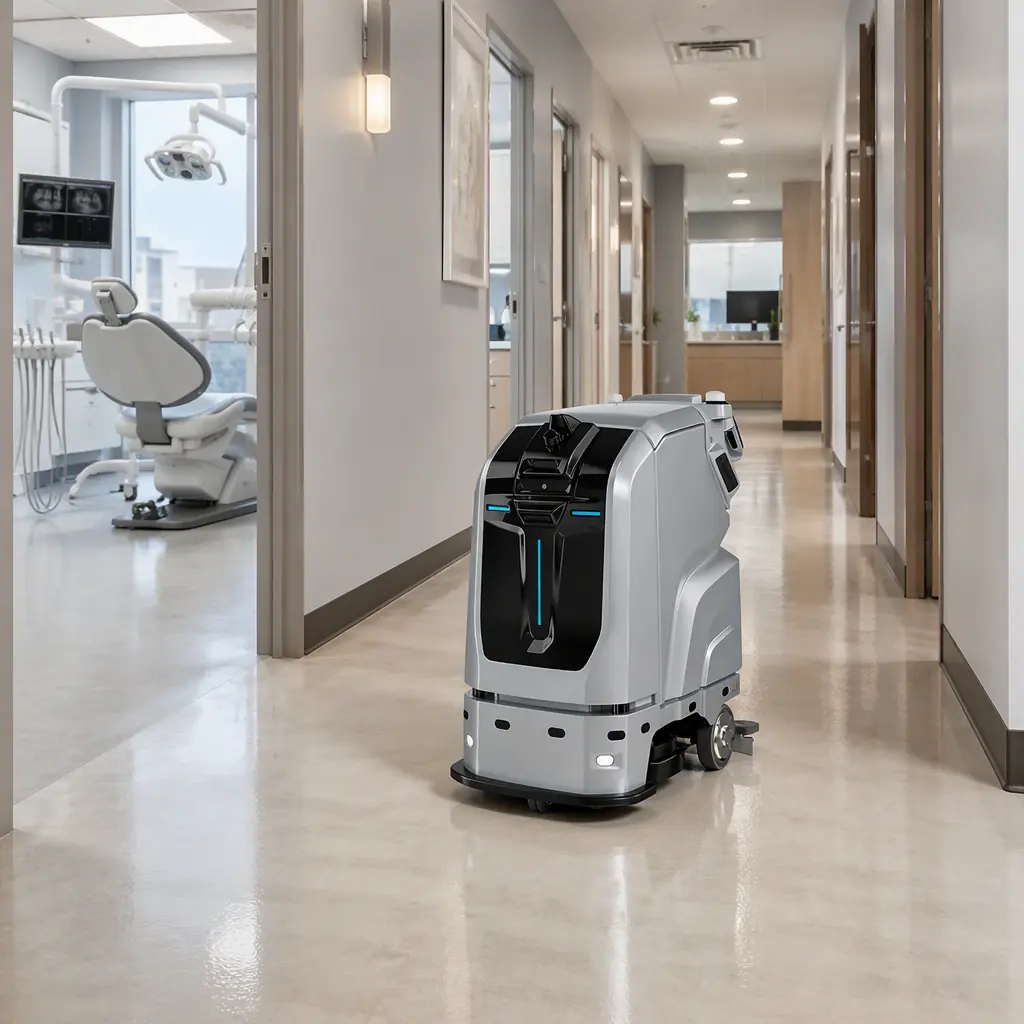
Operatory Turnover: The Floor Is Part of the Hygiene Protocol
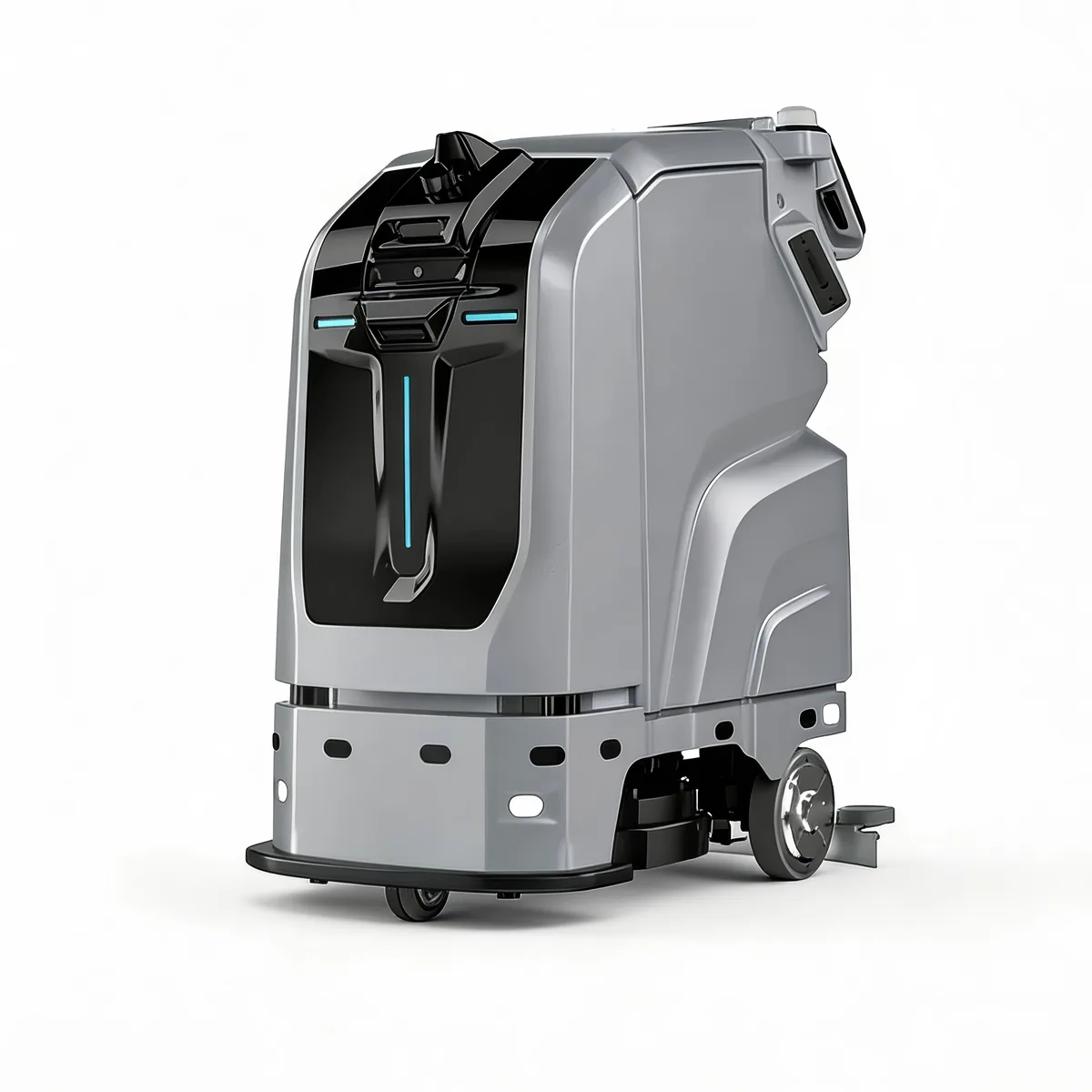
Dental operatories generate a specific floor-debris profile — composite dust from polishing, amalgam and zirconia particles from prep work, saliva splatter, and the tracked residue from the sterilization room — and the floor is part of the infection-control protocol, not a cosmetic afterthought. The CLEINBOT M79 scrubber covers the clinic loop: single-pass scrub, vacuum and mop at up to 2,000 m²/h — a 400 m² clinic corridor and operatory block in under 15 minutes — with a 45L tank and auto-return docking that lets it run between-patient hygiene passes without a dedicated operator. The specification framework in the commercial cleaning robot buyers guide applies; the dental-specific rule is the between-patient pass: the M79 runs a short operatory-threshold loop after each chair's exit, picking up the composite dust and splatter before it tracks into the next operatory — the same "clean the source before the sensitive zone" sequencing the cleanrooms guide documents for controlled environments, applied to the clinical floor.
The practice's math: the two mopped floor passes cost 90 minutes of staff time a day (45 minutes per pass, two passes), and the ATP failures cost a re-swab cycle plus the scheduling disruption of a late-starting operatory. The M79 runs the corridor loop on a documented schedule, produces a timestamped floor-care log that supports the infection-control file, and returns the 90 minutes to the clinical team — the same argument the senior living guide documents for care facilities, where documented hygiene is part of the operating standard.
Sterilization-Room Logistics: Trays Move, Clinicians Stay
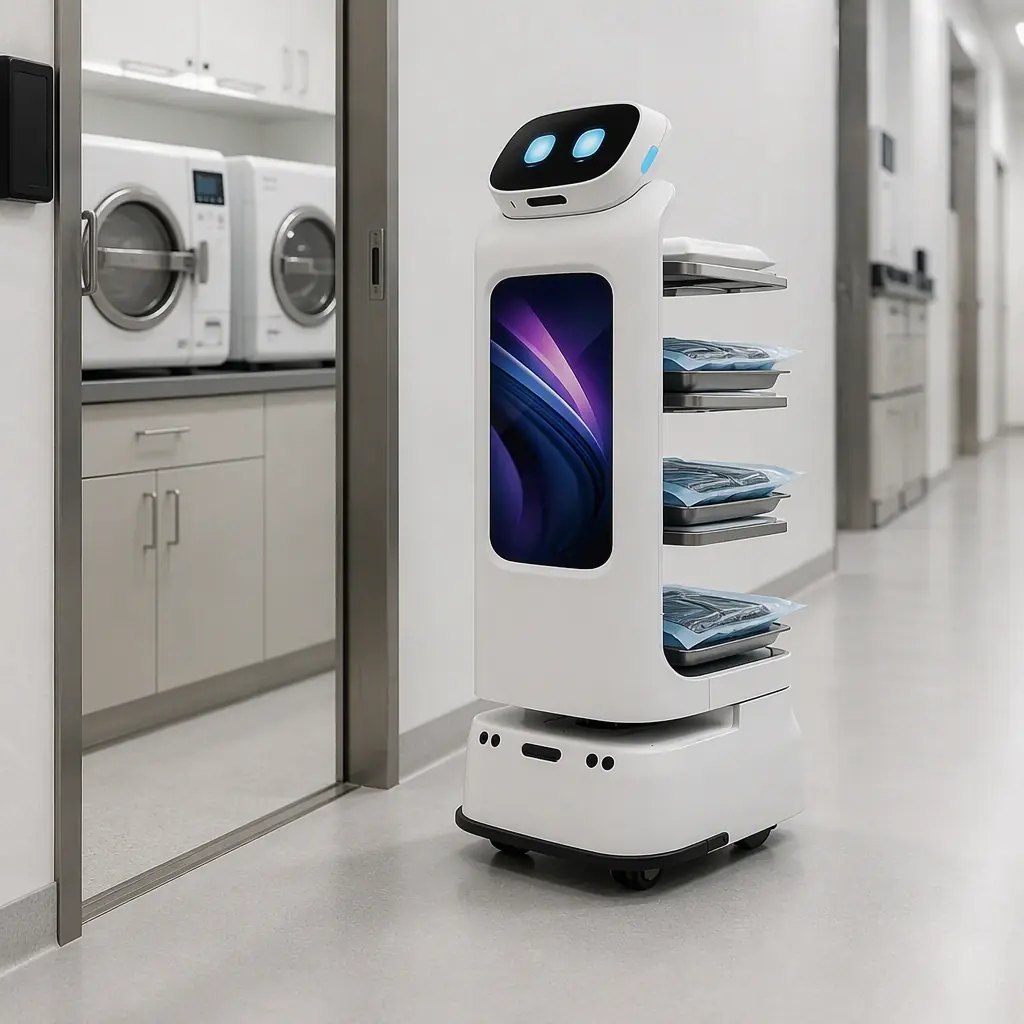
The sterilization room is the traffic hub of a dental clinic: every instrument cycle moves trays from the chairs to the sterilization room for cleaning, packaging and autoclaving, then back to the operatory drawers. The CADEBOT L100 covers the delivery loop: a 400 mm-wide platform that clears standard clinic doorways, four independent trays rated for 15 kg each, and a 40 kg total payload that carries a full tray-and-consumable run in one trip — 6–8 deliveries per hour between the sterilization room and the chairs. The same pattern the hospital delivery robots guide documents for pharmacy and lab runs applies at clinic scale: the robot runs the route, the clinical staff stays at the chair, and every delivery is logged by the fleet dashboard for traceability.
The contamination-zone design rule is the one practice owners ask about first: the L100's route is planned so the return leg from the sterilization room never crosses the soiled-tray staging area — clean instruments travel on the robot, soiled trays stay in their covered hampers, and the robot's tray surfaces are wiped with the same clinic-grade disinfectant at each docking cycle. The delivery robot selection guide covers the cabin-configuration decision; the dental-specific rule is the open-tray format, which keeps instruments visible and logged through the delivery leg rather than sealed in a cabin where a mismatch goes unnoticed until the operatory opens the drawer.
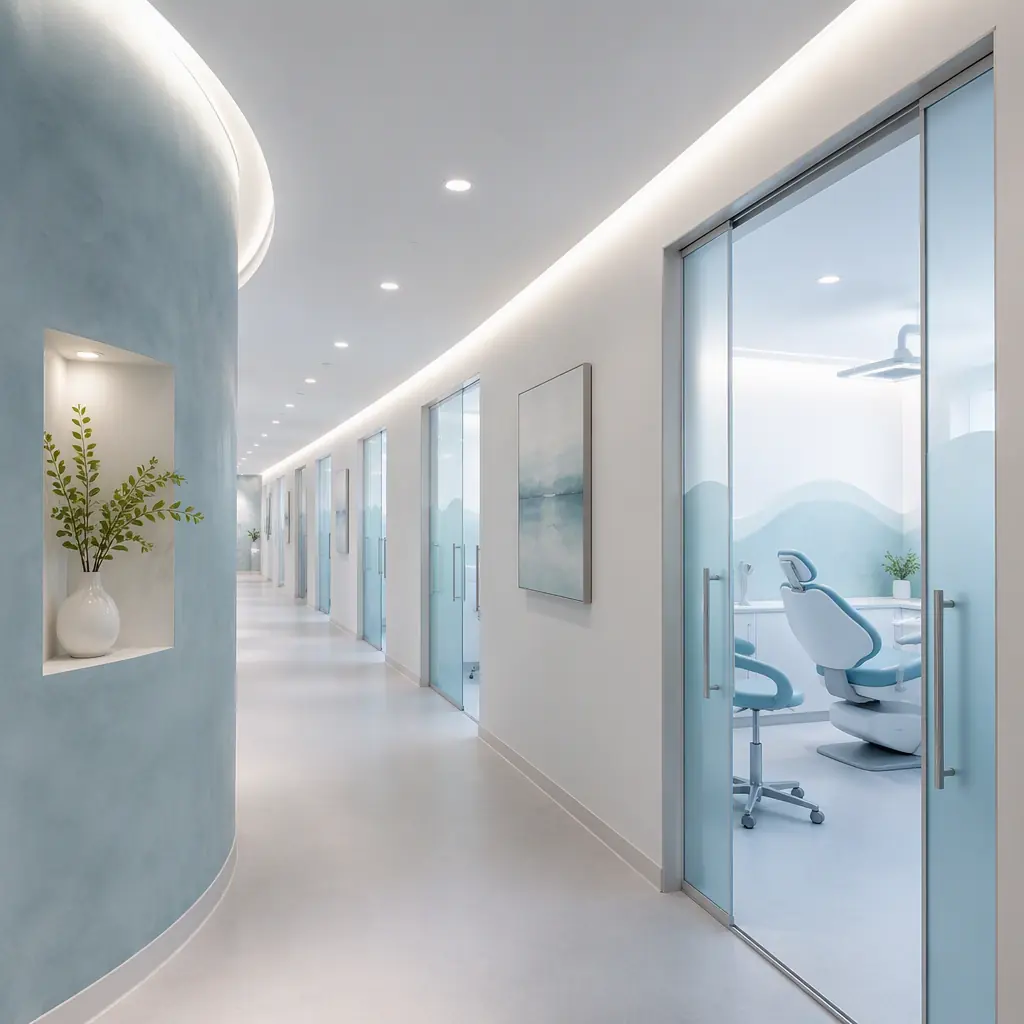
The Front Desk: Check-In Without the Scheduling Trade-Off
The front desk carries the patient-experience load — check-in, insurance verification, scheduling, and the first impression of the practice — and the intake rush is exactly when the phone rings. The CRUZR concierge robot works the lobby loop: 50+ languages for the patient population, a 14-inch facial LED array that displays the check-in queue and the next-appointment reminder, and 0.3-second face recognition that lets returning patients complete the check-in preamble — name, provider, insurance card scan — without holding the desk. It answers the three most common questions — where to wait, what the copay process is, when the next opening is — and hands off to the front-desk team at the moment of verification, the same engagement pattern documented in the reception & concierge guide, applied to a clinical lobby where the desk staff are also the schedulers and the insurance coordinators.
Dental Laboratories: The Production-Floor Variant
Dental laboratories (CAD/CAM milling, 3D printing, crown and bridge production) run a different cadence: work orders arrive in batches, cases move between the scanning, milling, sintering and finishing stations, and the floor carries a fine dust load from the milling and polishing stages. The M79 scrubs the production floor on the same 2,000 m²/h loop with adjustable water output for the transition from sealed epoxy floors under the milling stations to tiled finishing benches, and the L100 runs case deliveries between stations with the tray-based traceability that batch production needs — every case logged by order number at each handoff, the same chain-of-custody pattern the pharmaceutical GMP guide documents for serialized batch production.
Multi-Chair Practices: One Dashboard, Every Operatory
Dental groups and DSOs (dental service organizations) run multiple practices with the same infection-control standard and the same patient-flow problem, and the multi-site deployment guide documents the fleet pattern: every M79, L100 and CRUZR reports to one cloud dashboard, routes and schedules are configured remotely by the group's facilities office, and a DSO with fifteen practices runs the same hygiene loop, the same delivery routes and the same check-in flow everywhere — with the fleet management guide covering the operational layer and the safety standards guide documenting the compliance framework from the liability side. The RaaS financing guide covers the subscription structure that fits practice budgets: most clinics start with one M79 on the corridor loop and one L100 on the tray run, run one infection-control cycle with the documented floor logs, and add the CRUZR when intake volume becomes the front-desk bottleneck.
Deployment Table for Practice Types
| Practice type | Interior fleet | Delivery fleet | Monthly cost (RaaS) | Staff hours returned |
|---|---|---|---|---|
| Solo practice (2–4 chairs) | 1 × M79 (corridor + operatory thresholds) | 1 × L100 (sterilization-room loop) | $1,600–2,400 | 90–150/month |
| Multi-chair clinic (6–12 chairs) | 1–2 × M79 | 1–2 × L100 + 1 × CRUZR (front desk) | $3,200–5,400 | 250–450/month |
| DSO group (10+ practices) | 1–2 × M79 per site | 1–2 × L100 per site + CRUZR at high-volume sites | $18,000–32,000 | 3,000–5,500/month |
| Dental laboratory | 1 × M79 (production floor) | 1–2 × L100 (case delivery between stations) | $2,200–3,800 | 150–300/month |
A dental practice's capacity is measured in turnover time, not square footage. The M79 holds the clinical floor on a documented hygiene loop, the L100 keeps trays and consumables moving so the clinical team stays at the chair, and the CRUZR keeps the front desk flowing through the intake rush — all on schedules that become part of the practice's infection-control file. That is the automation pattern that fits a dental clinic's budget and its protocols, and it starts with the same step every successful deployment starts with: a walk-around audit of where the tray trips, the floor passes and the front-desk handoffs actually are.