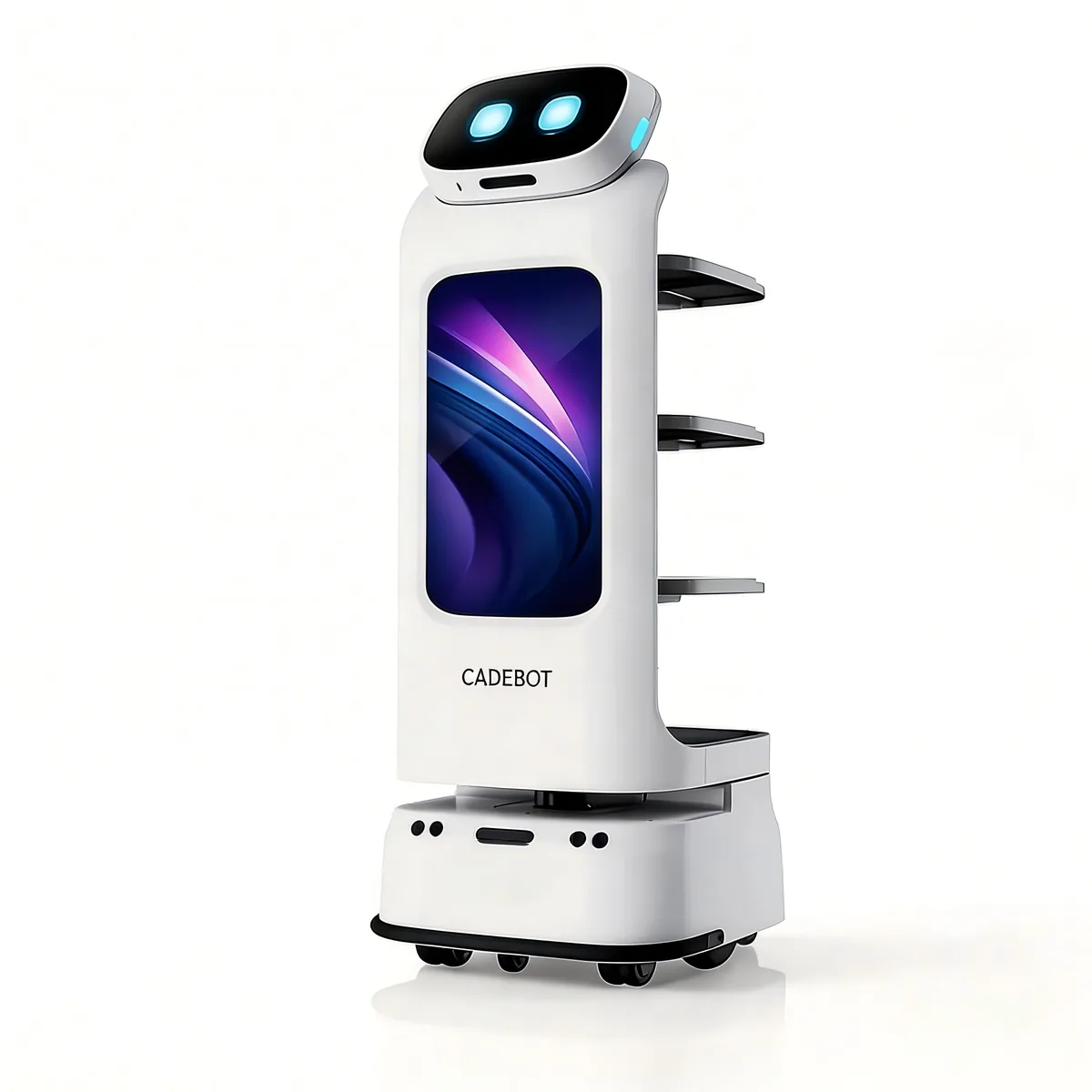
A 12-store urban coffee chain ran its 2025 operations audit and found that its baristas were spending an average of 26 minutes per shift walking food and drinks from the counter to tables and another 18 minutes on floor spills and sticky-rush cleanup — roughly 11% of every paid hour spent away from the espresso bar, where the actual revenue happens. The second finding was the rush-window math: the 7:30–9:30 a.m. window generated 42% of the chain's daily revenue, and every delivery trip a barista made to a table was a trip not spent pulling shots or working the register. The third was the floor: syrup, milk and coffee spills during peak hours turned the front-of-house floor into a slip hazard that closed-store cleaning could only fully address after hours.
Coffee shops are a velocity business with a hygiene layer, and the restaurants & food service guide documents the adjacent full-service pattern; this guide covers the café-specific version, where counter-to-table delivery, between-rush floor care and chain-wide fleet operations are the three highest-value robot roles — the delivery loop that keeps baristas behind the counter, the floor pass that keeps the front-of-house safe and presentable during service, and the dashboard that lets a 12-store chain run the same pattern everywhere.
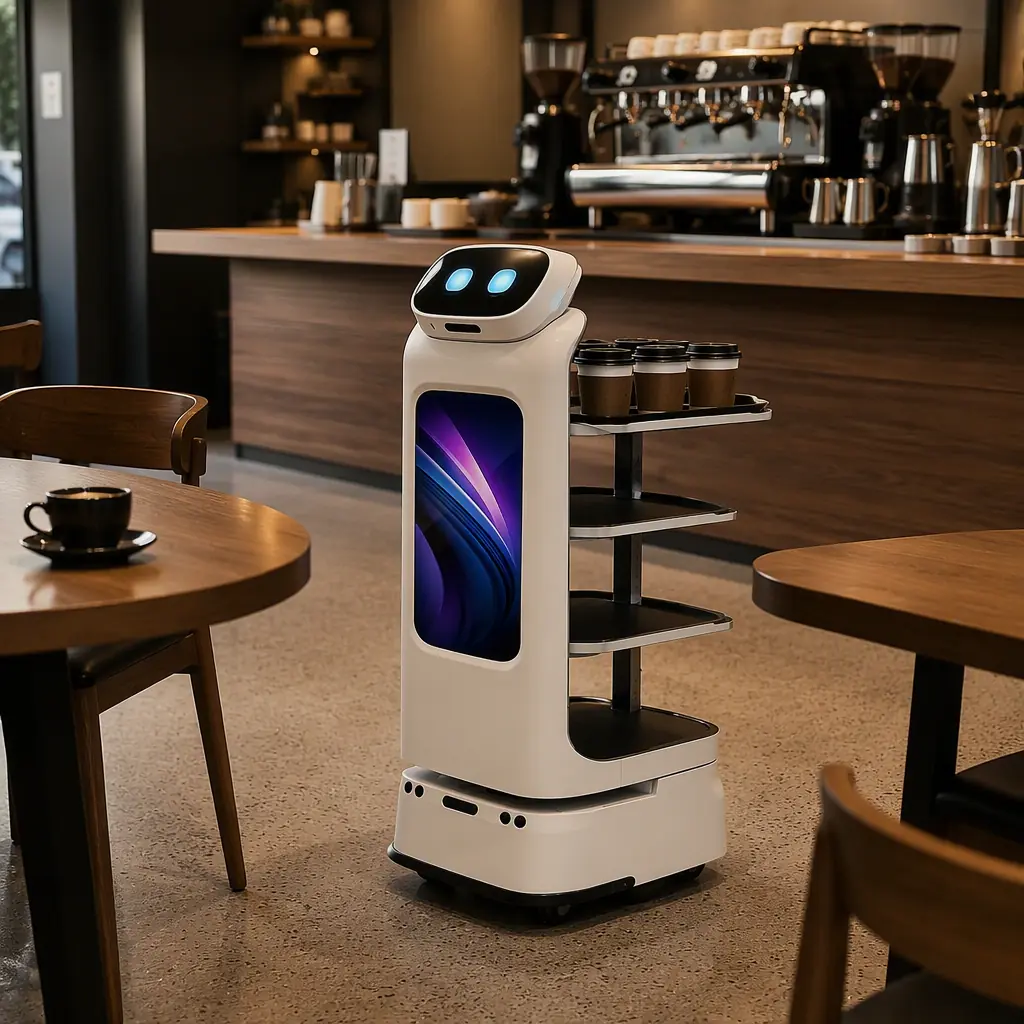
Counter-to-Table Delivery: Keeping Baristas Behind the Bar
The delivery loop is where the economics sit. The CADEBOT L100 runs counter-to-table deliveries on a 400 mm platform that clears the 700 mm aisles typical of café layouts, with four independent trays rated for 15 kg each and a 40 kg total payload — enough for four drink-and-pastry orders in a single trip. Its 6–8 trips per hour return the 26 minutes of walking the audit measured back to the counter: the barista plates the order, the robot runs it, and the staff member stays on the espresso bar through the rush. The same pattern the delivery robot selection guide documents for matching robot form factor to floor plan applies at café scale — the L100's tray layout and clearance profile are the two specs that matter most in a tight front-of-house, and the sensor stack handles the pedestrian traffic that coffee shops generate continuously rather than in waves.
The food-contact-zone design rule is the question café owners ask first: the L100's trays are sealed and the delivery cycle is logged, so the robot follows the same food-handling documentation pattern the safety standards guide covers from the compliance side — the robot never touches food directly, the trays are cleaned on a documented schedule, and the delivery log gives the health inspection trail that manual running-around never produced.
Between-Rush Floor Care: The Sticky-Floor Loop
Coffee floors carry a specific contamination profile — syrup, milk, coffee spills, tracked-in urban debris — and the front-of-house needs a cleaning pass between rushes, not just at close. The CLEINBOT M79 scrubber covers the interior loop: single-pass scrub, vacuum and mop at up to 2,000 m²/h — a 120 m² café floor in about 4 minutes — with a 45L tank and adjustable water output that lets it dial down for the laminate-and-tile mix most cafés run. It docks, recharges and runs scheduled passes on its own, which is what makes the between-rush loop viable: the 10 a.m. lull pass, the 2 p.m. lull pass and the after-hours deep pass all run without a staff member pushing a machine. The specification framework in the commercial cleaning robot buyers guide applies; the café-specific rule is the sequencing — the M79's route is programmed to clean the spill-prone service zone first, then the seating area, so the wet-pass residue dries before the next rush seats customers.
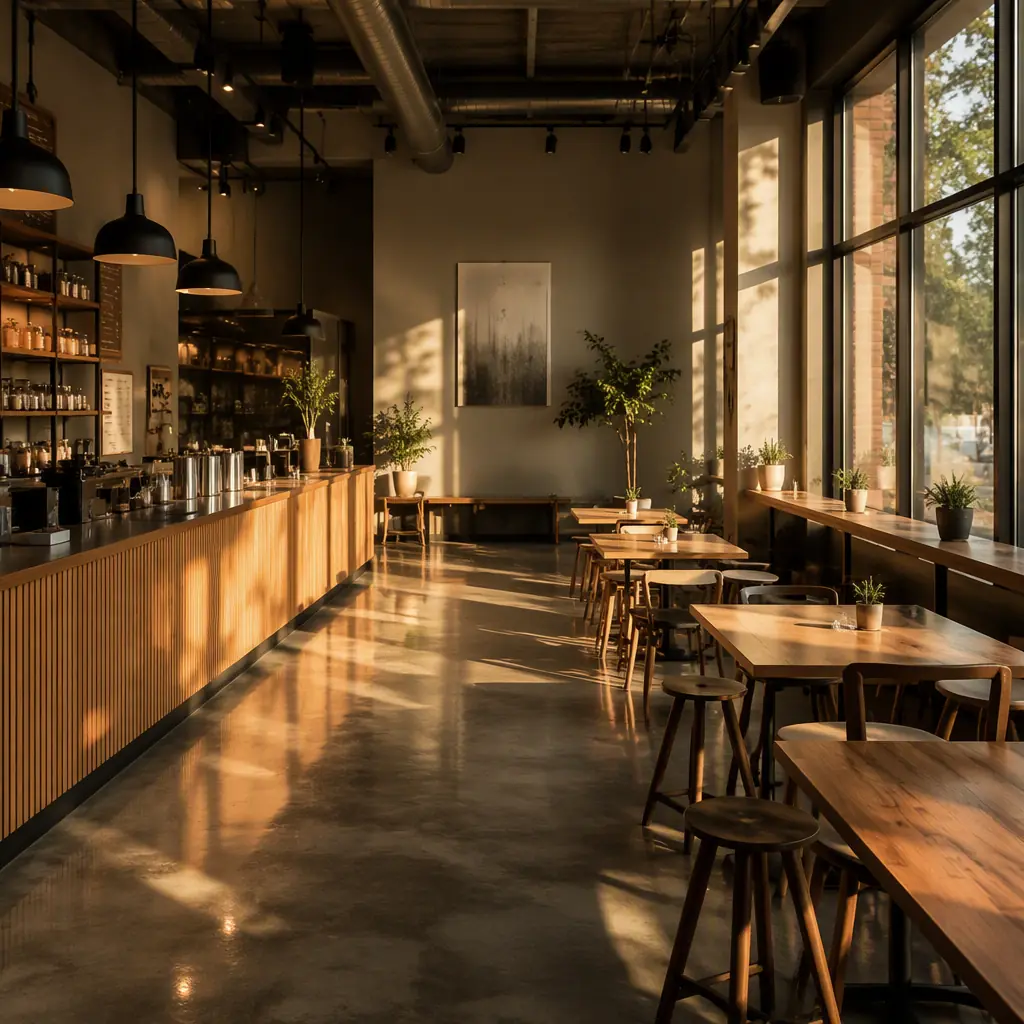
The slip-safety angle is the one that gets franchise operators' attention: a wet floor sign during service is a service interruption, and the M79's schedule is set so floor passes happen in the documented lull windows — the same "clean the high-traffic zone when the traffic isn't there" logic the smart office buildings guide documents for corporate cafés and break areas, applied to a storefront where the traffic is customers rather than employees.
Chain-Wide Operations: One Dashboard, Every Store
Coffee chains are the ideal multi-site robot customer because the floor plan, the menu and the rush pattern repeat across stores. The multi-site deployment guide documents the fleet pattern: every L100 and M79 reports to one cloud dashboard, delivery routes and cleaning schedules are configured remotely by the regional operations office, and a chain running 12 stores runs the same delivery loop, the same lull-window cleaning and the same documentation trail everywhere — with the fleet management guide covering the operational layer and the staff training guide documenting how café teams build the internal expertise to run the fleet. The RaaS financing guide covers the subscription structure that fits café budgets: most operators start with one L100 on the delivery loop and one M79 on the floor, run one quarter with the documented numbers, and scale the fleet as the walking-time savings show up on the store P&L.
Deployment Table for Store Types
| Store type | Interior fleet | Delivery fleet | Monthly cost (RaaS) | Staff hours returned |
|---|---|---|---|---|
| Single store (80–150 m²) | 1 × M79 (floor passes) | 1 × L100 (counter-to-table) | $1,100–1,800 | 50–90/month |
| Urban chain (5–15 stores) | 1 × M79 per store | 1–2 × L100 per store | $7,500–14,000 | 400–800/month |
| Regional franchise network (15+ stores) | 1 × M79 per store | 2 × L100 per high-volume store | $18,000–38,000 | 1,200–2,800/month |
| Drive-thru / kiosk format | 1 × M79 (dining room + restrooms) | 1 × L100 (curbside handoff) | $1,400–2,200 | 70–120/month |
A coffee shop's economics are measured in line velocity and repeat visits, not square footage. The L100 keeps baristas behind the espresso bar through the rush, the M79 keeps the front-of-house clean and dry between rushes, and the dashboard keeps a 12-store chain running the same documented pattern everywhere — the automation fit for a margin business, and it starts with the same step every successful deployment starts with: a walk-around audit of where the walking minutes, the spill cleanup and the rush-window trips actually are.