A Gulf Coast ethylene cracker producing 1.5 million metric tons annually operates 8,450 hours per year — the remaining 310 hours are planned turnarounds. During those 8,450 hours, the facility cannot stop. A polymer spill on the extrusion-floor grating, a catalyst dust accumulation in the reactor-area corridor, a glycol leak at a pump seal — these events must be addressed while the process runs, which means sending operators into classified areas wearing Level B PPE (chemical-resistant suit, SCBA or supplied air, double-layer nitrile gloves) to perform tasks that, in any other industry, would be handled by a janitorial crew with a mop and bucket.
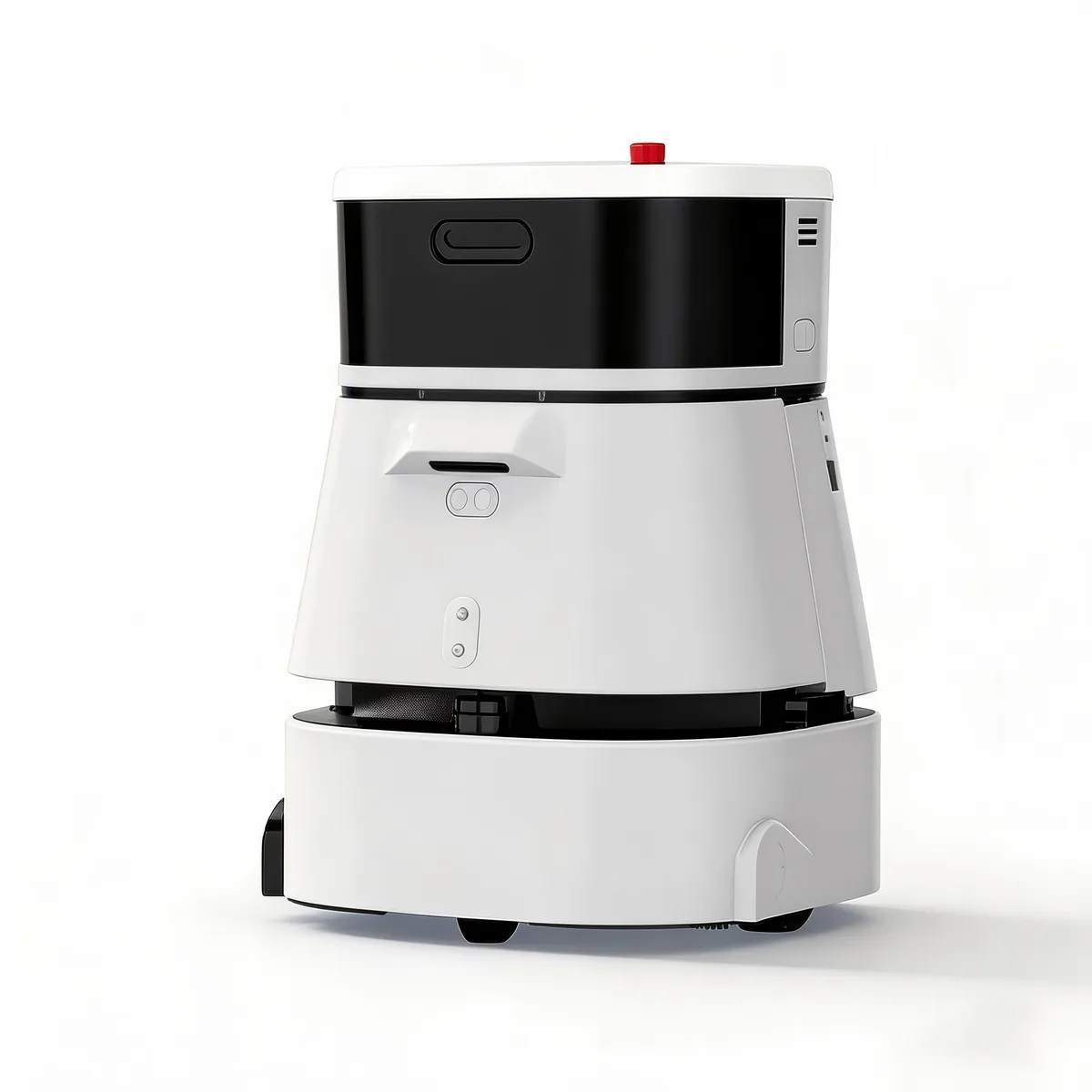
In 2026, a Texas ethylene/polyethylene complex deployed CLEINBOT CC201 explosion-proof autonomous floor scrubbers in three classified process areas and CADEBOT L100 delivery robots for sample-transport logistics between the QA lab and 12 sampling points distributed across 80 acres. The safety case was straightforward: every hour a human operator spends in a classified area performing non-process-critical tasks is an hour of cumulative exposure that the plant's OSHA 300 log and insurance underwriter would prefer to eliminate. The economic case was equally straightforward: an operator in Level B PPE costs approximately $85/hour in loaded labor (including PPE consumables, decontamination time, and the 2:1 buddy-system requirement that effectively doubles the labor cost of any classified-area entry). A robot performing the same task costs approximately $4.50/hour in lease amortization — a 94% reduction in the cost of classified-area labor.
The Classified-Area Cleaning Problem: Why "Send a Crew With Mops" Is a $1,200/Hour Decision
Process-area cleaning in petrochemical facilities is governed by a hierarchy of controls that OSHA, API, and facility insurers all recognize. The most effective control is elimination — design the process so that spills and leaks don't occur. The second most effective is engineering controls — secondary containment, drip pans, sealed pump systems. The least effective, but often the only practical option for existing facilities, is administrative controls and PPE — sending operators into the hazard zone to clean up what the process deposited.
The cost arithmetic of the administrative-control approach is punitive. A two-person cleaning crew entering a Class I Division 2 area requires: donning time (15 minutes per person for Level B), the cleaning operation itself (45-60 minutes for a polymer-granule spill covering 500 square feet of grating and decking), decontamination and doffing (20 minutes), and PPE consumables ($180-320 per entry for chemical-resistant suit, gloves, boot covers, and SCBA cylinder refill). The total: approximately 2.7 person-hours at $85/hour loaded = $230 in labor, plus $250 in PPE consumables, per cleaning event. A facility averaging 3 classified-area cleaning events per day — conservative for a polyolefins plant — spends $144,000 annually on cleaning events that produce no value beyond floor sanitation.
A CLEINBOT CC201 designed for Class I Division 2 Group C&D hazardous areas (the standard classification for ethylene, propylene, and butadiene environments) eliminates the PPE cost entirely and reduces the labor cost to zero — the robot cleans autonomously on a programmed cycle. The robot's explosion-proof certification (ATEX Zone 1 / NEC Class I Division 2) means it can operate continuously in areas where a standard floor scrubber's electric motor, battery, and control electronics would constitute an ignition source. This is the same hazardous-environment deployment logic applied in oil-and-gas and petrochemical settings globally, where autonomous equipment is replacing human entry for routine maintenance tasks that do not require operator judgment — cleaning being the most frequent and least judgment-intensive of these tasks.
The insurance dimension is equally important from a total-cost perspective. A plant's workers' compensation experience modification rate (EMR) — the multiplier applied to the facility's base premium based on claims history — is disproportionately affected by classified-area incidents because these incidents tend to be more severe when they occur. A single recordable injury from a slip-and-fall in a polymer-granule accumulation area — a common event in extrusion buildings — can increase the facility's EMR by 0.05-0.15, adding $40,000-120,000 to the annual premium for a mid-size plant. Eliminating the most common classified-area entry activities — spill cleanup and routine floor sanitation — removes the exposure that drives the majority of these incidents, following the same risk-reduction logic described in the safety standards compliance guide.

Sample Transport Logistics: The 80-Acre Version of "Walking to the Lab"
A large petrochemical complex operates like a small city distributed across 80-200 acres, with the QA/QC laboratory typically located at the facility's administrative center — as far as half a mile from the farthest process-unit sampling point. The standard operating procedure for process samples has not changed materially since the 1970s: an operator collects a sample at the unit (a 15-minute task involving purging sample lines, filling sample cylinders or bottles, and labeling), then walks or drives a utility vehicle back to the QA lab to deliver the sample (10-25 minutes round-trip depending on distance), then returns to the unit.
In a facility collecting 40-80 process samples per shift — ethylene purity at the cracker effluent, polyethylene melt index at the extruder, catalyst activity at the reactor, cooling-water pH at the tower — sample-transport walking consumes 12-28% of an operator's shift. This is time not spent on the tasks that affect production: troubleshooting a reactor temperature deviation, optimizing a distillation column reflux ratio, or inspecting a compressor for the vibration signature that precedes a bearing failure.
CADEBOT L100 redeployed as a sample-transport platform eliminates the walking. The operator collects the sample, places it in the robot's locked sample compartment (maintaining chain-of-custody with an RFID-tagged sample container that logs the transfer), and immediately returns to process monitoring while the robot autonomously navigates the facility's road network to the QA lab. The lab technician receives a notification when the sample arrives, removes it from the robot's compartment, and the robot returns to a designated staging area near the next scheduled sampling point.
The quality-control benefit — faster time-to-result — is in many cases more valuable than the labor savings. When a reactor catalyst-feed adjustment is made based on a melt-index measurement, the 20-minute sample-transport delay means the adjustment is applied to product that is already 8-12 metric tons past the sampling point at typical polyolefins throughput rates. Reducing sample-transit time from 22 minutes to 8 minutes (the robot moving at 4 mph vs. an operator walking at 3 mph with a 4-minute average wait for lab intake) means the catalyst adjustment reaches the process 14 minutes sooner — which, at 30-40 metric tons per hour, represents 7-9 metric tons of product produced within the target specification window rather than outside it. For a plant producing 400,000 metric tons of polyethylene annually at an average $1,200/metric ton, a 0.25% improvement in first-quality yield — a conservative estimate for faster feedback-loop closure — represents $1.2 million in annual margin improvement.
For organizations managing complex logistics across large industrial campuses, the fleet management systems guide provides the coordination framework for routing multiple autonomous vehicles across shared road networks, integrating with existing plant logistics systems, and managing battery-charging infrastructure across distributed docking stations.

Turnaround Cleaning: The 310 Hours When Everything Must Happen Simultaneously
Plant turnarounds — the scheduled shutdown periods when an entire unit or facility is taken offline for inspection, maintenance, and cleaning — represent the most operationally intense periods in any petrochemical facility's calendar. An ethylene cracker turnaround involves opening every major vessel (furnace convection sections, quench towers, distillation columns, reactor vessels), cleaning accumulated coke deposits, polymer fouling, and corrosion products from thousands of square feet of internal surface area, inspecting thousands of welds and pipe-wall thickness points, and completing hundreds of maintenance work orders — all within a 3-6 week window during which the facility is generating zero revenue.
The cleaning workload during turnarounds is immense and time-compressed. A single ethylene furnace decoking operation generates several tons of coke dust that must be vacuumed from furnace tubes, convection-bank surfaces, and the surrounding furnace-deck floor. A polyolefins reactor cleaning produces hundreds of pounds of polymer residue — sheets of polyethylene or polypropylene that have adhered to reactor walls over the 3-5 year operating cycle between turnarounds. This material must be physically removed, bagged, and transported to waste-handling areas while the turnaround clock is ticking.
CLEINBOT units deployed during turnarounds handle the continuous floor-cleaning demand that the turnaround workforce generates: hundreds of contractors tracking coke dust, catalyst residue, and insulation fibers from work areas into corridors, stairwells, and access platforms. The cleaning is not cosmetic — accumulated debris on walkways and stair treads becomes a slip hazard that, in the confined-space, multi-trade environment of a turnaround, can delay the entire schedule if a safety incident triggers a stand-down investigation.
The operational model for turnaround robot deployment follows the pattern established in construction-site deployments: temporary, high-intensity deployment for the duration of the project, with the robots returned to normal post-turnaround duty cycles once the facility restarts. The key difference in petrochemical turnarounds is the hazardous-area classification — the robots deployed during turnarounds must maintain their explosion-proof rating because even though the process is shut down, residual hydrocarbons may be present in vessels and piping that are being opened for inspection.
Regulatory Compliance: When Your Cleaning Log Is an OSHA Exhibit
Petrochemical facilities operate under a regulatory framework where documentation is not optional and audit trails are not theoretical. OSHA Process Safety Management (PSM) Standard 29 CFR 1910.119, EPA Risk Management Plan (RMP) Rule 40 CFR Part 68, and facility-specific insurers' loss-prevention requirements all mandate documented evidence that safety-critical housekeeping tasks are performed on schedule and to standard.
CLEINBOT units with digital logging create an auditable, tamper-proof record of every cleaning cycle: timestamp, area covered, cycle duration, cleaning-solution usage, and any interruptions (door obstructions, human overrides, low-battery returns to dock). This automated log satisfies the housekeeping documentation requirements of PSM mechanical integrity programs and insurers' loss-control surveys without the compliance burden of paper logbooks — which, in practice, are often filled out at the end of the shift from memory rather than at the time of task completion. The same compliance-via-automation principle has driven adoption in pharmaceutical manufacturing, laboratory environments, and food-processing facilities, where the shift from manual to automated documentation is driven by the same recognition that paper checklists are an unreliable proxy for actual task completion.
For organizations building the financial case for hazardous-environment automation, the ROI calculation framework provides the cost-basis model that combines direct labor savings, PPE consumable elimination, insurance-premium reduction, and the harder-to-quantify value of eliminating cumulative operator exposure to classified-area environments — a benefit that plant managers understand intuitively even when the dollar value is difficult to isolate on a P&L statement.