
Thermal Derating: What Heat Does to a Cleaning Robot's Shift
At a glance: A cleaning robot specified for two eight-hour shifts does not deliver them in a plant room at 38 °C. Heat acts on the duty cycle in three places at once, the pack, the drive system and the charger, and each one derates on a different curve. This guide gives the arithmetic for turning ambient temperature into lost productive hours, the worksheet that shows whether a hot site needs more robots or a different schedule, and the three interventions that recover most of the loss without buying hardware.
Why Heat Costs Coverage, Not Just Comfort
The temperature in a robot's working environment changes three numbers: how much energy the pack can deliver, how hard the drive system has to work to deliver it, and how fast the charger will accept energy back. None of the three is dramatic on its own. Together they can take a eight-hour shift down to six and a half hours of productive work, which is the difference between a site running two robots and a site running three.
Facility teams usually discover this in the first August, when a fleet that met its coverage target in spring starts missing zones. The instinct is to blame the robot, then the schedule, then the vendor. The measured cause is almost always ambient temperature, and the reason it is missed is that robot datasheets quote performance at 25 °C while the rooms that need cleaning most, plant rooms, service corridors, back-of-house kitchens and unventilated storage, run well above that for most of the year.
The loss is not linear and it is not symmetric. A pack at 40 °C loses capacity faster than a pack at 30 °C, the drive motors draw more current for the same work in thin hot air, and the charger cuts current at exactly the moment the schedule assumes a fast top-up. A site that models only the capacity loss will underestimate the effect by roughly half.
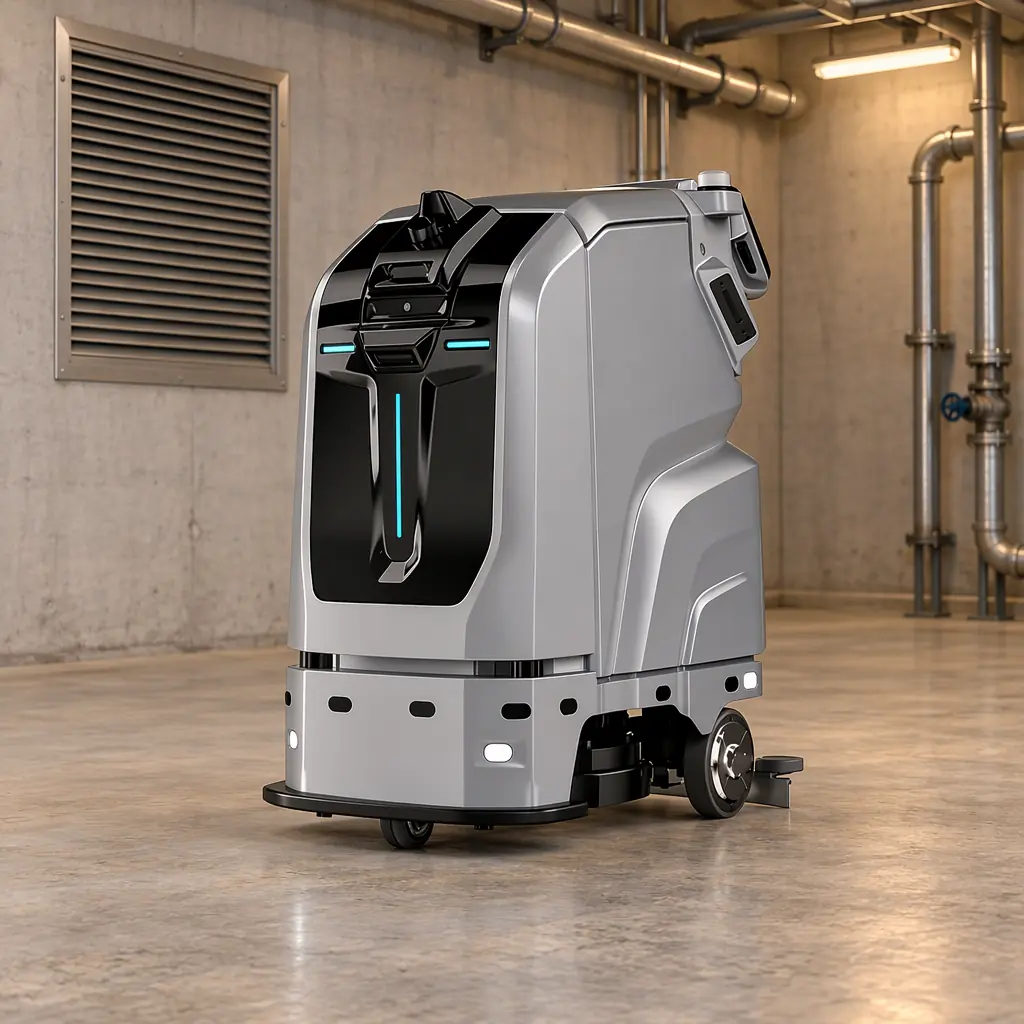
The Three Derate Curves That Apply to a Cleaning Robot
Three separate curves govern what happens as ambient temperature rises. Buyers who ask for all three in writing get a usable answer; buyers who ask for one get a marketing number.
| Component | What derates | Typical behaviour | How it shows up on site |
|---|---|---|---|
| Battery pack | Usable energy and peak discharge | Little change between 10 and 30 °C; capacity loss becomes material above roughly 35 °C, and BMS current limits tighten above 45 °C | Runtime in the afternoon is shorter than runtime in the morning on the same route |
| Drive and vacuum motors | Continuous torque and thermal headroom | Motor controllers derate on their own internal temperature, not ambient, so the effect lags the room by 20 to 40 minutes | Slower travel speed after two hours; climbing ramps in hot service corridors takes longer |
| Charger and dock | Charge current accepted | Charge acceptance falls as pack temperature rises; a hot pack may refuse a fast top-up entirely until it cools | A robot that finishes a shift and docks still is not ready for the next window |
The commissioning implication is straightforward. An acceptance test run in a 22 °C corridor in spring proves nothing about the same robot in a 36 °C plant room in July. The test that matters is a duty-cycle run at site ambient with a logged pack temperature, and it takes one robot, one shift and a data export to run.
The Derate Arithmetic: Ambient to Lost Hours
The calculation below turns a site's measured temperatures into a coverage figure. It is deliberately conservative, in that it charges the full loss to the hot hours rather than spreading it across the day.
- Split the shift into temperature bands. Log the room temperature at the robot's working height, not at the ceiling, for one week at fifteen-minute intervals. Group the shift into bands of five degrees.
- Apply the pack capacity derate per band. Use the pack supplier's published curve. A common shape is a one percent capacity loss per degree above 30 °C up to 45 °C, which means a four-hour hot block at 38 °C costs about eight percent of that block's usable energy.
- Apply the motor current increase. Roughly one percent extra current per three degrees above 25 °C for a scrubber holding constant brush pressure and vacuum, which reduces net runtime by a further amount in the same band. Treat the two effects as multiplicative, not additive.
- Apply the charger limit to the recovery window. If the pack returns at 45 °C and the charger only accepts half current until it cools to 35 °C, the 90-minute charge the schedule assumed becomes a 150-minute charge, and the next mission starts late.
- Convert to coverage. Take the site's required cleanable square metres per shift, divide by the degraded hourly rate, and compare to the robot-hours available once the longer charge window is subtracted.
A worked example makes the size of the effect concrete. A scrubber rated 1,800 m² per hour on a 3.5-hour usable runtime delivers 6,300 m² per charge in a mild corridor. In a plant room at 37 °C across a six-hour hot block, capacity and motor effects together cost roughly 15 percent of runtime, so the charge delivers about 5,400 m². If the room needs 5,200 m² per night, the robot that was comfortable in spring is now at 96 percent of requirement with no margin, and any additional derate or dock delay produces a missed zone.
Why Night Windows Shrink in Hot Weather
Most cleaning fleets run at night, and the assumption is that night is cooler. In buildings with heavy thermal mass, that assumption fails. A plant room that absorbed heat all day releases it between 22:00 and 03:00, and a back-of-house corridor next to a kitchen extract runs hot long after the kitchen closes. The night window is cooler than the afternoon, but it is not cool.
Two consequences follow. First, the shortest possible charge window in a night schedule is exactly the one a hot pack refuses to use, so hot sites need either a longer gap between missions or an intermediate dock that the schedule can use. Second, the hottest hour of the night is often the middle of the run, not the start, which means a schedule built around a cool start and a cool finish has no margin if the middle derates. Logging for a week answers both questions with data rather than with the facilities team's recollection.
The Duty-Cycle Worksheet
This worksheet converts the measurements into a purchasing decision. It takes about an hour with the site's temperature log and the vendor's derate curves.
| Input | Where it comes from | Worked example |
|---|---|---|
| Required cleanable area per night | Site plan, zones in scope | 5,200 m² |
| Winter rated hourly rate | Vendor benchmark, verified at commissioning | 1,800 m²/h |
| Usable runtime per charge | Field measurement, not datasheet | 3.5 h at 22 °C |
| Hot-block temperature band | One week of logged room temperature | 35 to 40 °C for 6 h of the 8 h window |
| Combined derate in that band | Pack curve and motor current | 15 percent |
| Derated runtime per charge | 3.5 h x 0.85 | 2.98 h, delivering 5,360 m² |
| Charge window in hot conditions | Charger curve at 45 °C pack temperature | 150 min instead of 90 min |
| Missions available per night | Window divided by mission plus charge | Two full missions, not three |
The worksheet usually produces one of two answers. Either the site needs a third robot for the hottest six weeks of the year, or the schedule needs to be rebuilt so that hot zones are cleaned first, when the pack is cool, and cool zones last, when it is not. The second answer is free and is the one experienced operators choose.
Three Interventions That Recover Most of the Loss
Hardware is the last resort, not the first. In most hot sites, three operational changes recover the majority of the derated hours, and all three are schedule edits rather than purchases.
- Hot-first sequencing. Send the robot into the hottest zone at the start of the window with a cool pack. The same zone costs fewer minutes at 25 °C pack temperature than at 42 °C, and the zones it serves later are the ones where a cooled pack loses least.
- Split the charge. Two shorter charges with a cool-down gap between them move more energy into the pack than one long charge at high temperature, because charge acceptance recovers as the pack cools. A 25-minute opportunity dock in the middle of the window is often worth more than a bigger charger.
- Move the ambient, not the robot. In a plant room, air movement at the robot's working height changes the effective temperature more than the measured air temperature suggests. A local extraction fan or opening the service door during the window is a facilities fix, not a robot fix, and it costs a fraction of a third unit.
When those three are exhausted and coverage is still short, the hardware options are a second charger to halve the recovery window, or a pack with a chemistry that tolerates heat better. The chemistry-to-duty-cycle mapping is covered in the battery chemistry selection guide, and the charge-acceptance behaviour that makes a hot top-up slow is worked through in the RS485 battery specification guide.
What to Ask the Vendor in Writing
Four questions separate a vendor who has measured their platform from one who has read their datasheet.
- At what ambient temperature does the drive controller begin to derate, and what is the derate at 40 °C?
- What is the pack's usable capacity at 40 °C as a percentage of the 25 °C figure, and what is the BMS current limit above 45 °C?
- What charge current is accepted at 80 percent state of charge when the pack is at 45 °C, on the dock the fleet will actually use?
- Which telemetry values does the fleet layer log, so that a hot-shift analysis can be run from the dashboard rather than from a service visit?
The fourth question matters more than it looks. A fleet that logs pack temperature, motor temperature and charge current alongside mission completion lets the operator rebuild the schedule with data, and lets the contract conversation about coverage be about the building rather than about the robot. The values a fleet layer needs are set out in the telemetry and predictive maintenance guide, and the sizing consequences of a shorter in-service day are covered in the throughput and fleet sizing guide.
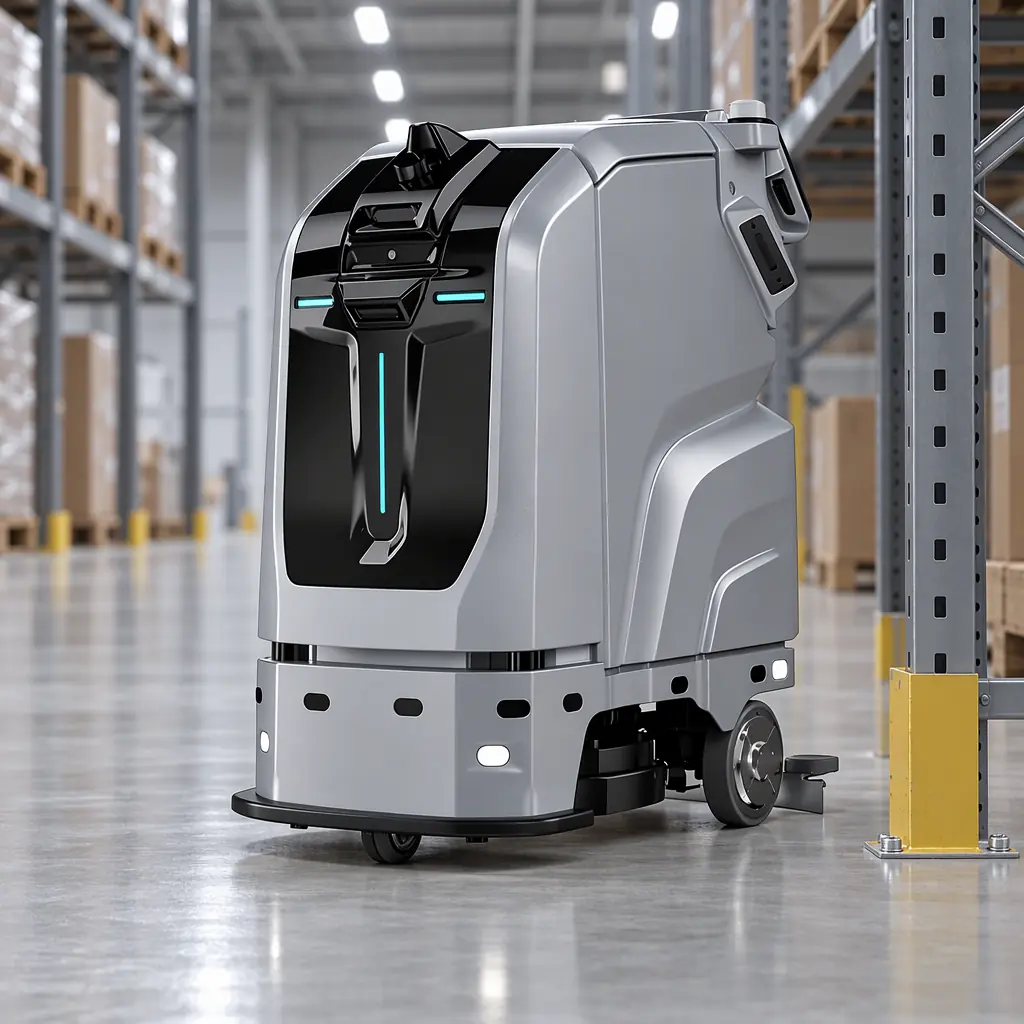
Acceptance Testing in Real Ambient Conditions
A thermal acceptance test is a single-shift test, and it belongs in the commissioning plan rather than in a later dispute. The sequence below is what turns the derate curves into a verified site number.
- Log the ambient first. One week before the test, place a logger at the robot's working height in the hottest zone and leave it.
- Run the real route, not a test loop. A route with the real dock sequence, the real charge window and the real delays between zones is the only one that produces the number the operator will live with.
- Record pack temperature at mission start and end. Two readings per mission are enough to show whether the pack is cycling hot or whether it recovers between missions.
- Compare against the worksheet, not against the datasheet. If measured runtime in the hot band is worse than the worksheet predicted, the derate curve the vendor supplied is optimistic and the missing margin belongs in the schedule.
- Write the result into the contract. The coverage number agreed at commissioning should be stated with its ambient condition, so a hot August does not become an argument about whether the robot underperformed.
The output is a one-page thermal annex to the acceptance report. It takes half a day to produce and it converts the biggest seasonal surprise in cleaning robot deployment into a number that was known before the order was placed.
How AOMAN Supports Hot-Site Deployment
AOMAN builds the C1 large-format scrubber, the C2 Pro compact cleaner, the D1 delivery platform and the G1 reception platform, and quotes the charger with the robot so charge acceptance at site temperature can be specified rather than discovered. For deployments in plant rooms, industrial kitchens and unventilated back-of-house areas, the company provides the derate curves for pack, drive and charger in a form that can be dropped into the worksheet above, and supports a real-ambient acceptance run rather than a factory-only test. Buyers planning a hot-site deployment can share a week of temperature logs and receive a coverage estimate for the specific zones in scope. Platform specifications are on the products page, and the technology page covers the thermal management and charging architecture behind the fleet.

Get a Quote
Tell us about your space and workload, we reply within 24 hours.