
Robots for Renters: Who Signs, Who Owns and Who Carries the Risk
At a glance: When the building is leased, the robot sits on a boundary that standard contracts do not describe. Who signs, who owns the asset at the end of the term, who is liable when it damages the landlord's floor, and what happens if the tenant moves out in year two — answered as a structure, not as a sales pitch.
Most robot procurement advice assumes the buyer owns the building. A large share of the demand does not. A facilities management contractor runs robots in a client's building. A serviced office operator runs them in a leased floor. A cleaning subcontractor runs them under a contract that can be terminated with 60 days' notice. All three are renters in the sense that matters here: they do not control the term of their occupancy, and the robot outlives the certainty of that occupancy. That mismatch is the thing to design around, and the awkward questions it raises are worth answering before a purchase order rather than after.
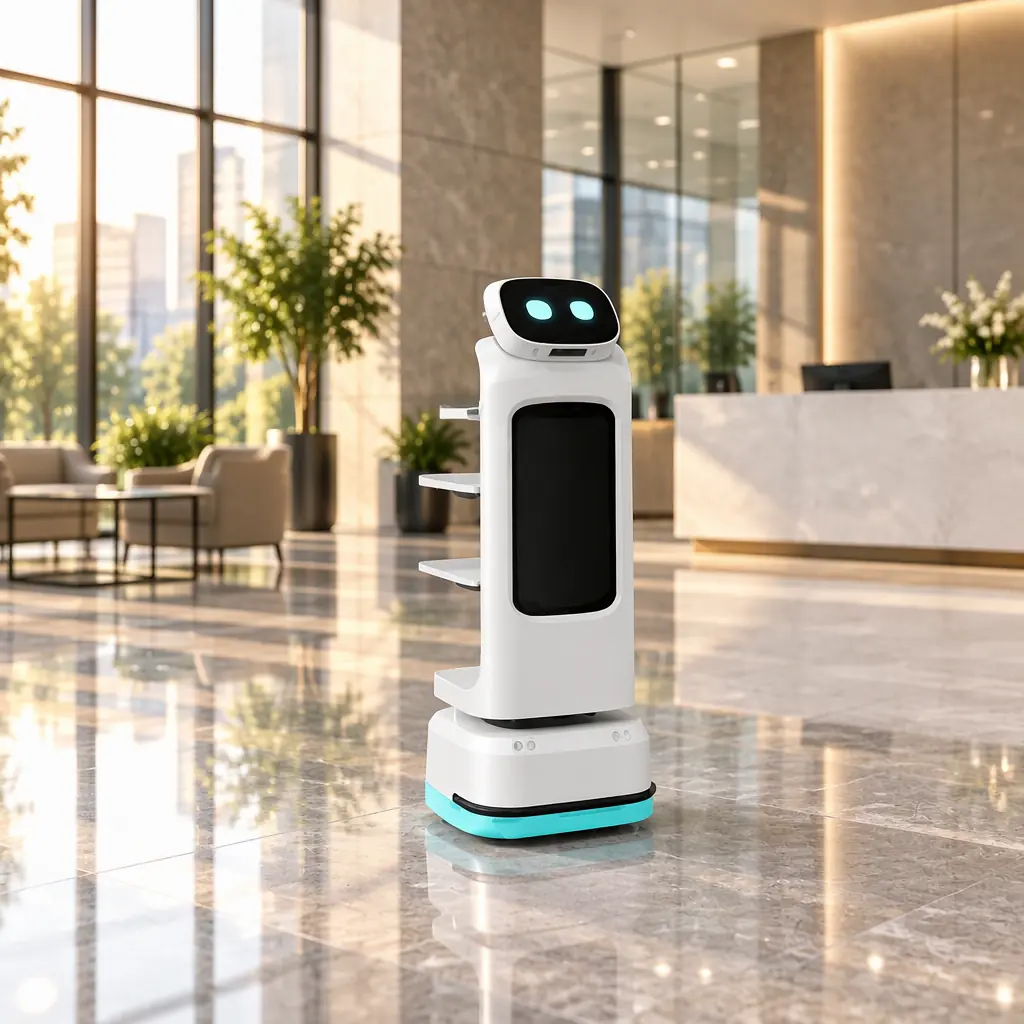
Who Actually Signs, and Why It Matters Later
The signature on the order determines who holds the obligation for the next three to five years. There are four common structures and each carries a different default risk.
The building owner signs. Cleanest case. The asset is a fixture of the building, depreciates with it, and stays when the space changes hands. The robot's residual value belongs to the same party that owns the improvements it supports.
The tenant signs, with landlord consent. Common in leased floors and serviced offices. The robot is the tenant's asset but physically installed in the landlord's building, which means the lease governs whether it can be fixed to the floor, whether it needs to be removed at the end of the term, and who repairs the floor if it is.
The facilities contractor signs. The contractor's asset, deployed in a client's building under a services contract that may be shorter than the robot's finance term. This is the structure with the largest hidden risk, and it is the most common in the cleaning sector.
Nobody signs, because it is rented. A subscription or rental arrangement where the vendor retains title. The operator carries the operational risk and the vendor carries the residual value risk. This is often the right answer for a renter, for reasons covered below.
| Structure | Who holds residual value | Main exposure | Best fit when |
|---|---|---|---|
| Owner signs | The owner, through depreciation | Commitment to a technology that may be superseded in four years | The building is owned and the term is long |
| Tenant signs with consent | The tenant | Lease end date arrives before the finance term ends | The lease has three or more years to run |
| Contractor signs | The contractor | Client contract terminable before the asset is paid off | The services contract is longer than the finance term |
| Rental or subscription | The vendor | Unit rate rises on renewal; less control over specification | Occupancy is uncertain, or the account is new |
The row to look at twice is the contractor. A five-year finance agreement supporting a services contract that the client can terminate on 60 days' notice is a five-year obligation with a 60-day revenue assurance. That is a balance-sheet question, not a robot question, and it is the single most common way a renter-structured deployment goes wrong.
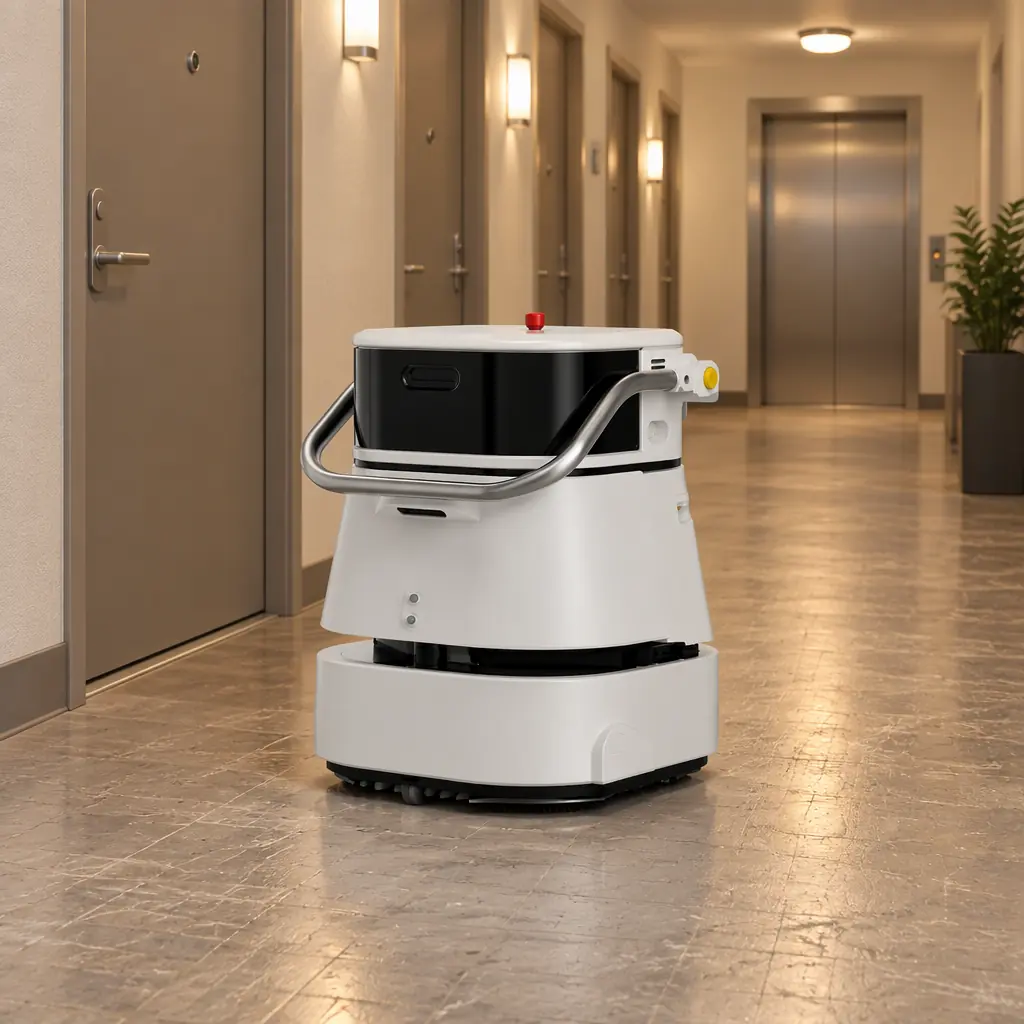
When Renting Beats Buying, in Arithmetic
The rent-or-buy argument is usually framed as a cash-flow preference. It is actually a bet on how long you will be in the building, and the arithmetic makes the bet explicit.
Break-even horizon. Take the purchase price, subtract the expected resale or residual value at the end of your occupancy, and add the cost of removing and reinstating whatever the machine altered. Divide by the monthly rental. The result is the number of months after which buying is cheaper than renting. If that number exceeds your remaining lease term, renting is the rational choice regardless of how good the machine is.
Reinstatement cost is the forgotten term. A robot that required a charging plate fixed to the landlord's floor, a dedicated circuit, and a route taught to a building that will be reconfigured on handover has an exit cost. That cost belongs in the break-even calculation and almost never is.
Specification obsolescence. A three-year-old cleaning robot is not a three-year-old mop. Perception hardware, battery chemistry and software capability all move within a single lease term. A renter who buys is committing to a capability snapshot for the whole term, while a renter who rents can change specification at renewal.
For the accounting treatment on the buying side — depreciation schedules, residual value assumptions, and how the two interact with a finance agreement — the worked ledger is in lease versus buy for service robots. The financing structures themselves are set out in RaaS and financing models. Neither covers the occupancy question, which is why this article exists.
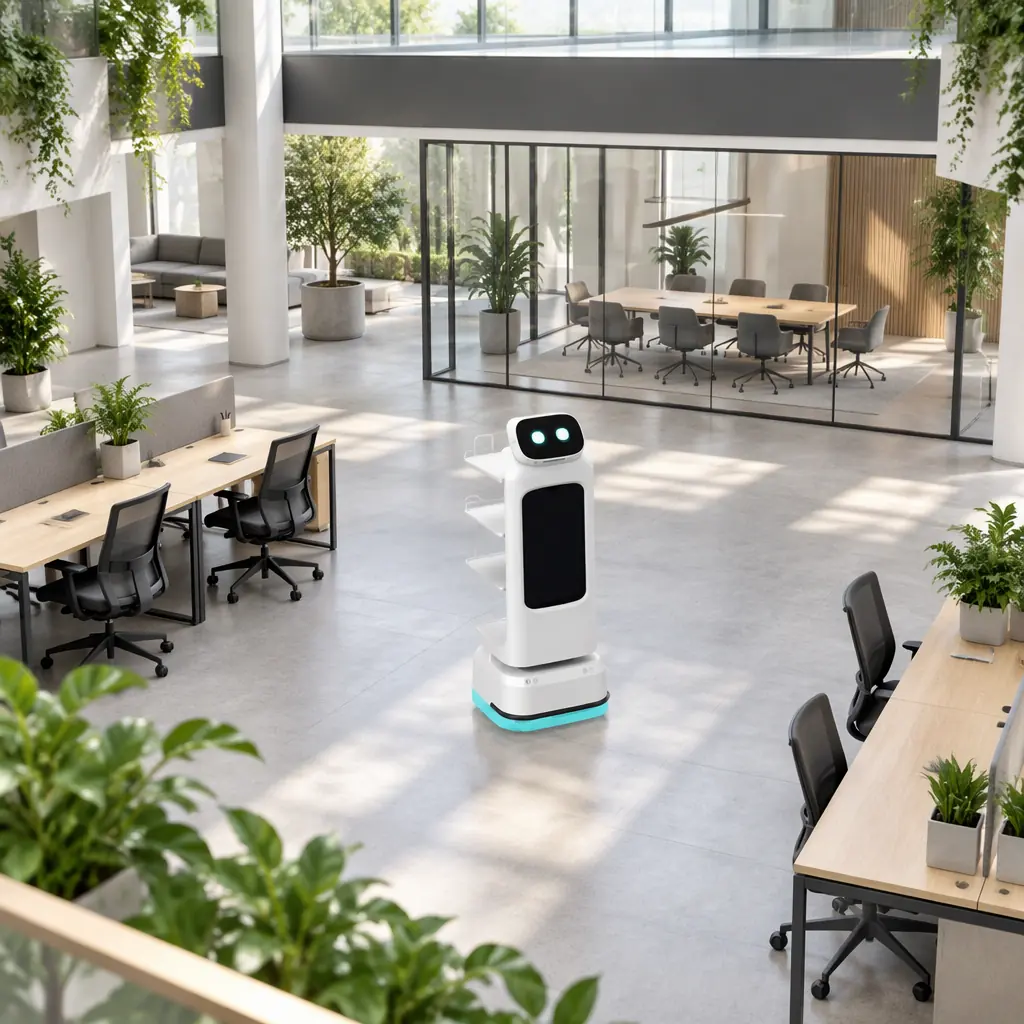
The Five Clauses a Renter Needs and Rarely Gets
Standard robot supply terms are written for an owner. A renter needs five things that a generic contract does not contain, and all five are negotiable before signature and effectively not afterwards.
- Relocation right. The right to move the machine to another site within the same portfolio without triggering a new order, a re-commissioning fee, or a change to the finance terms. A renter whose client contract moves will need this within the first two years.
- Early-termination mechanic tied to the lease. If the underlying lease or services contract ends, the robot obligation should have a defined exit: a buy-out figure, a return condition standard, or a transfer right. An obligation with no exit is a liability the finance team will price as such.
- Landlord-side damage allocation. Who repairs the floor where the plate was fixed, and who is liable for damage to the building fabric caused by normal operation. A cleaning robot that leaves a wear pattern on a polished stone floor is a landlord conversation, and the contract should say whose conversation it is.
- Removal and reinstatement scope. Stated as a named party and a scope, not left to the end of the term. The reinstatement standard should match the lease's yielding-up clause, or the tenant pays twice.
- Insurance and indemnity alignment. The robot's liability cover must not be narrower than the tenant's obligations under the lease. Where the two do not align, the gap is the tenant's. The evidence pack that a landlord or insurer will actually ask for is described in the insurance evidence pack guide.
None of these five is exotic. All five are absent from a purchase order written for a building owner, which is what a renter will be handed if they do not ask.
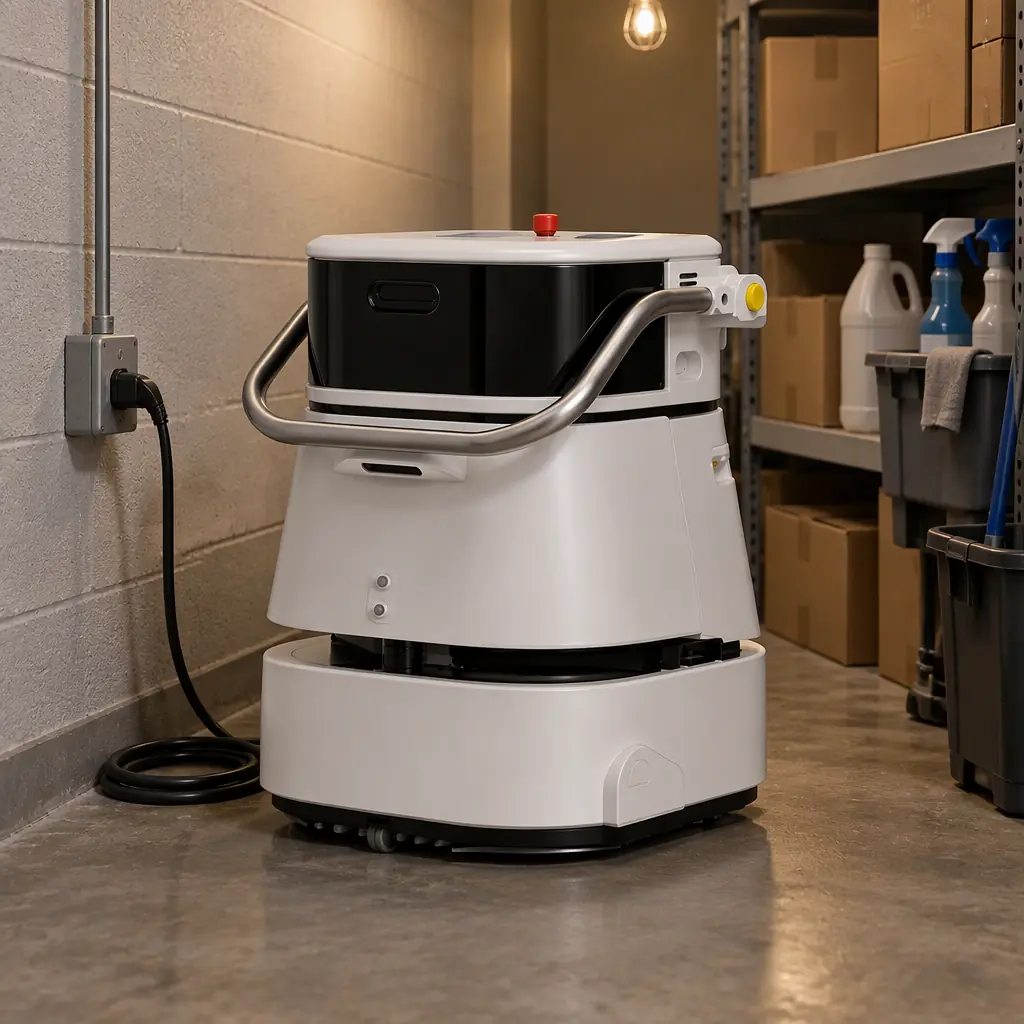
The Multi-Tenant Building: A Special Case With Its Own Arithmetic
A building with several tenants and one shared robot fleet needs a cost allocation rule before the machine arrives, not after the first invoice. Three approaches work and each suits a different building.
By floor area. Simple, defensible, and wrong when the floors differ in intensity. A ground-floor retail concourse and a fifth-floor office suite of the same area do not generate the same cleaning load.
By measured service. Allocate on actual robot-hours or square metres cleaned per tenancy, taken from the fleet logs. Defensible in a dispute because it is evidence rather than assumption, and it requires that the fleet system reports per-zone. The allocation logic for shared building services is set out in robot service charge allocation in multi-tenant buildings.
By fixed shares with a reconciliation. Agreed percentages with an annual true-up against measured service. This is usually what a managing agent will accept, because it is budgetable and still corrects over time.
The rule that matters more than the method is that it is written into the service charge schedule before the fleet is installed. A method agreed after the fact is a negotiation; a method agreed before is a clause.

What AOMAN Provides and What It Does Not
AOMAN supplies equipment specifications, per-model power and installation requirements, per-zone service reporting from the fleet system, and the documentation a landlord or insurer will ask for: unit specifications, electrical requirements, conformity documentation and maintenance records. Where a deployment is being structured around a lease term, our commercial team will provide the rental and purchase options side by side so the break-even arithmetic can be done on real numbers rather than indicative ones.
What we do not do is give legal or accounting advice, or interpret a lease. The consent question with the landlord, the reinstatement standard, and the treatment of the asset in the tenant's accounts belong to the tenant's lawyer and accountant. What we can do is make sure that whoever reads the lease has the equipment facts they need in front of them, which is usually the difference between a clause that works and one that gets signed and regretted.
The short version: work out the break-even horizon against your remaining occupancy before choosing between buying and renting, put the relocation right and the early-termination mechanic in the contract before signature, and settle the multi-tenant allocation rule before the first machine arrives.

Get a Quote
Tell us about your space and workload, we reply within 24 hours.