
Service Robot Battery Recycling and Take-Back: What the Contract Should Say Before Year Five
At a glance: Every service robot fleet is a battery collection problem with a service contract attached. The regulation now assigns the cost, the SoH arithmetic decides whether a pack is an asset or a liability, and the transport rules make a damaged pack a different kind of shipment entirely. The clause that settles all three belongs in the supply agreement, not in year five.
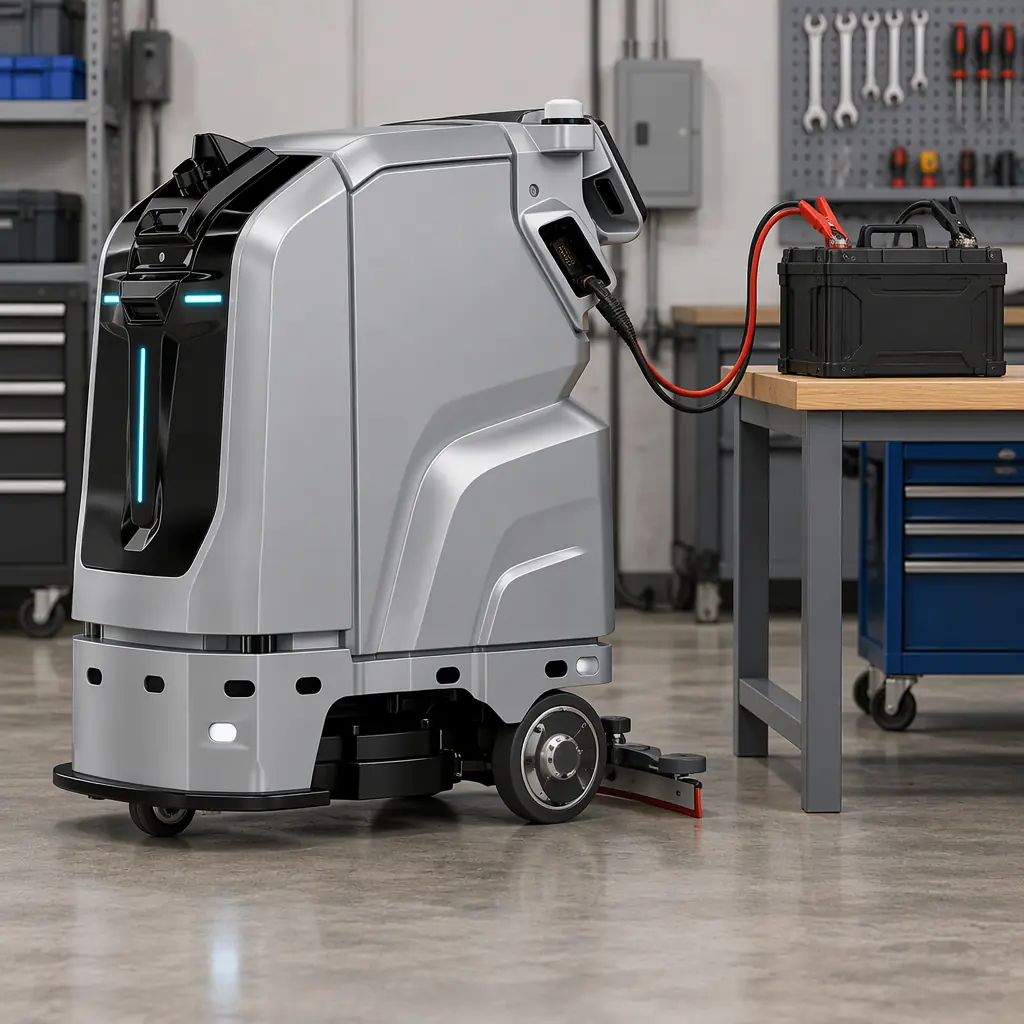
A fleet of 60 cleaning robots with 48 V, 40 Ah packs holds roughly 2.8 tonnes of lithium cells. Nobody in the procurement process signs off on 2.8 tonnes of regulated material; they sign off on a machine that cleans floors. The material becomes visible about four years later, when the first packs fall below the performance threshold and the question of who removes them, who certifies their condition, and who pays the freight turns into a negotiation with no leverage left on the buyer's side.
This article is about closing that gap early. It covers what the regulation now requires, the state-of-health arithmetic that separates a second-life sale from a scrap cost, the transport problem that catches people out, and the four clauses worth adding to a supply agreement while the vendor is still competing for the order.

The Bill Nobody Budgets For
Total cost of ownership models for service robots usually treat the pack as a replacement line item: a unit price, a cycle life, a replacement interval. That captures the purchase but not the exit. The exit has four components, and only the first is normally quoted.
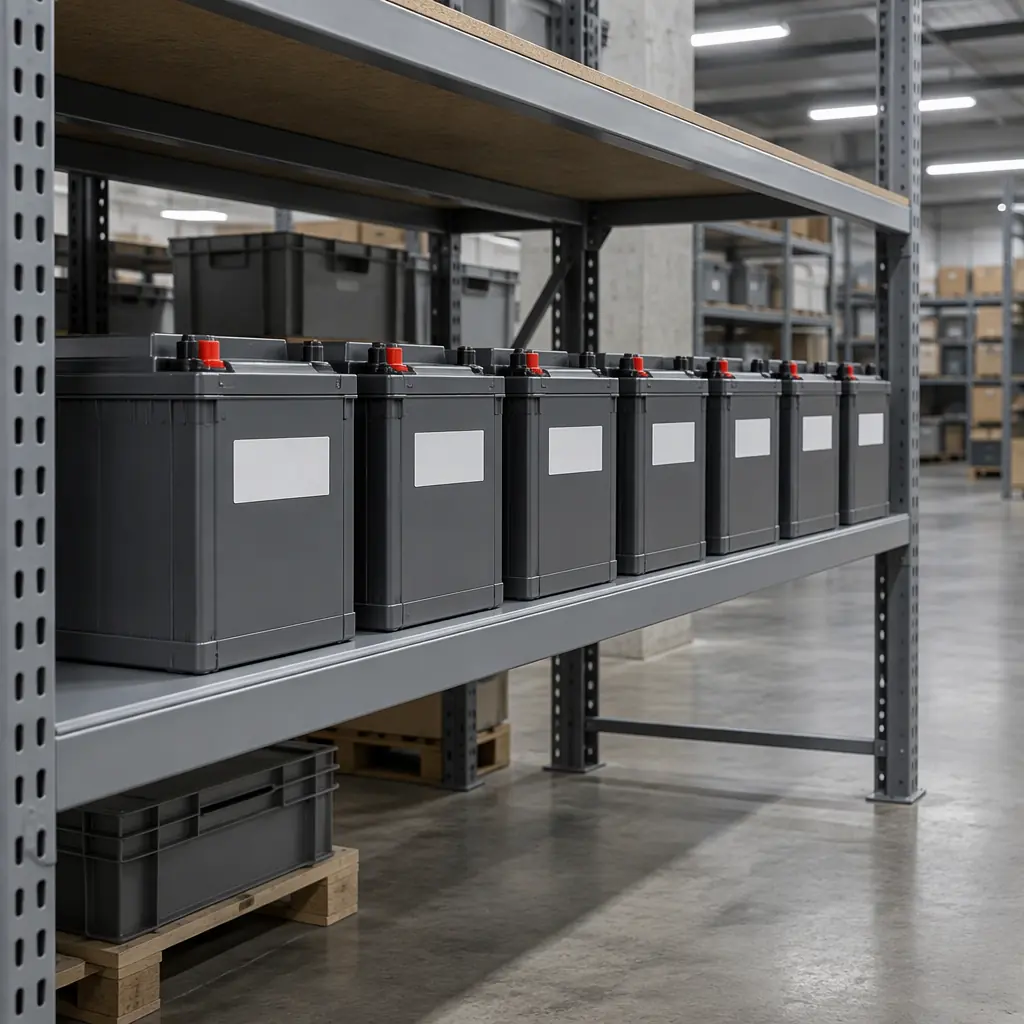
- Collection and consolidation — moving packs from 40 sites to one location. A 25 kg industrial pack is not a parcel; it is freight with dangerous goods paperwork.
- Condition assessment — a capacity test and a documented SoH figure. Without it the pack is assumed to be waste, which is the expensive assumption.
- Transport as dangerous goods — the same pack that shipped as UN38.3-tested cargo when new may require a different classification once it has been in service and certainly once it has been damaged.
- Processing or resale — recycling gate fee, or a second-life sale that offsets it.
The spread between the cheapest and most expensive path through those four items, on a 60-unit fleet, is routinely the price of two or three robots. It is worth a clause.
What the Regulation Actually Requires
The EU Battery Regulation (2023/1542) replaced the older directive and applies to industrial batteries above 2 kWh, which covers essentially every service robot pack. Its obligations phase in over several years, and the phase-in dates matter because a fleet bought in 2026 will still be in service when the later ones bite.
| Obligation | Applies from | Who carries it |
|---|---|---|
| CE marking and conformity assessment for industrial batteries | Already in force | Manufacturer placing the battery on the market |
| Extended producer responsibility registration and collection financing | Already in force (staged by member state) | Producer — not the fleet operator |
| Carbon footprint declaration | Phased from 2025–2026 by battery class | Manufacturer |
| Recycled content documentation (cobalt, lead, lithium, nickel) | Phased from 2028–2031 | Manufacturer |
| Battery passport with QR access to core data | From February 2027 | Manufacturer; data must remain accessible |
| Collection and take-back targets for portable and LMT batteries | From end-2028 onward | Producer, via EPR scheme |
| Due diligence on raw material supply chains | From August 2025 (large operators) | Economic operator placing on market |
Read the third column carefully, because it contains the negotiation. In most cases the producer, meaning the party that placed the battery on the EU market, carries the collection and recycling obligation. When a fleet operator imports robots directly from a non-EU manufacturer, the operator becomes the producer for that transaction. That single sentence turns an importer into a party with EPR registration duties, collection obligations and reporting, and it is the point at which the difference between buying through a distributor and importing directly stops being a pricing question.
The battery passport is the second practical consequence. From February 2027, industrial batteries need a QR-linked data record covering composition, carbon footprint, recycled content and state of health history. A fleet operator who has never recorded per-pack telemetry has nothing to contribute to that record and no way to demonstrate a pack's remaining value at resale. The telemetry obligations worth writing into a data contract are covered in robot fleet battery telemetry and the data contract.
Second Life or Recycle: The SoH Arithmetic
The industry rule of thumb is that a pack is no longer suitable for traction duty below 80 % of its original capacity. That number is a starting point and it is not the decision rule, because capacity fade and power fade are different problems with different second-life uses.
Capacity fade is lost energy, measured in a full discharge test at a defined rate and temperature. It determines runtime, and therefore whether a cleaning robot can finish a shift.
Power fade is lost ability to deliver current, measured as internal resistance rise. A pack at 82 % capacity with doubled internal resistance will fail on a ramp or under a brush load even though it passes a capacity check. For a service robot this is often the binding constraint, not capacity.
The economics then depend on who wants the pack and what they will pay for it:
| SoH band | Disposition | Approximate value logic |
|---|---|---|
| Above 80 %, resistance < 1.3× new | Redeploy within the fleet as a spare or light-duty pack | Worth more than a new pack minus depreciation; no transaction cost |
| 70–80 %, resistance 1.3–1.8× | Second-life buyer (stationary storage, buffer) | Priced per kWh at a fraction of new; transport cost is the dominant term |
| 50–70 %, resistance > 1.8× | Recycle | Scrap value by mass; gate fee may exceed metal credit |
| Below 50 % or any fault history | Recycle as hazardous | Negative value: you pay gate fee plus DG freight |
The break-even is almost always freight, not metal price. A 25 kg LFP pack carries perhaps 2–3 kg of recoverable lithium carbonate equivalent and several kg of steel and copper; at current scrap values the metal credit is a modest fraction of a new pack's price and is easily consumed by the cost of moving one unit 600 km as dangerous goods. This is why consolidation matters: twenty packs moved together per kilogram cost a fraction of twenty packs moved individually, and why a take-back clause that collects from every site is worth more than a slightly better scrap price.
Transporting a Dead Pack Is a Dangerous Goods Problem
New packs ship under UN38.3 test summaries and are, in the ordinary case, a well-trodden path. Worn packs are a different matter, and damaged packs are a third thing again.
State of charge limits. Air transport of lithium cells is limited to 30 % state of charge for cells and batteries shipped alone. A pack pulled from a robot at end of shift is likely near 100 %, and must be discharged before any air freight — which in practice means the collection plan has to include a discharge step, not just a collection step.
Classification shift. A pack that has been in service and shows no damage is usually still UN3480 (lithium ion batteries, standalone) or UN3481 (contained in or packed with equipment), class 9. A pack that is damaged, defective or has a thermal event history becomes UN3480 with a “damaged or defective” designation, which restricts the modes it can travel by, requires special packaging, and in many cases must travel by ground only. Getting this wrong is a regulatory offence with a personal liability dimension for whoever signed the paperwork.
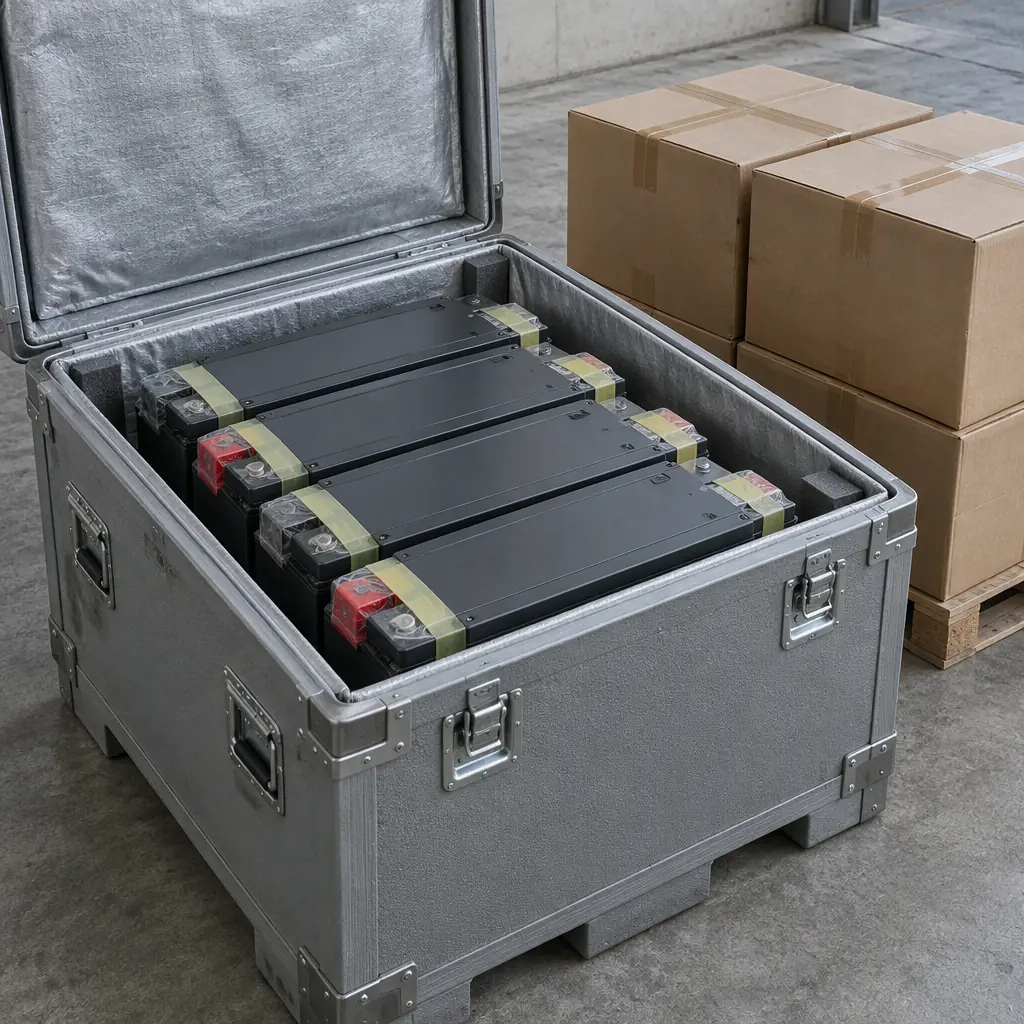
Packaging. The practical requirement is a pack that cannot short-circuit: terminals protected, unit inside a non-conductive inner packaging, and for damaged units a fire-resistant outer container with absorbent and thermal barrier material. Shipping a pack in a cardboard box with the terminals taped is a common shortcut and an indefensible one.
If the fleet has any site outside the country of processing, the transport question dominates the whole calculation. The guide to battery certification and transport requirements sets out the paperwork trail that has to survive an audit.
Four Clauses to Add to the Supply Agreement
These are the clauses that convert the above from a year-five surprise into a year-one line item. None of them requires a legal team to draft, and all of them are easier to obtain while the vendor is still bidding.
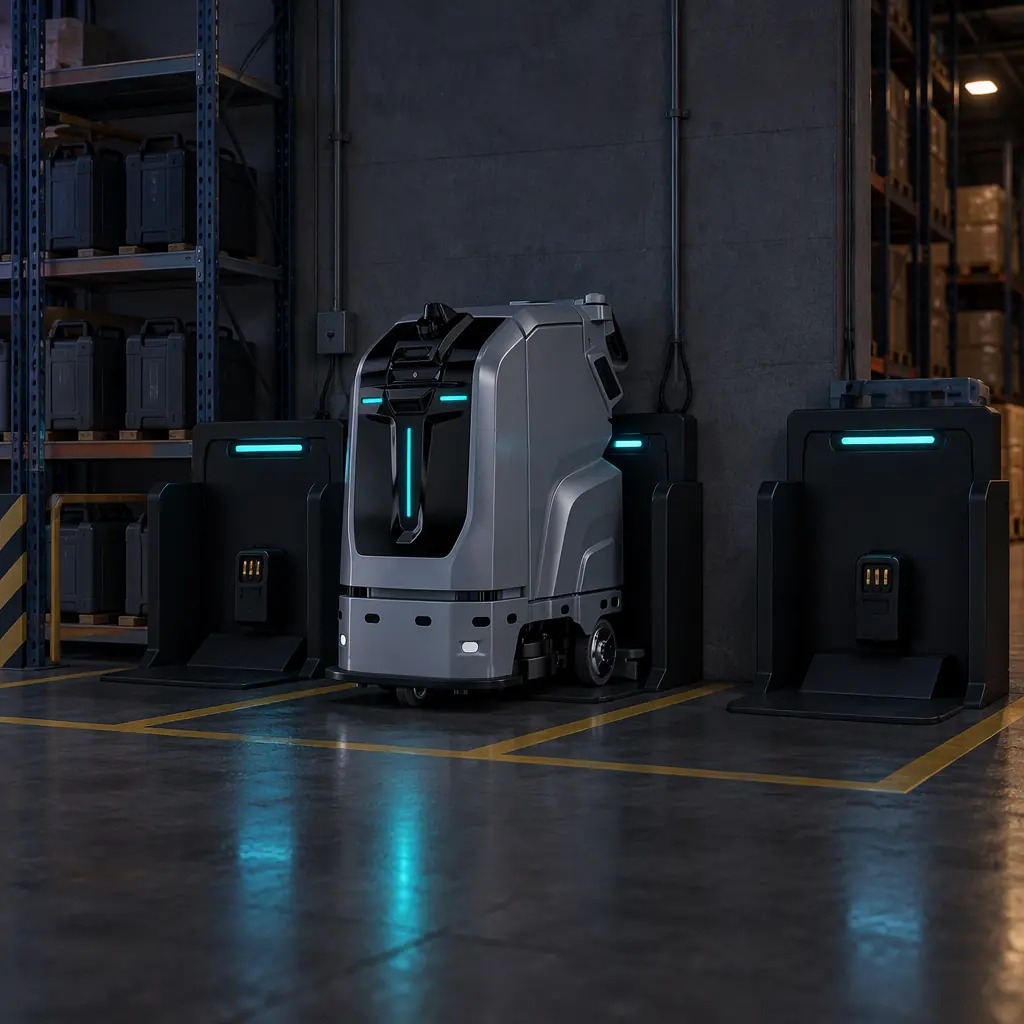
1. A take-back obligation with an allocated cost. The vendor takes the pack back at end of life, at a stated price per pack, with collection from the operating site. Specify who pays freight, who arranges the dangerous goods documentation, and what happens if the pack is damaged: the answer should distinguish an intact pack from a damaged one, because they are different shipments.
2. A state-of-health report at handover, with a defined test. The pack does not leave the site without an SoH figure produced by an agreed method — full discharge at a stated C-rate and temperature, plus an internal resistance measurement. Without a defined method, “SoH” becomes an argument between two spreadsheets. The same measurement is what a second-life buyer will ask for, so it serves both exits.
3. Passport data ownership and availability. The operator owns the per-pack telemetry history generated during service, and the vendor must supply the identifying data needed to populate the passport. This is a data clause that behaves like a spare-parts clause: it has no value until the day it has all of the value.
4. Spare pack availability after the model is discontinued. The mirror image of take-back. A fleet in year six with a discontinued robot model needs packs more urgently than it needs recycling. Require a stated post-discontinuation support period and a compatible replacement specification, or accept that the fleet's end of life is set by pack availability rather than by the machines.
What a Recycling Partner Should Prove
When the processing route is chosen, the partner is doing regulated work on your behalf and the operator retains a reputational exposure that outlasts the invoice. Four documents are worth asking for before the first collection.
Permit and scope. A waste management permit that covers lithium-ion industrial batteries specifically, not batteries generally. Storage and treatment are separate permissions and a partner often holds one and not the other.
Mass balance reporting. For each consignment, the input mass, the recovered fractions and the residues going to landfill or energy recovery. This is the document that answers a customer asking what happened to the packs, and it is the one most partners do not volunteer.
Recycling efficiency against the regulatory targets. The regulation sets material-specific recovery targets that rise over time; a partner should be able to state current efficiency by material rather than a single headline percentage.
Downstream documentation. Where the recovered material goes, and confirmation that the downstream operator is authorised. A chain-of-custody document that stops at the first processor is not a chain.
Reading the Numbers Back Into the Business Case
The reason this belongs in the purchase business case rather than the disposal file is that the exit changes the entry economics. A pack with a documented take-back route at a known price per unit has a predictable terminal value, which lowers the effective cost per cycle. A pack with no route has an unpriced liability, and an unpriced liability is either ignored, which is a future variance, or over-provisioned, which is a worse business case than the competitor's.
Three numbers turn the exit into something a finance team can model: the take-back price per pack, the SoH that the vendor will accept without penalty, and the collection frequency. With those three, the terminal cost per pack is a multiplication. Without them, the whole line is a placeholder that gets revised upward in year four, usually at the same time as a pack shortage.
The honest summary is that service robot fleets are easier to open than to close. Buying 60 machines is a procurement exercise with competitive tension. Closing the same fleet is a logistics exercise with a single supplier who knows the buyer has no alternative. The clauses above move the second conversation into the first, which is the only place where it can be won cheaply. For the cost side of the same ledger across the fleet's life, see cleaning robot total cost of ownership and battery warranty and cycle life claims.

Get a Quote
Tell us about your space and workload, we reply within 24 hours.