
Industrial AMR Selection: A Spec-Sheet Planner for Payload, Aisle and Fleet
At a glance: Most industrial AMR projects that fail do not fail in the software. They fail on three numbers that were negotiated before anyone measured the building: how much the robot can actually lift, how much aisle it actually needs to turn, and how many units actually cover the shift. Every one of those numbers is written as a single figure on a product page and behaves as a range in a real warehouse. This planner takes the three apart, shows the arithmetic behind each, and ends with the spec-sheet lines that turn a vendor promise into a testable requirement.
Three Numbers That Decide the Project
Warehouse automation budgets are lost in the gap between a datasheet headline and a measured building. A lift AMR is quoted at a rated payload, an aisle requirement and a runtime. Each of those is a laboratory figure taken under conditions the loading dock does not reproduce. Before comparing models, fix what the three numbers mean on your floor.
| Headline figure | What it is measured at | What changes it on site | Planning rule |
|---|---|---|---|
| Rated payload | Maximum mass lifted on a level floor at the lift mechanism's rated stroke | Shelf mass itself, off-centre loading, floor gradient, battery state of charge, tyre condition | Size the payload requirement from loaded shelf mass, then add margin — the shelf is not part of the payload rating |
| Minimum aisle | Turning envelope of the chassis at a stated speed on a flat, unobstructed surface | Racking uprights, floor joints, pallet overhang, pedestrian clearance, the load on the forks | Measure the narrowest real gate on the route, not the average aisle |
| Runtime | Continuous operation at nominal speed on a new battery | Stops per hour, lift cycles, ramps, cold stores, charging window | Convert runtime into throughput per shift using your task mix, then add charge-dock idle time |
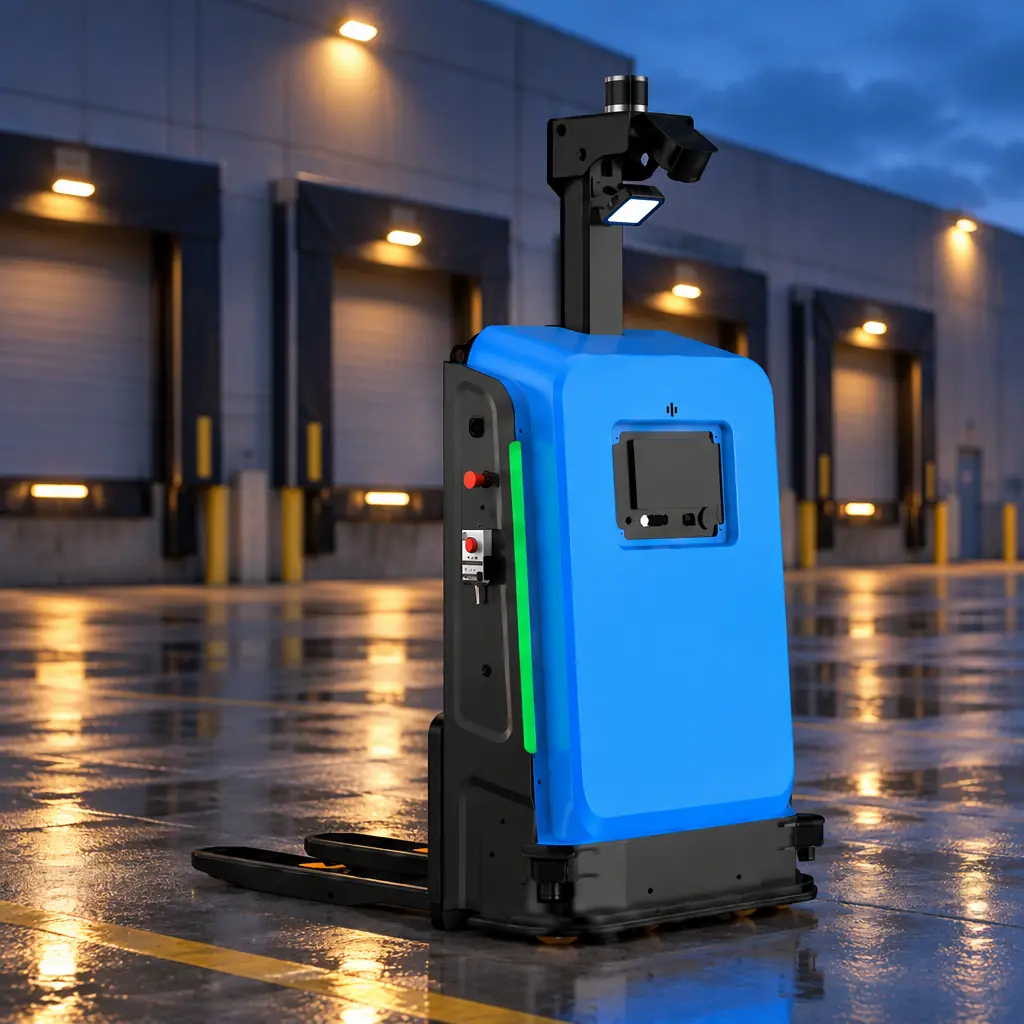
The AOMAN fleet illustrates the spread. The S300E compact lift AMR is rated 300 kg with a 50 mm lift and a 900 × 600 mm footprint; the L600 heavy-load AMR is rated 600 kg with the same 50 mm lift but a shelf that is 920 × 860 mm; the FT2000 pallet truck lifts 2,000 kg to 130 mm on forks. Three different machines, three different aisle realities. The selection question is never "which is biggest" — it is which envelope the building can accept.
Payload: Rated Is Not Lifted
The rated payload on a lift AMR is the mass the lift mechanism raises, measured on a level floor, with the load centred, at nominal battery voltage. Four things erode it once the machine is working.
The shelf is a payload item. On a lift-and-carry AMR the robot does not lift a tote; it lifts the shelf pod with the tote on it. A 920 × 860 mm steel shelf pod with castors typically weighs a substantial fraction of the goods it carries. If the model is rated 600 kg and the shelf weighs 80 kg, the goods ceiling is 520 kg before any derating. Vendors who quote "600 kg" and sell you a shelf separately have not told you the effective payload.
The lift is hydraulic or leadscrew, and both lose margin. A 50 mm lift at 5 mm/s is a slow, high-force operation. Stack three shelf levels and the top level is lifted with more of the mechanism's stroke consumed. Ask for the rated payload at maximum stroke, not at mid-travel.
Off-centre loading reaches the castors first. A shelf loaded to one end shifts the centre of gravity off the drive wheel line. The robot will still lift it; it will not track straight, and the safety scanner will see an increasing heading error until the run is aborted. If the pick face of the racking loads to one side, plan on a 20 to 30 percent payload reduction and check with a test load before signing.
Floor gradient and battery state compound. A 2 percent floor fall across a 60 m aisle is invisible to the eye and measurable to the drivetrain. As the pack discharges, available torque falls, so the same ramp that was comfortable at 100 percent state of charge becomes marginal at 25 percent. Do not plan the payload ceiling on a fully charged pack.
Aisle Width: Where the Number Actually Comes From
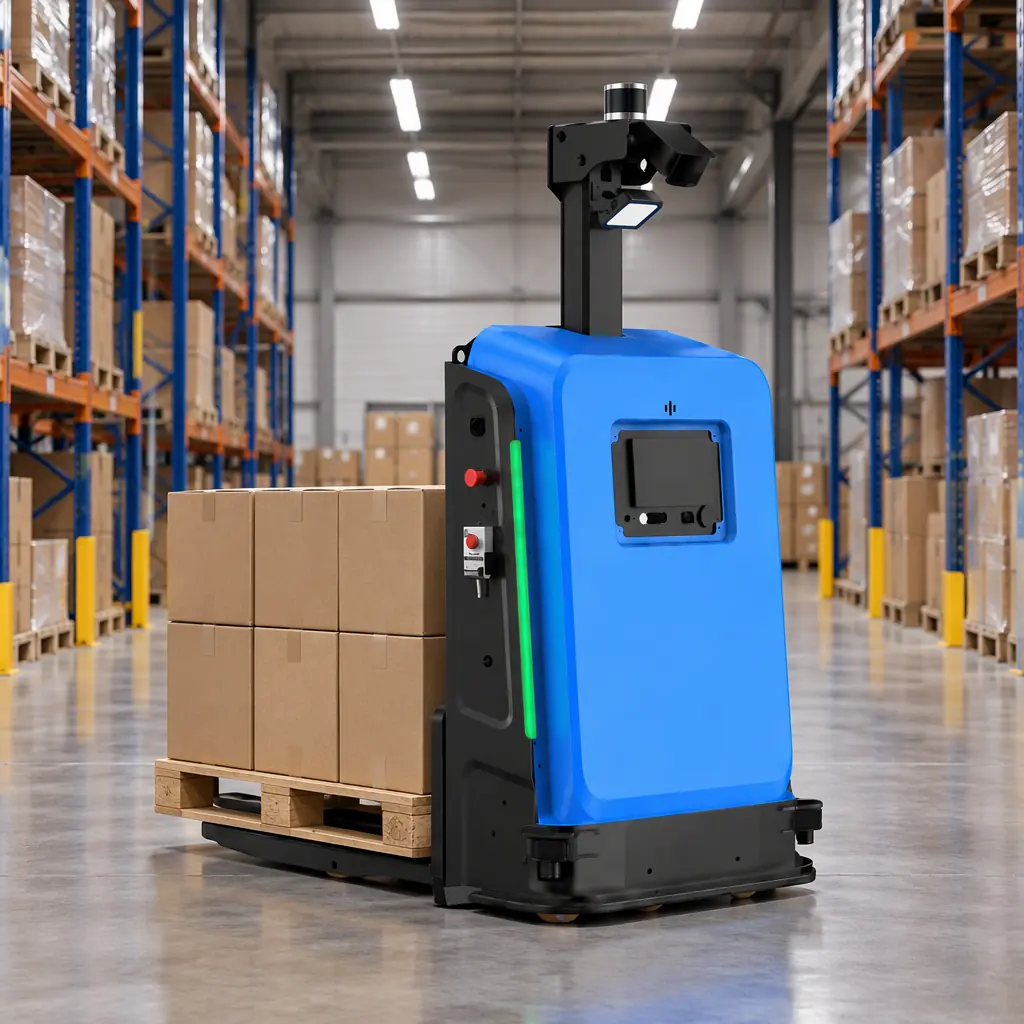
Aisle requirement is quoted as a single millimetre value, usually described as minimum clearance. That figure is the chassis turning envelope, not the aisle. Three separate measurements decide whether the robot fits.
| Measurement | Where it comes from | AOMAN reference figure |
|---|---|---|
| Chassis turning envelope | Pivot geometry of the drive wheels at the rated speed | FT2000: 1,223 mm turning radius; right-angle aisle 2,100 mm for a 1,200 × 1,000 mm pallet |
| Load overhang | Pallet or shelf width beyond the chassis footprint | A 1,200 mm pallet on a 1,005 mm wide chassis adds 98 mm per side at the fork tips |
| Pedestrian and rack protection | Business safety policy plus racking upright deflection allowance | Typically 600 to 900 mm on a shared pedestrian route; up to 1,000 mm where racking is unprotected |
Add the three and the answer is frequently double the quoted figure. A pallet truck with a 2,100 mm right-angle aisle becomes a 3,100 mm aisle the moment people walk down it and the racking has no end guards. This is why the most common finding in a first AMR survey is that the aisle the vendor was told about is not the aisle that exists.
The practical method is to walk the route with a tape and record the minimum of each gate: the door frame, the gap between two racking uprights, the space past a fire cabinet, the corner where a pallet is stored proud of the line. The minimum is the constraint. Everything else is optional comfort.
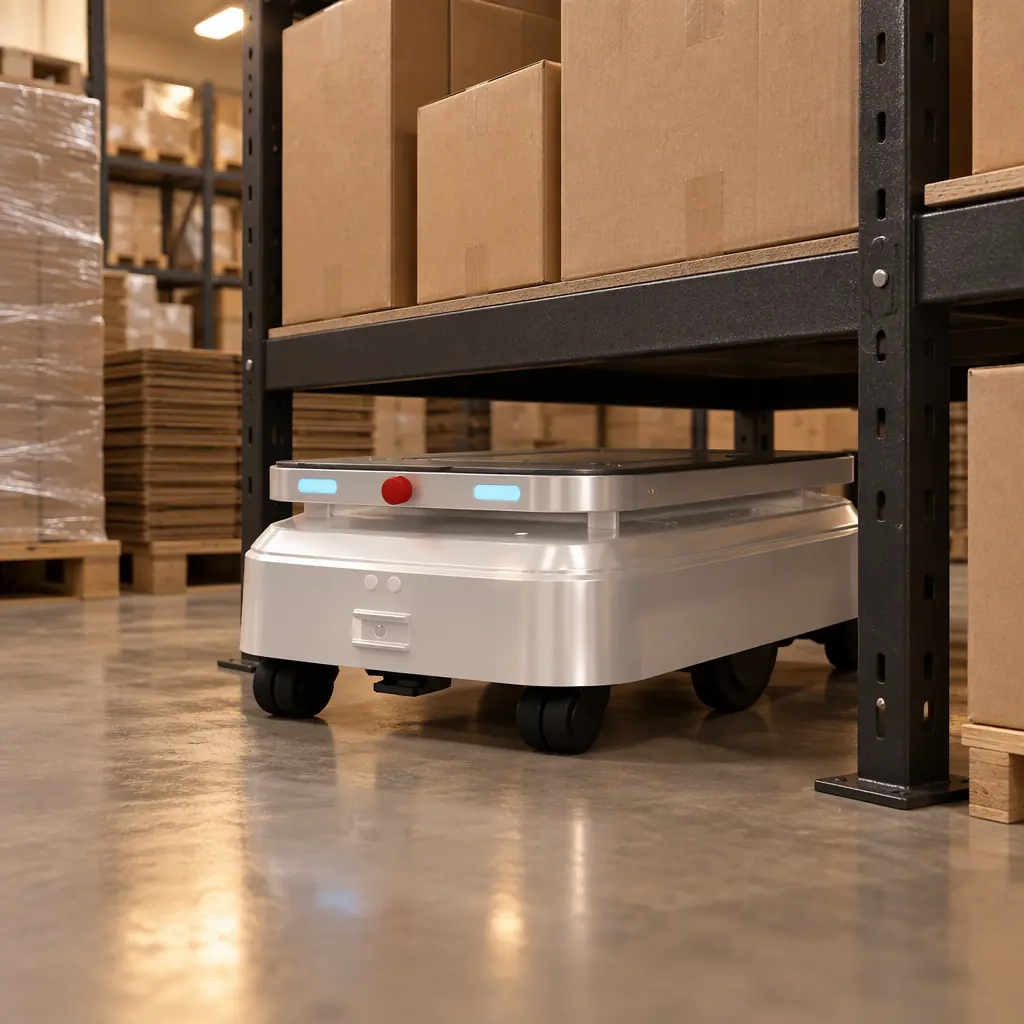
Compact AMRs change the arithmetic in the other direction. The S300E sits 310 mm high and slips beneath a standard 900 × 790 × 363 mm shelf pod; its value is that it turns inside a stockroom that a pallet truck cannot enter at all. Where the building's gates are tighter than 2,000 mm, the correct answer is usually a smaller class of machine and more of them, not a larger machine and a racking reconfiguration.
Fleet Arithmetic: How Many Units, Really
Fleet sizing starts from a task list, not from a coverage number. The useful shape of the calculation is tasks per shift divided by tasks per unit run, with an availability factor applied to the denominator.
| Input | How to get it | Worked example |
|---|---|---|
| Tasks per shift | Count of moves in the WMS for a representative 8-hour shift | 240 shelf moves per shift |
| Task cycle time | One measured route end to end, including lift and settle, plus the load and unload wait | 7.5 minutes door to door |
| Tasks per unit per shift | Available operating minutes divided by cycle time | 420 minutes ÷ 7.5 = 56 tasks |
| Availability factor | Charging windows, planned maintenance, map changes, blocked routes | 0.85 working factor |
| Effective tasks per unit | Tasks per unit × availability factor | 56 × 0.85 = 47.6 |
| Units required | Tasks per shift divided by effective tasks per unit | 240 ÷ 47.6 = 5.04, so 6 with one unit of slack |
Two corrections turn an optimistic number into a defensible one. First, cycle time is not travel time: the dwell while a picker loads a shelf is often longer than the drive, and it is invisible in a runtime figure. Second, the availability factor has to absorb the charging pattern. An L600 rated for 8 hours of runtime with a dock allowing 7×24 operation is not the same as one worked to empty and then charged, because the second pattern removes a unit from the fleet for the charge window.

Where throughput is driven by dock turns rather than internal moves, size the handoff points before sizing the fleet; a fleet that queues at one lift or one dock door behaves like a smaller fleet. The coverage arithmetic for cleaning and inspection platforms follows a different route — see the throughput planning method for that case.
WMS and Route Integration: The Spec Lines That Matter
Integration scope is where AMR projects acquire unplanned cost. Route planning for a lift AMR lives inside the fleet manager; the WMS decides which shelf goes where. The boundary between them is a contract, and it should be written down as one.
| Interface | What must be specified | Failure mode when it is vague |
|---|---|---|
| Task dispatch | API verb, payload schema, acknowledgement and retry semantics, timeout | Duplicate moves when a command times out but eventually executes |
| Location model | Whether the AMR map or the WMS bin model is authoritative, and who resolves conflicts | Shelf delivered to a bay the WMS believes is empty |
| Blocked route handling | Who is notified, how long the robot waits, what it does after the wait | Fleet park-and-wait at a spill, throughput collapse without an alarm |
| Exception ownership | Named party responsible for a shelf left in transit at shift end | Inventory discrepancy blamed on the supplier |
Note the third row. The network layer is a prerequisite, not a detail: minimum signal strength on every point of every route, handover behaviour between access points, and what happens in a dead zone. Our connectivity checklist sets out the survey that should precede any fleet commitment.
The RFQ Spec Lines to Insist On
Turn the three numbers into testable requirements. Each line below can be accepted or failed at a factory acceptance test, which is the point: a requirement that cannot be failed is not a requirement.
| Spec line | Requirement wording | Test |
|---|---|---|
| Payload, loaded shelf | Rated goods payload with the specified shelf pod fitted, at maximum lift stroke | Weigh a representative loaded shelf and run a full route |
| Payload, off-centre | Stated heading deviation at 60 percent load biased to one end of the shelf | Load to one end, run the longest aisle, record aborts |
| Aisle, loaded | Minimum aisle to complete a right-angle turn with the specified pallet or shelf, at the stated speed | Tape an aisle at the quoted figure and attempt the turn |
| Aisle, shared | Minimum aisle with a pedestrian passing on one side | Simulated pass with the site safety officer present |
| Throughput | Tasks per hour sustained across a 2-hour run with a stated load mix | Count completed tasks, not distance driven |
| Availability | Hours available per 24 hours with the specified charging arrangement | Run the charge pattern for 48 hours, log dock time |
| Battery and swap | Field replacement time, tool requirement, pack transport certification | Swap a pack in front of the buyer with the tools shipped |
| Upgrade path | Notice period and price basis for added cameras, sensors or a second shelf height | Written schedule agreed before order |
The battery line earns its place. A pack that needs a factory service appointment is a fleet availability event; one that swaps in under a minute with no tools is an operator task. The difference shows up in the availability factor, not the datasheet.
Where the Fleet Spends Its Money After Year One
The purchase decision is the small number. The operating cost of an industrial AMR fleet is dominated by four items, and only one of them appears in a rental quote.
| Cost line | Driver | How to bound it before signing |
|---|---|---|
| Floor and route upkeep | Joint repairs, tape and marker refresh, racking alignment after impacts | Specify the floor flatness tolerance the navigation assumes, and who pays when it drifts |
| Consumables | Shelf castors, bumpers, sensor windows, drive wheel tread | Ask for the replacement interval in operating hours and the part price list |
| Map maintenance | Re-mapping after every layout change, and who is allowed to do it | Contract the re-map rate and the operator training that permits self-service |
| Integration change | WMS upgrades, new bin naming, added route segments | Fixed-price change windows with a named engineer |
The map maintenance line is the one buyers forget. Every racking move invalidates part of the map, and a fleet that cannot be re-mapped by the operator is a fleet that stops for a service visit every time the layout changes. The interoperability note covers what a second vendor on the same floor does to that arrangement.
Frequently Asked
Is a 600 kg lift AMR enough for a shelf that holds 600 kg of goods?
No. The shelf pod itself is part of the lifted mass. Deduct the shelf weight first, then apply the derating for off-centre load and floor gradient. A shelf rated for 600 kg of goods on a 600 kg machine leaves no margin at all.
Can a pallet truck with a 2,100 mm right-angle aisle work in a 2,400 mm aisle?
It can turn, but only with no pedestrian passing and no racking protection in the swept area. If people use the aisle, plan on the measured minimum plus the site's pedestrian clearance rule, and expect that rule alone to add 600 to 900 mm.
Do we need a charger for every unit?
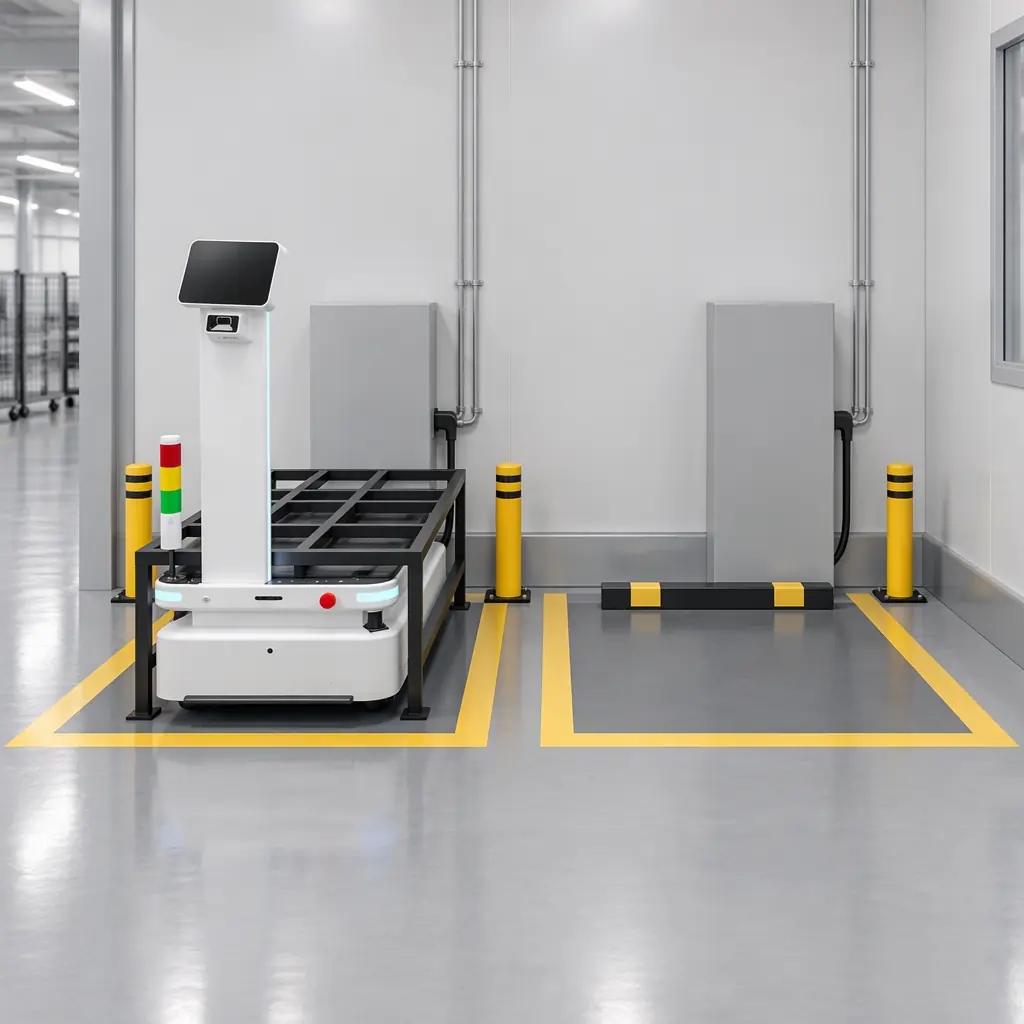
Only if the charge pattern requires it. Units that return to the dock between tasks share bays; units that run a full shift to empty need a bay each, or a pack-swap routine. The dock arrangement is what sets the availability factor in the fleet calculation.
What breaks first in a mixed racking environment?
Shelf castors and sensor windows. Castors take the off-centre load every time a shelf is picked from one end, and sensor windows collect dust and cardboard fibre until the scanner range falls below the map the robot was taught. Both are consumables with an operating-hour interval, and both should appear in the service plan.
A Selection Sequence That Holds Up
Measure the building before discussing models: narrowest gate, longest gradient, worst floor joint, heaviest loaded shelf including the shelf. Then size the fleet from the task list with a stated availability factor. Then write the RFQ lines above, and insist the acceptance test runs on your floor with your shelf, your pallet and your safety officer.
If you want the arithmetic run against a specific layout, send the route sketch and the shelf weights with a request through the contact form; the machine class and the fleet count come out of those two documents, not out of a brochure.
For the wider picture of how these machines sit in a mixed fleet, the full AOMAN range covers lift AMRs, pallet trucks, delivery platforms and quadrupeds with one spare-parts programme, and the multi-floor deployment guide covers the case where the route leaves the ground floor.

Get a Quote
Tell us about your space and workload, we reply within 24 hours.