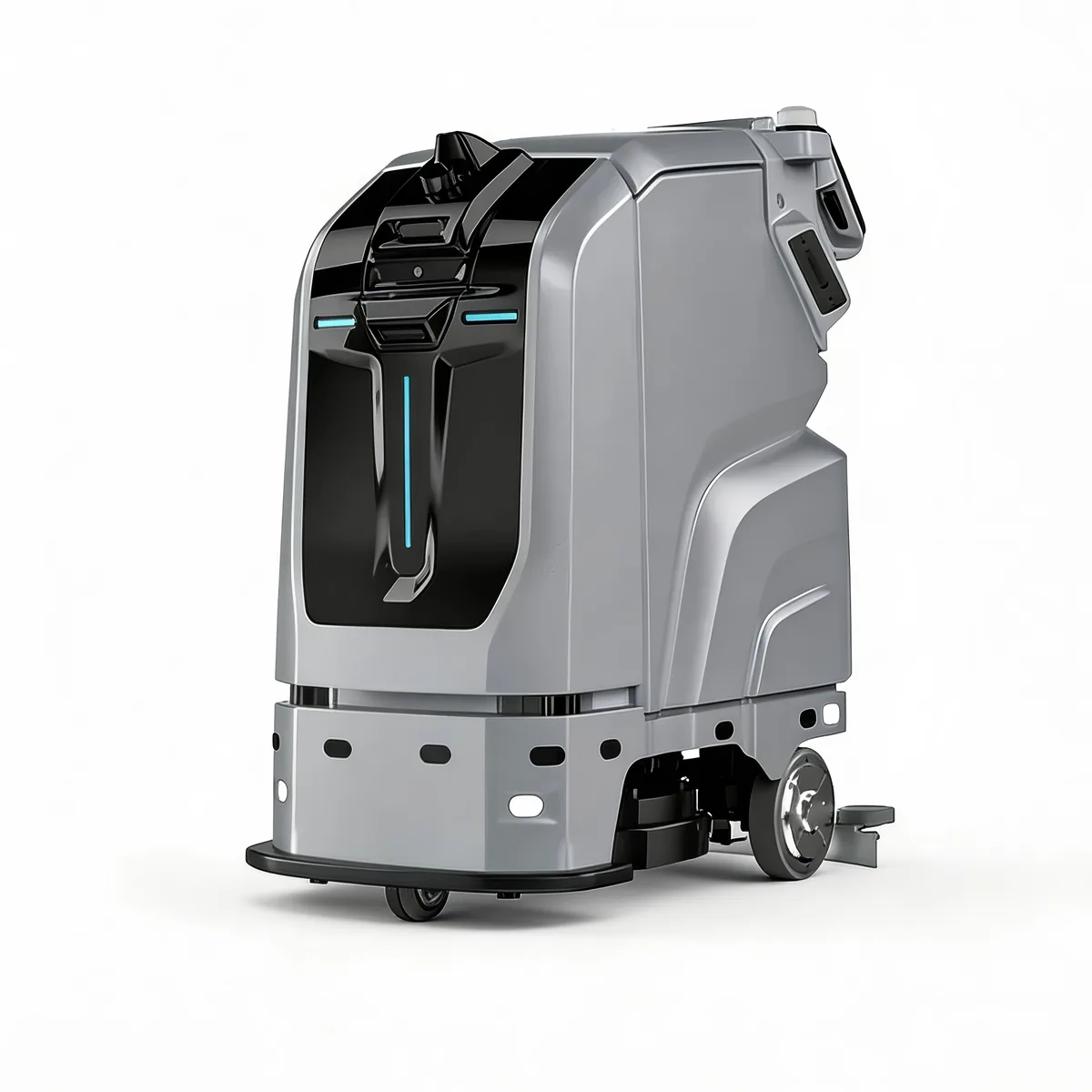
A 12-floor office tower in Shenzhen ran its cleaning audit and found the inefficiency every smart building eventually hits: the night crew scrubbed all 28 meeting rooms on a fixed schedule, but time-stamped badge data showed that 19 of them had been used for a combined total of 41 hours that week — the other 9 rooms sat empty for five straight days and were cleaned anyway. Meanwhile the two rooms the executive floor actually used for back-to-back client meetings got the same single nightly pass, and by 3 PM their carpet showed the traffic. The tower had occupancy data everywhere — PIR sensors in every room, badge readers at every door, a BACnet BMS tracking room state — but the cleaning schedule was blind to all of it. That is the gap the smart building automation pattern leaves open, and the cleaning robot occupancy sensor integration closes it: robots that read occupancy signals and trigger cleaning only when a space is actually empty and actually used.
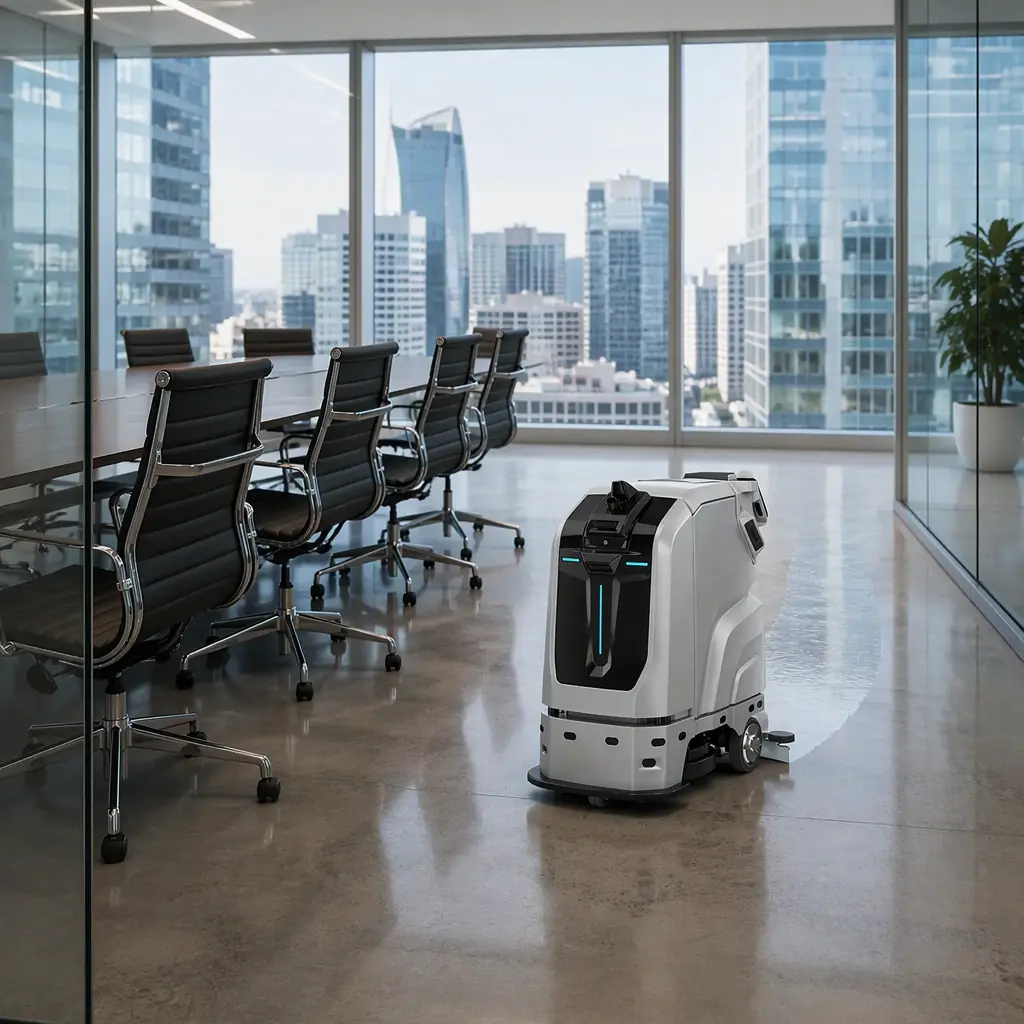
What Occupancy Data a Building Already Has
Most buildings already carry the sensors this integration needs; they are simply wired to the lighting and HVAC systems, not the cleaning schedule. Four signal types matter. PIR occupancy sensors — present in 80%+ of modern meeting rooms and restrooms for lighting control — report presence in 1-5 second intervals. Door and reed sensors on meeting rooms and offices report open/close events. Badge-access systems log who enters which zone and when, which is the highest-resolution occupancy source in a corporate building. And the BMS room-state layer (BACnet or KNX) aggregates all of the above into a per-room occupied/vacant flag that a robot can poll. The coworking guide documents the same data sources from the operator's side; this guide covers the robot-side integration, where the signal-to-cleaning pipeline turns raw presence events into missions.
The Trigger Pattern: Clean Empty Spaces, Skip Dead Ones
The core logic is a trigger, not a schedule: a cleaning robot mission starts when an occupancy condition is met. The standard trigger set, in priority order: vacancy-triggered — a room that was occupied flips to vacant (PIR timeout or badge-out event), so a 15-minute "clean-after-meeting" mission starts immediately; usage-threshold — a restroom or break room whose occupancy count crosses a threshold (e.g., 20 entries per hour) queues a high-priority mission; scheduled-empty — a corridor or floor that drops below 10% occupancy (per badge data) triggers the mid-day pass that the commercial cleaning robot buyers guide recommends instead of cleaning underfoot; and time-window fallback — rooms with no occupancy signal for 72 hours get a reduced-frequency pass (weekly instead of nightly), which is where the Shenzhen tower recovered its cleaning hours. The fleet management guide covers the orchestration layer that queues and de-conflicts these triggered missions against the robots' charging cycles and the building's elevator schedules.
Integration Architecture: KNX, BACnet, MQTT & Vendor APIs
The integration has four architectural paths, and the right one depends on the building's age and its BMS stack. Path 1 — BMS native (BACnet/KNX): the robot fleet platform subscribes to the BMS room-state objects via a gateway, the cleanest fit for buildings that already expose occupancy points; the data center guide documents this exact BMS-integration pattern on the DCIM side. Path 2 — MQTT bus: buildings with an IoT layer publish occupancy topics (e.g., floor/03/room-302/occupancy) that the fleet platform subscribes to with a 1-3 second quality-of-service guarantee. Path 3 — badge-system API: access-control vendors expose zone-occupancy endpoints that the fleet platform polls on a 30-60 second interval — the coarsest but often the most reliable signal. Path 4 — onboard sensing: the robot's own LiDAR and camera stack detects empty rooms during patrols and flags them for immediate cleaning, which is the only path that works in buildings with no sensor layer at all. The navigation SLAM guide covers the onboard-sensing half; the integration rule that applies to all four paths is that the robot never acts on a single sensor event — every trigger requires two consecutive readings or a 30-second confirmation window, which eliminates false starts from a person stepping out to take a call.
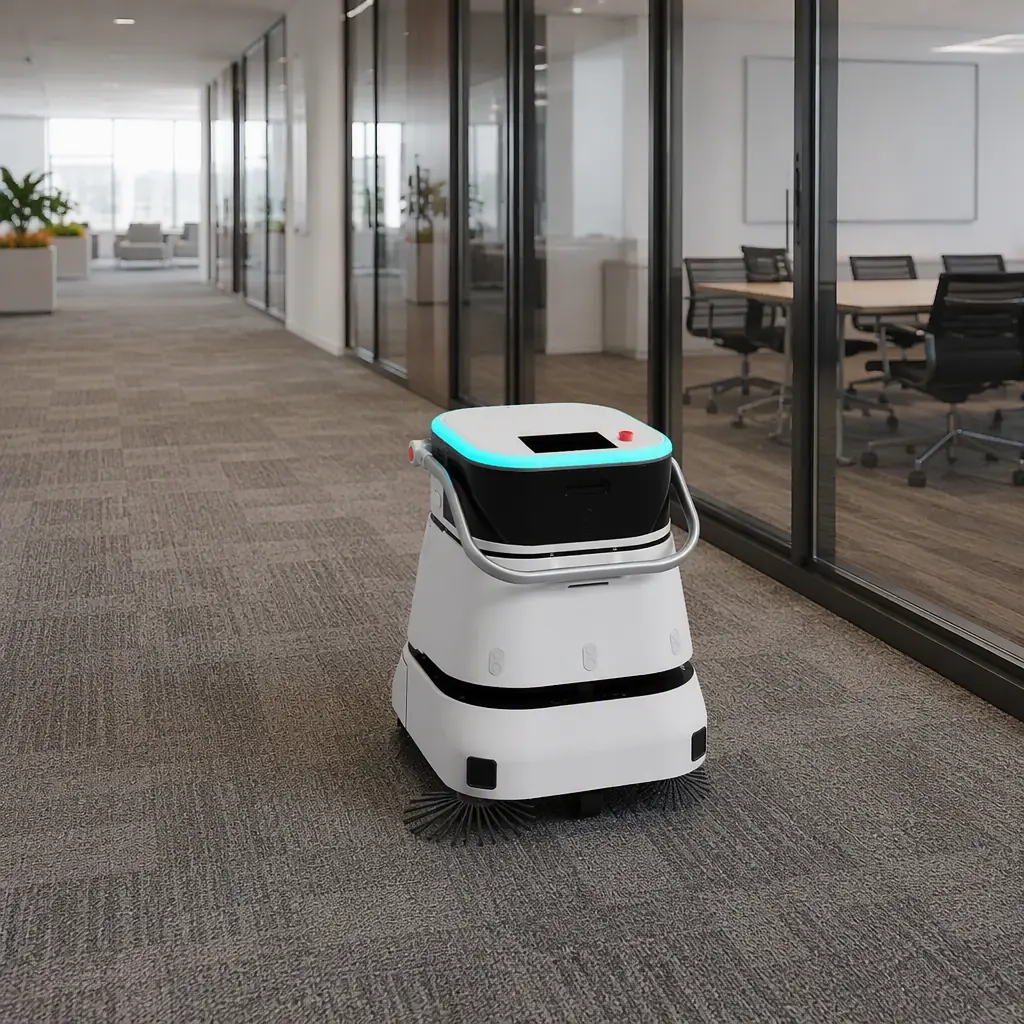
Privacy Rules for Presence Data
Occupancy data is personal data the moment it can identify an individual, and the cybersecurity & data privacy guide applies in full: presence events are aggregated to room level before the robot platform sees them, badge data is processed through the access-control vendor's own API with role-based access control, raw camera footage is never used for occupancy classification (PIR and badge signals are sufficient), and the robot's onboard camera is masked to cleaning verification only. The privacy-clean pattern is the same one the healthcare deployment guide uses for patient-zone robots: the platform stores zone-level statistics, not individual movement traces, and retention is capped at 30 days for audit purposes.

Trigger-Priority Table
| Trigger | Signal source | Response | Typical frequency |
|---|---|---|---|
| Vacancy after meeting | PIR timeout / badge-out | Clean-after-meeting mission within 15 min | 3-8 missions/room/week |
| Restroom usage threshold | Door sensor + PIR count | High-priority mission on threshold breach | 4-10 missions/day/floor |
| Floor occupancy < 10% | Badge-access zone data | Mid-day floor pass | 1-2 missions/day/floor |
| 72h no occupancy signal | BMS room state | Reduced-frequency weekly pass | 1 mission/room/week |
Deployment Table
| Building type | Robots | Integration path | Monthly cost (RaaS) | Cleaning hours saved |
|---|---|---|---|---|
| Single floor, 20-40 rooms | 1 × CLEINBOT M79 | PIR + door sensors via MQTT | $1,400-2,200 | 35-60/month |
| Multi-floor office, 100+ rooms | 2 × M79 + 1 × C2 Pro | BACnet BMS + badge API | $3,800-5,600 | 110-190/month |
| Corporate campus, 3+ buildings | 4-6 × M79/C2 Pro per building | Full BMS + IoT + badge mesh | $18,000-28,000 | 450-750/month |
The cleaning robot occupancy sensor integration is what turns a cleaning schedule from a guess into a response: the building already knows which rooms are empty and which are used, and the robot fleet finally listens to it. The Shenzhen tower cut its meeting-room cleaning load by 38% in the pilot — the 9 dead rooms dropped to weekly passes and the two high-traffic rooms started getting cleaned after every use. The starting point is not a robot purchase; it is an inventory of the occupancy signals the building already emits, and a walk-around with the BMS vendor to see which of the four integration paths is one gateway away.