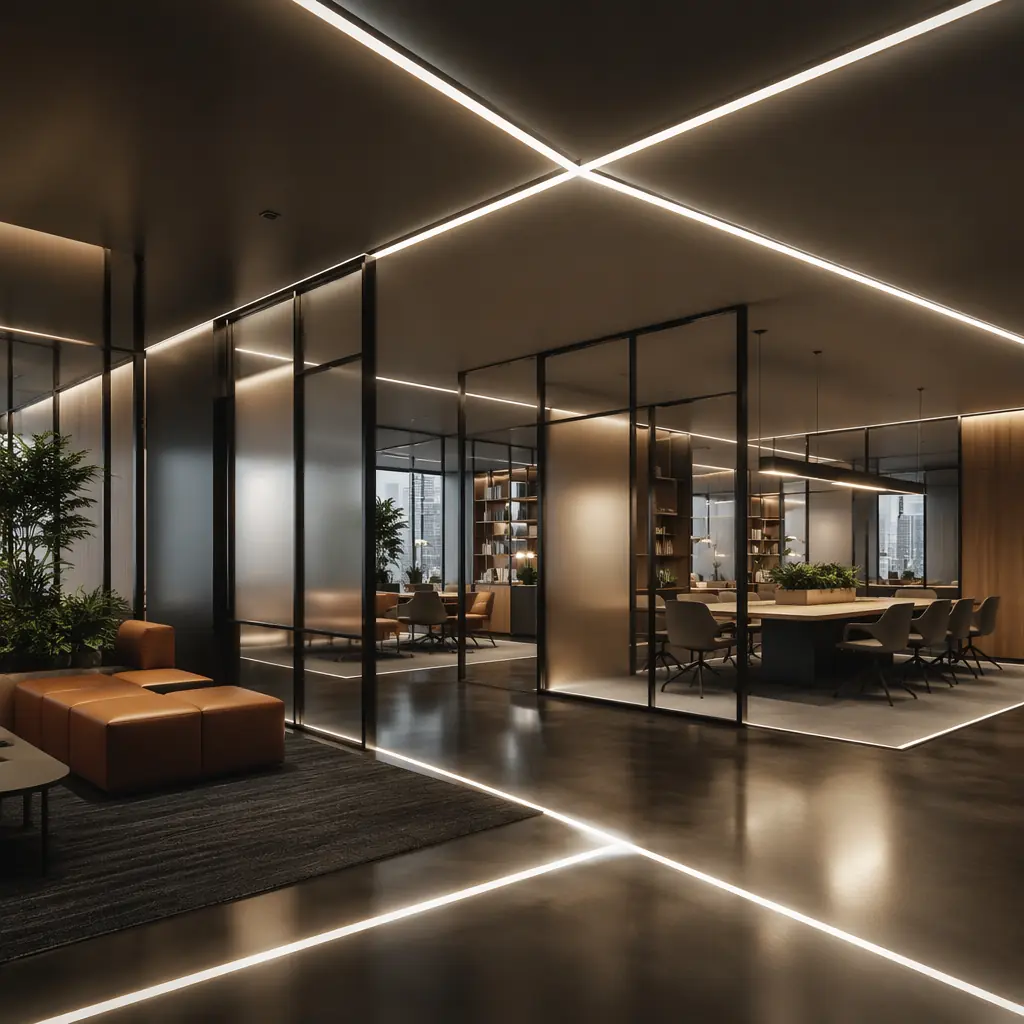
A regional coworking operator with seven locations across three cities serves approximately 2,400 members, ranging from solo freelancers renting hot desks at $350 per month to enterprise teams of 15-40 employees occupying dedicated private offices at $650-900 per desk per month. The operator's average occupancy across all locations is 82%, and the business is, on paper, profitable — but the margin is thin: 6.8% EBITDA in Q1 2026, down from 11.2% in Q1 2024, driven by a 19% increase in operating costs per square foot (higher cleaning frequency post-pandemic, 24/7 access expectations requiring overnight staffing, and the "hospitality creep" where members expect front-desk responsiveness comparable to a boutique hotel).
The operator's general manager describes the operational challenge as "the 7 AM to 10 PM problem." Between 7 AM and 10 PM, the space must feel staffed, clean, and responsive — coffee refreshed, trash emptied, spills addressed within minutes, visitors greeted and badged — across 15,000-25,000 square feet per location. Staffing this window with three full-time community managers per location costs approximately $180,000 per location per year at fully-loaded labor rates, consuming 22% of gross revenue before rent, utilities, or amenities. Reducing staffing to two community managers per location saves $60,000 per location annually but produces the predictable result: during the 2-3 hours each day when only one staff member is present, response times for member requests degrade, Google review scores for "staff responsiveness" decline, and membership churn — which runs at 4-6% monthly in the coworking industry — accelerates by an estimated 0.8-1.2 percentage points per month at under-staffed locations.
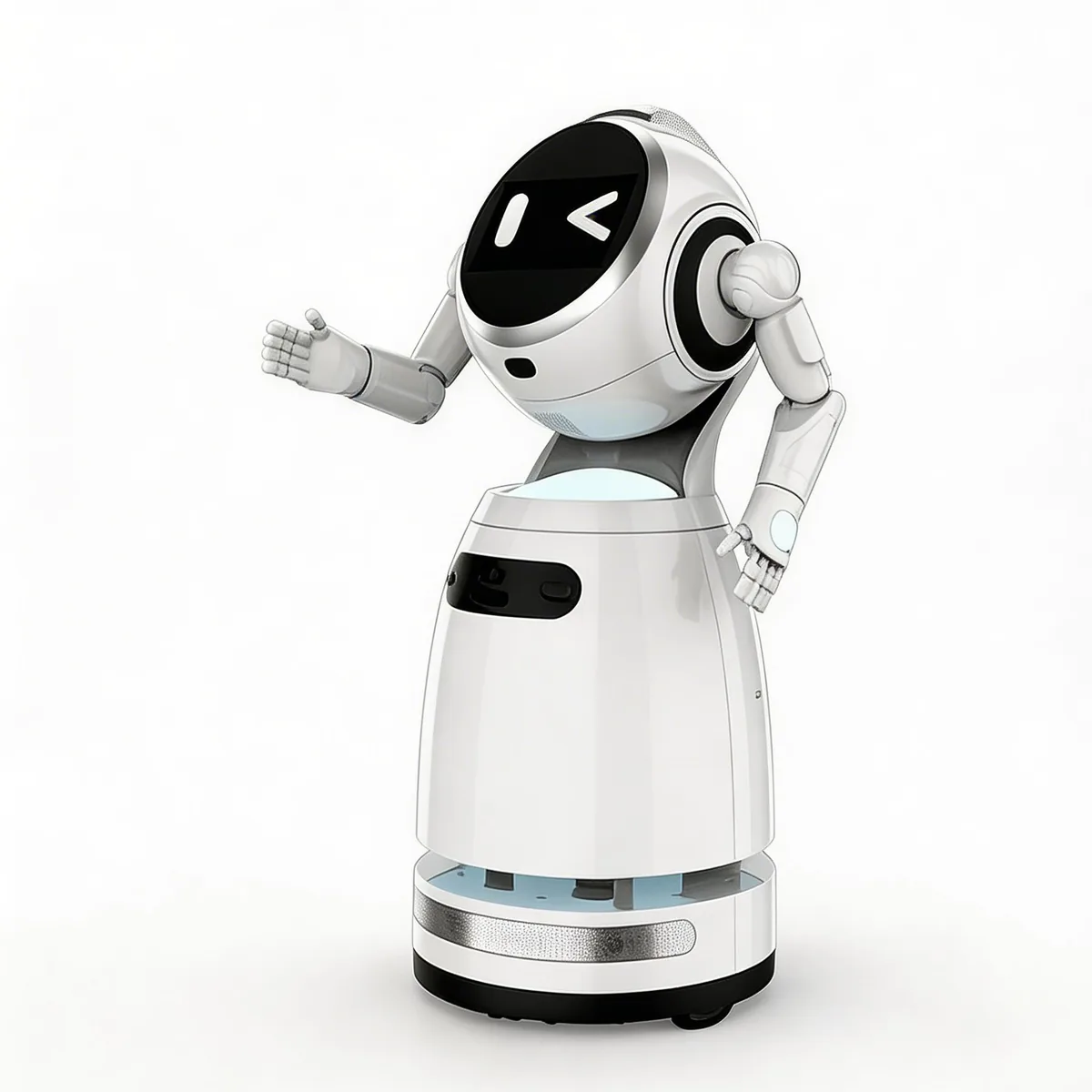
In Q2 2026, the operator deployed a three-robot configuration in its flagship 22,000-square-foot location: a CLEINBOT M79 for continuous floor and surface maintenance across the open-plan hot-desk area, private office corridors, and kitchen/lounge zones; a CRUZR reception robot at the main entrance for member check-in, visitor badging, and space navigation; and a CADEBOT L100 for intra-space logistics — delivering mail, packages, and catering orders from the receiving area to member desks and meeting rooms. At month 3, the location reduced its front-desk staffing from 2.5 FTE community managers to 1.5 FTE (a senior community manager plus a part-time assistant), with the CRUZR robot handling approximately 67% of member check-ins and 82% of visitor-badging interactions without human intervention. Member satisfaction scores for "space cleanliness" and "staff responsiveness" remained unchanged from the pre-deployment 3-FTE baseline. The location's monthly operating cost dropped $8,400, equivalent to a 3.9-percentage-point improvement in location-level EBITDA.
The Coworking Margin Problem That Robots Address Without Cutting Member Experience
The coworking industry's post-pandemic recovery has been a story of strong demand met by structurally higher operating costs. Members who returned to coworking spaces in 2024-2026 expect a level of cleanliness, responsiveness, and amenity quality that was considered premium in 2019 and is now table stakes. A Coworking Insights survey of 800 members across 12 major operators found that "consistent cleanliness throughout the day" ranked as the #1 factor in membership renewal decisions, ahead of location, price, and community events — a dramatic shift from pre-pandemic surveys where community quality consistently ranked first.
The problem for operators is that delivering continuous cleanliness with a traditional janitorial model — a cleaning crew that visits once or twice during operating hours plus an overnight deep clean — fails to address the 11 AM coffee spill that sits on the hot-desk floor until the 3 PM janitorial visit, by which time three different members have encountered it, one has posted about it on the member Slack channel, and the community manager has spent 12 minutes finding a mop and cleaning it themselves instead of onboarding a new enterprise member who arrived for a tour.
An autonomous floor maintenance robot operating on a continuous 75-minute cycle eliminates this gap. The spill gets addressed within the cycle window, not within the next janitorial visit window, and the community manager never touches a mop. This dynamic — autonomous robots handling the routine, repetitive facility tasks that consume community manager time — is the operational insight that makes robotics economically viable for coworking at a much smaller square footage than traditional facility automation (which typically requires 100,000+ square feet to justify fixed automation infrastructure).
This pattern mirrors what corporate office deployments have demonstrated: when autonomous cleaning handles the continuous maintenance layer, human cleaning staff can focus on the higher-value tasks — deep cleaning, surface sanitation, supply restocking — that autonomous platforms cannot perform, creating a blended labor-automation model that improves both cost efficiency and cleanliness consistency.
The Three Robot Roles for Coworking Operations
Role 1: Continuous Multi-Zone Cleaning (CLEINBOT M79)
The CLEINBOT M79's value proposition in a coworking environment is its ability to transition between surface types — hardwood, carpet tile, polished concrete, vinyl plank — without manual reconfiguration, adapting its cleaning mode (dry vacuum, damp mopping, or scrubbing) based on the floor surface detected by its downward-facing sensors. A typical coworking floor plan includes four surface types within 50 feet: hardwood in the hot-desk zone, carpet tile in the private office corridor, vinyl plank in the kitchen area, and polished concrete in the event space. A human janitor needs different equipment for each surface; the CLEINBOT transitions automatically, maintaining consistent cleanliness across the entire floor plan.
The noise profile is the critical specification for coworking deployment. The CLEINBOT M79 operates at 56 dB in vacuum mode and 52 dB in mopping mode at 1 meter — equivalent to quiet conversation — which means it can operate in the open-plan workspace during business hours without disrupting member focus. This is the differentiating factor from traditional floor-care equipment, which operates at 68-75 dB and cannot be used while members are working.
For operators managing multi-location portfolios, the standardized CLEINBOT platform allows a single configuration to deploy across locations with different floor plans and surface types, reducing the training and configuration overhead that typically makes facility automation deployments expensive to sustain across a distributed portfolio.
Role 2: Member Reception and Space Navigation (CRUZR)
The CRUZR humanoid robot, positioned at the coworking space entrance, transforms the member and visitor experience in ways that directly reduce front-desk staffing pressure:
Automated member check-in. When a member enters the space, the CRUZR scans their digital membership card (or recognizes them through an opt-in facial recognition system), confirms their membership status, and welcomes them by name — "Good morning, Sarah — your usual hot desk in Zone B is available. Meeting Room 3 is booked for your 10 AM client call." This interaction replaces the 30-60 seconds of community manager time required for a manual check-in, and cumulatively saves approximately 2.3 hours of community manager time per day at a location with 300-400 daily member visits.
Visitor badging and NDA workflow. For external visitors — clients, vendors, job candidates — the CRUZR handles the visitor management workflow: capture name and company, print a visitor badge, have the visitor sign an NDA on the touchscreen, and notify the host member via SMS or Slack that their guest has arrived. This workflow previously consumed 3-5 minutes of community manager time per visitor, or 45-75 minutes per day at locations with 15-20 daily visitors.
Space navigation and amenity education. First-time visitors and new members frequently need directions — "Where's Meeting Room 5?" "Is there a phone booth available?" "Where do I get more coffee?" The CRUZR provides interactive wayfinding with a 3D floor plan displayed on its screen, and proactively surfaces amenity information: "The espresso machine was refilled 20 minutes ago — would you like me to show you the kitchen?" This self-service navigation reduces the "where is" inquiries that community managers field an average of 22-28 times per day.
The reception function in coworking spaces shares operational requirements with corporate lobby deployments and hospitality reception, with the added requirement that coworking check-in systems must integrate with the space's membership management platform (Nexudus, OfficeRnD, Cobot, or equivalent).
Role 3: Intra-Space Logistics and Deliveries (CADEBOT L100)
The CADEBOT L100's logistics function in a coworking space addresses three workflow categories:
Mail and package distribution. A coworking location with 350 members receives an average of 45-65 packages and 80-120 pieces of mail per day, which the community manager team typically sorts and delivers to member desks or mail slots during the 9-11 AM window — consuming 1.5-2 hours of community manager time that directly coincides with peak tour and onboarding hours (10 AM-12 PM, when prospective members visit). A CADEBOT configured with a mail-carrying tray module receives sorted packages from the receiving area and autonomously delivers them to member-designated drop points throughout the space, freeing the community manager to focus on member-facing interactions during the highest-value morning window.
Catering and food delivery. Corporate teams occupying private offices within coworking spaces frequently order catering for client meetings and team lunches. The current workflow — a community manager receives the catering delivery at the front desk, calls the member to notify them, and either waits for the member to retrieve it or delivers it themselves — consumes 8-12 minutes per catering order. The CADEBOT receives the order at the front desk and delivers it directly to the meeting room or office door, notifying the member via automated message. For a location with 4-7 catering deliveries per day, this saves 30-80 minutes of community manager time daily.
Inter-office document and equipment transfer. In larger coworking locations (20,000+ square feet, multiple floors), members frequently need to move items between locations — documents from a private office to the printer station, AV equipment from the storage room to a meeting room. The CADEBOT's on-demand delivery function — triggered through a member app or Slack integration — handles these transfers without requiring a community manager to leave their post.
The logistics dimension of coworking operations connects to broader patterns in warehouse and logistics facilities and corporate campus environments, where the same CADEBOT platform handles intra-facility transport across different payload types and delivery patterns.
Integration with Coworking Management Platforms
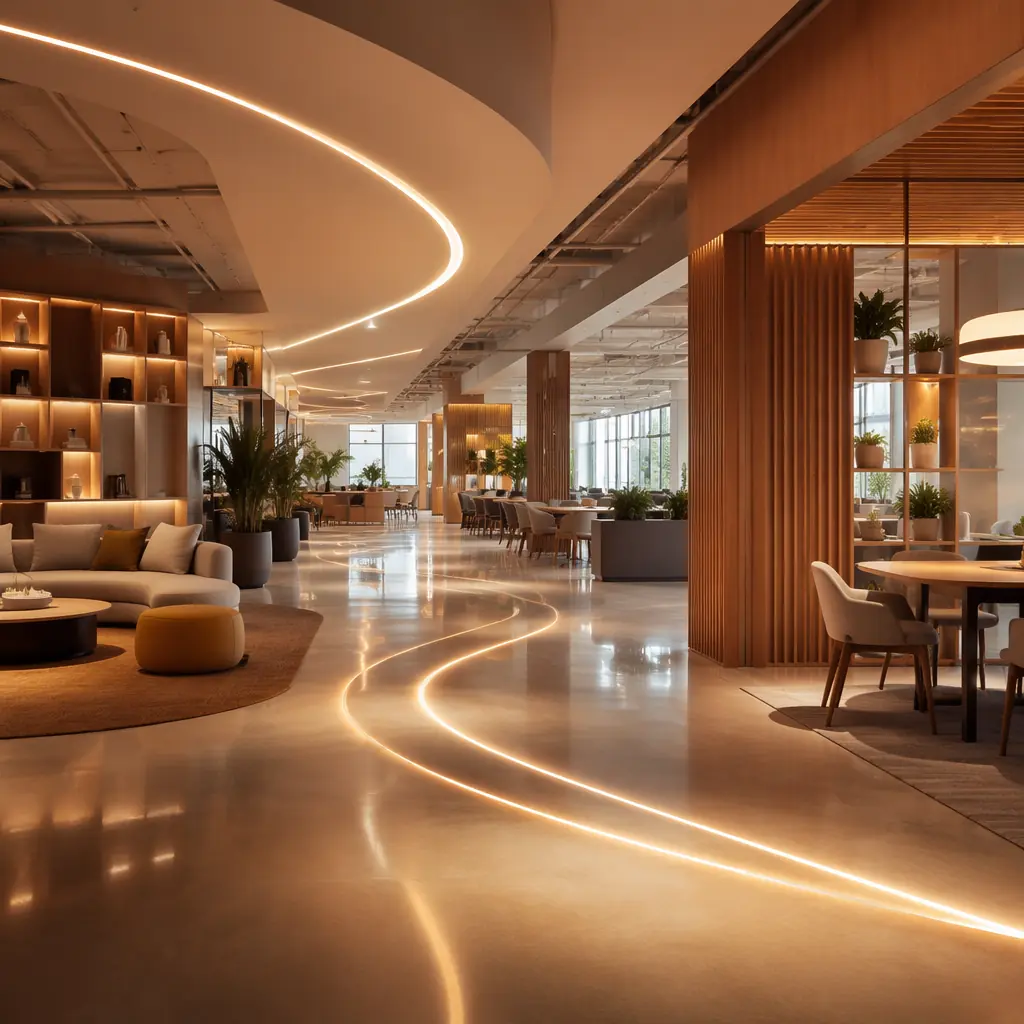
Autonomous robots in a coworking environment must connect to the space's membership management platform to access member data, check-in status, meeting room bookings, and visitor logs. The integration architecture varies by platform:
For Nexudus and OfficeRnD — the two most common platforms among multi-location operators — the integration uses the platform's REST API to pull member profiles (name, photo, membership status, desk/office assignment, meeting room bookings) and push robot interaction logs (check-in timestamps, visitor badge issuance, delivery notifications) back to the member's activity record. This bidirectional data flow ensures that the robot's interactions are captured in the same member engagement dashboard that the operator uses to track community manager touchpoints, enabling a unified view of member experience.
For enterprise-scale deployments across dozens of locations, the integration middleware standardizes the robot-to-platform connection so that each new location can deploy the same robot configuration without custom integration work — a critical factor in achieving portfolio-wide ROI.
Getting Started: The Coworking Robot Pilot
A coworking operator should pilot autonomous robots in a single location following a staged approach:
Stage 1 (weeks 1-3): Overnight cleaning validation. Deploy one CLEINBOT M79 for overnight-only operation, measuring the reduction in overnight janitorial crew hours and the improvement in opening-condition cleanliness scores. This stage validates the robot's navigation and cleaning performance in the space's specific floor plan without member-facing complexity.
Stage 2 (weeks 4-6): Daytime cleaning expansion. Expand CLEINBOT operation to daytime hours (9 AM-6 PM), monitoring member feedback through post-interaction surveys and Slack channel sentiment analysis. This stage validates that the robot's noise profile and navigation behavior are compatible with an occupied workspace.
Stage 3 (weeks 7-10): Reception robot deployment. Deploy CRUZR at the main entrance, initially as a supplement to the existing community manager (not a replacement). Measure the percentage of check-ins and visitor-badging interactions handled autonomously, and survey members on their interaction preference (robot, human, or no preference).
Stage 4 (weeks 11-14): Logistics robot deployment. Deploy CADEBOT for mail and package distribution during the 9-11 AM window, measuring community manager time reallocation from logistics tasks to member-facing activities (tours, onboarding calls, community event planning).
For the financial framework, the service robot ROI guide provides cost models applicable to coworking and flexible office operations, while the change management guide addresses the community manager retraining and member communication strategies that determine whether robot deployment is received as "the space is innovating" or "the space is cutting corners" — a perception gap that has determined the success or failure of every automation initiative in the experience-sensitive coworking industry.