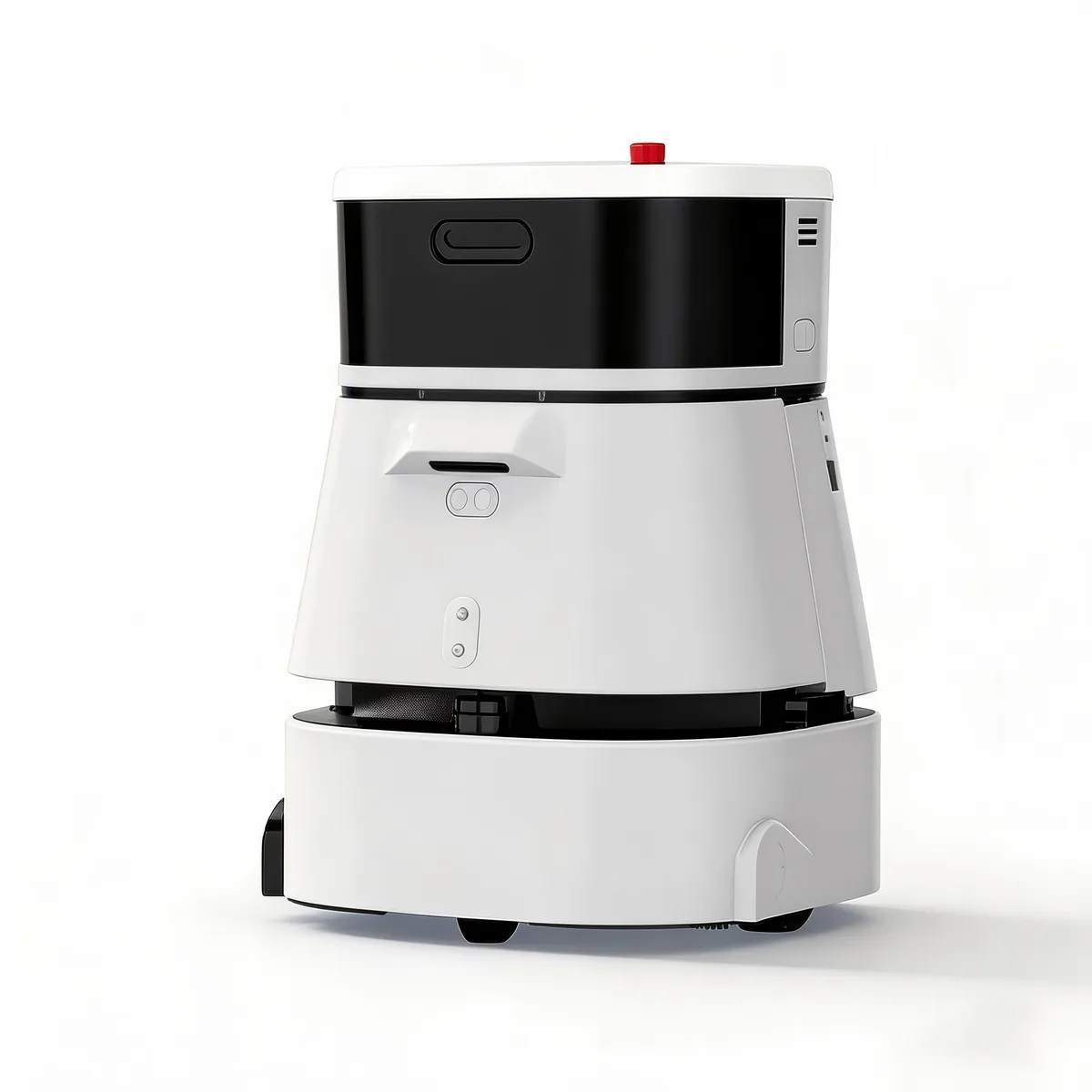
A 12,000 m² vertical farm in Guangdong runs 26,000 plants under LED light across three grow rooms, and its 2025 operations audit found the walking problem hiding in the harvest ledger: the picking team logged 11.2 km per worker per day moving harvest trays, empty racks and supply carts between the grow rooms, the packing line and the cold room — 40% of it with trays in hand rather than on wheels. The second finding was the floor problem: nutrient solution drips, soil fines and harvest debris tracked from the grow-room aisles into the packing zone, where a third-party food-safety audit flagged the floor transitions two quarters in a row. The third was the hygiene clock: at 65% average relative humidity, the facility's own swab data showed biofilm regrowth on hard floors within 72 hours of a deep clean. Vertical farms are controlled-environment food factories with a logistics and hygiene layer, and the agricultural & food processing guide documents the adjacent hygiene-critical pattern; this guide covers the CEA-specific version, where grow-room aisle care, harvest tray logistics and packing-zone floor hygiene are the three highest-value robot roles.
The Grow-Room Hygiene Rule: Floors Are a Food-Contact Surface
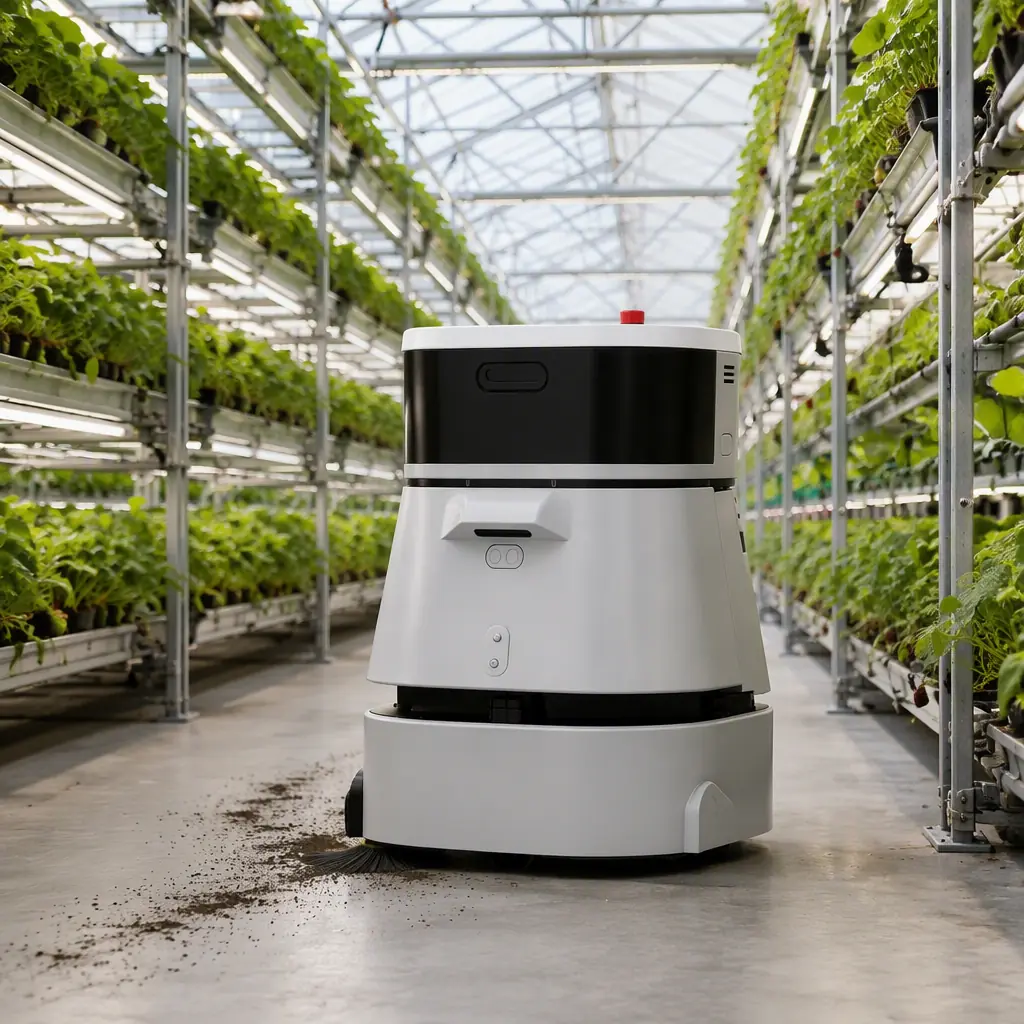
In a controlled-environment facility, the floor is a food-safety surface by adjacency: what lands on it gets walked into the packing line, and what grows on it in high humidity becomes the audit finding. The CLEINBOT CC201 covers the grow-room aisle loop: a 1,020 mm sweeping width at 3,000 m²/h, a 130L dust container that auto-empties into an 800L docking station, and IP67 sealing with a rain sensor for the wet-process environment — the design rule that matters most in a grow room, where floors are wet by design and a sweeper that stops for moisture would stop daily. Its GPS + LiDAR + IMU navigation follows the approved aisle sequence between grow racks, and its -10°C to 50°C operating range covers both heated greenhouses and cold-region tunnels. The grow-room hygiene rule is the one food-safety managers ask about first: the CC201's route is sequenced to clean the grow-room aisles first and the packing-zone approach last, so harvest debris is picked up before it reaches the food-contact zone — the same "clean the contamination source before the sensitive zone" logic the renewable energy facilities guide documents for utility sites, applied to the hygiene problem instead of the dust problem. For the outdoor side of the campus — access roads, loading yards, greenhouse perimeter paths — the outdoor cleaning robots guide covers the same CC201 pattern at plaza scale.
Harvest Tray Logistics: The 11 km Walking Problem
The highest-leverage automation in a vertical farm is the move, not the clean: harvest trays, empty racks, seedling flats and supply carts travel constantly between grow rooms, the packing line and the cold room, and every one of those trips is a worker walking. The CADEBOT L100 covers the transport loop: a 400 mm platform with four trays rated for 15 kg each and a 40 kg total payload, clearing the 1.2 m aisle widths between grow racks and returning 6–8 trips per hour — the same pattern the warehouse delivery robots guide documents for internal logistics in distribution facilities, applied to a facility where the "inventory" is perishable and the "order picking" is harvest. The CEA-specific rule is the tray-batching protocol: L100 runs are batched by zone and temperature — harvest trays from the grow rooms to the packing line, empty racks back to the seeding room, supplies from the loading dock to each grow room — so the robot does the cross-zone travel while workers stay at their stations. Every run is logged by the fleet dashboard, giving the operations team a per-batch transport record the fleet management guide describes as the operational layer of any multi-robot deployment. Facilities choosing between delivery platforms should weigh the same factors the delivery robot selection guide lays out: payload per trip, tray configuration and aisle clearance.
Packing, Processing & Cold-Storage Zones: Audit-Ready Floors
The packing and processing zones carry the strictest hygiene expectations in the facility: this is where food is handled, weighed, bagged and cold-stored, and where the audit swabs land. The CLEINBOT M79 covers the packing-zone loop: a 720 mm cleaning width at 2,000 m²/h with adjustable water output for the epoxy and tile transitions between the wash-down area and the dry packing floor, and a scrub cycle that runs on the food-safety cleaning schedule — the same audit-aligned approach the water treatment plants guide documents for control-room floors in process facilities. The cold-storage zone adds the low-temperature requirement: the M79 runs the cold-room floors on the same schedule as the packing floor, and its battery and navigation systems are rated for the sub-zero shift. The rule that keeps the audit trail defensible is simple: the fleet dashboard time-stamps every cleaning pass, and the food-safety team reviews the logs on the same cadence it reviews the hand-washing observations — so the third-party audit sees documented floor care instead of a clipboard.
Food-Safety Compliance Alignment
Vertical farms operate under a food-safety framework that makes the robot's audit trail part of the compliance record: GLOBALG.A.P. and PrimusGFS certifications govern the growing and packing operations, FSMA Preventive Controls rules require documented sanitation procedures, and retail customers increasingly require supplier floor-care documentation. The robot deployment maps onto that framework directly — the CC201's aisle-cleaning logs become the grow-room sanitation record, the M79's scrub logs become the packing-zone sanitation record, and the L100's transport logs become the cross-contamination control record. The safety standards guide covers the machine-safety certification side of the same picture (CE, FCC, ISO 13482) so the compliance conversation with the auditor covers both the robot's own certifications and the facility's sanitation records.
Deployment Table for Facility Types
| Facility type | Floor-care fleet | Logistics fleet | Monthly cost (RaaS) | Staff hours returned |
|---|---|---|---|---|
| Greenhouse farm (5,000–20,000 m²) | 1 × CC201 (aisles + perimeter) + 1 × M79 (packing) | 1 × L100 (harvest trays + supplies) | $2,800–4,600 | 220–380/month |
| Indoor vertical farm (multi-room) | 2 × CC201 (grow-room aisles) + 1 × M79 (packing + cold room) | 2 × L100 (tray batching) | $5,200–8,400 | 410–680/month |
| Multi-site CEA operator (3+ facilities) | 1 × CC201 + 1 × M79 per site | 1–2 × L100 per site | $12,000–20,000 | 950–1,600/month |
A vertical farm's economics live in yield per square meter and labor per harvest, and both improve when the walking and the floor care stop competing with the growing. The CC201 keeps grow-room aisles and greenhouse corridors clean on the hygiene clock, the L100 keeps harvest trays and supplies moving so pickers stay at the racks, and the M79 keeps packing and cold-storage floors audit-ready. That is the automation pattern that fits a CEA facility budget — and it starts the same way every successful deployment starts: with a walk-around audit of where the kilometers, the drips and the audit findings actually are.