
Municipal parks and recreation departments run some of the largest, most public facilities in a city — and some of the tightest budgets. They are also the ones that can least afford a visibly dirty park during peak season. Autonomous robots are now a workable middle path: a park lot and path sweeper covers the grounds that would otherwise take a crew all morning, while an indoor cleaning robot keeps pavilions, restrooms and recreation buildings turned over between programs. Here is how the math works and how to buy it the right way.
The Staffing Problem in Park Operations
Parks are seasonal and bursty. A department that runs with a small year-round crew triples its ground-maintenance load in summer. The traditional answer is seasonal hires — but temporary staffing is hard to train to a standard, expensive per hour, and unavailable exactly when you need them most. This is the same pressure every vertical facility feels, only in public view.
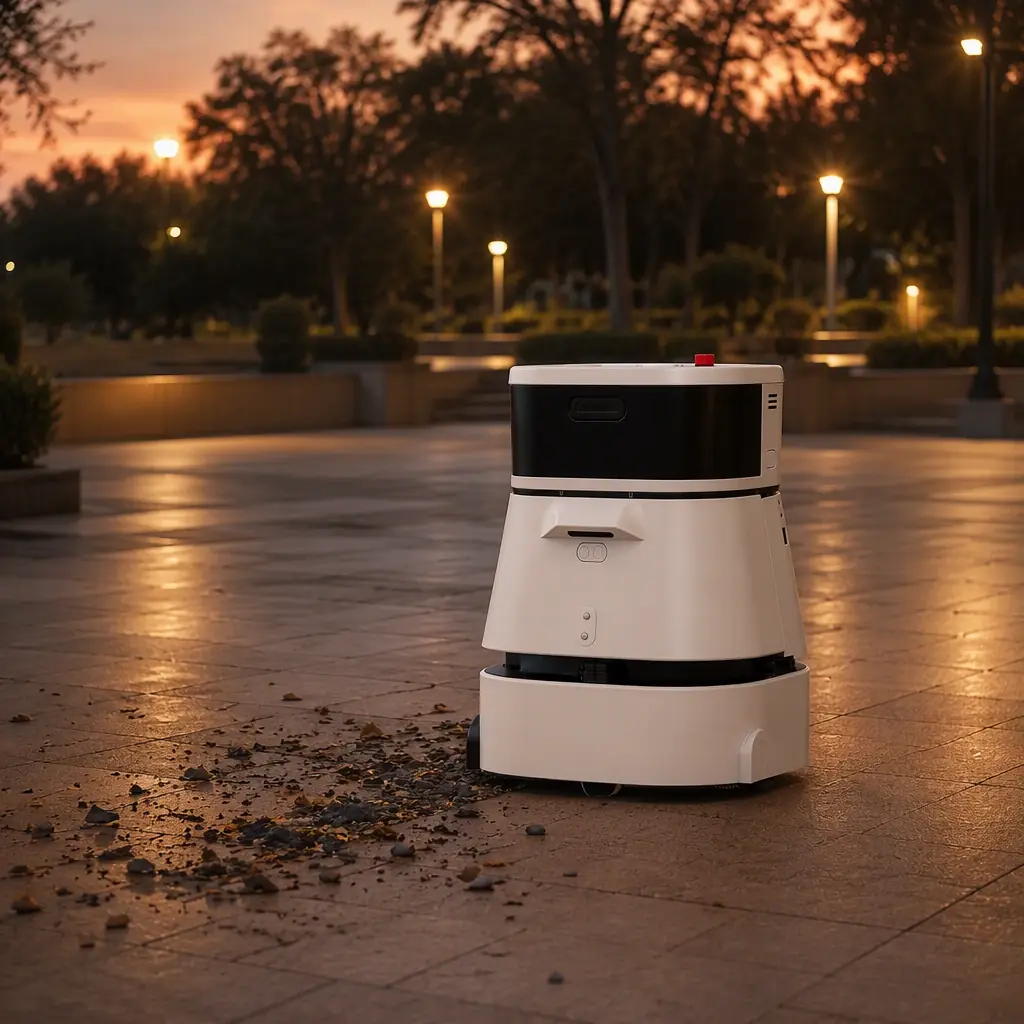
An autonomous sweeper changes the curve. One robot can cover several acres of paths and lots per day on a programmed route, running at night after the park closes — which means cleaning work that would occupy two or three staff during peak daylight hours happens for free, off-hours.
What a Robot Actually Does in a Park
The fit differs by zone, and the product line splits cleanly:
| Zone | What needs doing | Robot role |
|---|---|---|
| Parking lots & access roads | Litter, leaves, gravel sweep | CC201 outdoor sweeper |
| Paved paths & plazas | Debris, leaf drift, spill | CC201 on programmed loop |
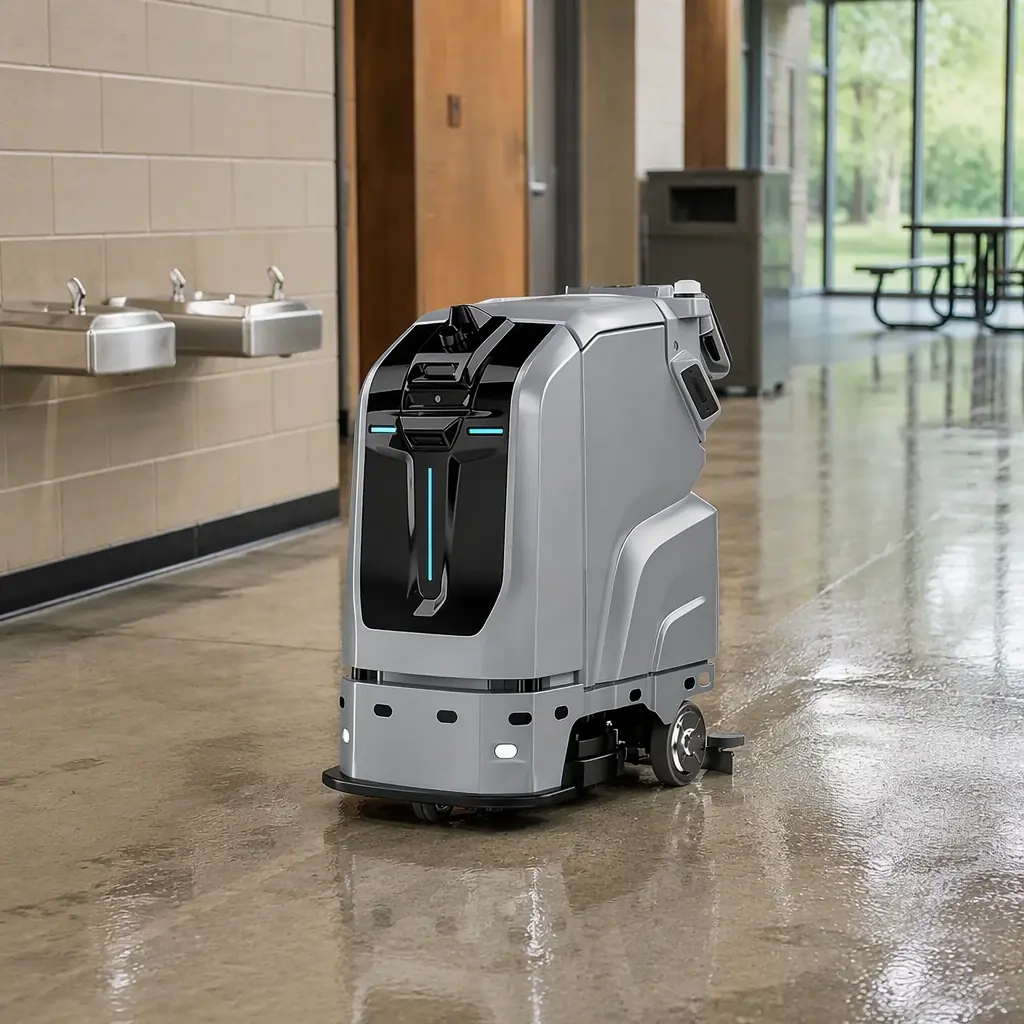
| Recreation building floors | Scrub, mop, buff | M79 indoor scrubber |
| Restrooms & pavilions | Turnover hygiene, odour control | Small indoor units |
| Sports fields | Edge, access sweep | CC201 perimeter runs |
An outdoor sweeper is the star for a park because the grounds are the biggest single workload. An indoor unit handles the community centre or park office while the crew focuses on deeper tasks. The two together cover roughly 80% of a typical park's repetitive ground- and floor-care hours — see the cleaning robot buyer's guide for how to decide between them.
Night-Shift Sweeping: The Quiet Win
The best argument for robots in a public park is not labour savings during the day — it is the ability to clean after hours. A robot on a night loop can sweep the paths, plaza and lot while the park is empty, so the park opens clean without a single crew member being scheduled at 5 a.m. This is the same playbook as outdoor autonomous cleaning, and it is why the operational saving is bigger than a pure headcount comparison suggests: you are reclaiming the off-hours that human crews simply cannot cover affordably.
Night operation also keeps the park looking maintained to the public, which matters for safety and perception — fewer leaves and spills, less debris, no morning backlog.

Weather, Terrain & Seasonality Challenges
A park is harder than a cleanroom. Chips the robot must handle:
- Grade and surface — the sweeper needs enough climb height and clearance for curbs, loose gravel and path seams.
- Weather — you need a unit rated for the temperature range and rain resistance of the region. The CC201 is rated for −10°C–50°C, which covers most temperate park environments.
- Debris variability — leaves, pine needles, branches and litter differ from indoor detritus; confirm the brush and collection hopper handle your mix.
- Winter — snow is out of scope; a robot handles sweeping, not plowing. Plan for a pause or a dedicated winter function.
Seasonal use changes fleet sizing. A park that is 4× busier in summer may not need a year-round fleet — a rental or seasonal lease during peak period can be cheaper than owning idle winter capacity. The fleet sizing guide shows how to model that.
Costs & Procurement for a Municipal Buyer
Public procurement has rules beyond a private purchase. The RFP template and a scored vendor evaluation protect you on price, parts support and spare availability. When you write the spec, call out:
- Off-hours operation as a requirement, not a nice-to-have.
- Service and parts within your region — a parks department cannot afford a 2-week parts wait during peak season. The maintenance and TCO guide frames this as part of the operating cost.
- Training for a transient seasonal workforce — the staff training guide covers building in-house expertise so you can run the fleet without vendor hand-holding.
The Bottom Line
For a parks and recreation department, an autonomous sweeper plus a small indoor unit is less a technology purchase and more a way to buy back your off-hours and stretch a seasonal hiring budget. Start with a single CC201 on a paved day-loop and measure the hours you actually replace, then scale the fleet for peak season. Build off-hours operation, regional parts and seasonal flexibility into the spec, and use the RFP discipline to keep the total operating cost honest. See the solutions page to map a robot programme to your park's acreage and facility mix.