An express-tunnel car wash in Phoenix runs 1,800 cars a month through a 110-foot tunnel with a 40-space queue lane and a 12,000 sq ft lot. Its owner walked the site with a facilities contractor in March 2026 and found the lot was the leak: mesquite leaves and gravel accumulated at the bay entrances twice a week, the two-person "lot crew" spent 3.5 hours per sweep on a schedule that slipped every time the tunnel was short-staffed, and the drying bays held a permanent water sheen that had already produced one staff slip injury and a $4,200 workers' comp claim. The membership counter was the second finding: 82% of new memberships were signed at the counter, but the counter staff were too busy with wait-time questions to pitch the top package.
Car wash facilities are a different cleaning problem than fuel retail or dealerships, and the outdoor autonomous cleaning guide documents the exterior-space pattern; this guide covers the wash-specific version, where water handling and customer-facing surfaces are the two highest-value robot roles — the lot and bay approach outside, the drying bays and lounge inside, and the membership counter where the robot meets the customer.
The Lot & Bay Approach: The First Impression Is Concrete
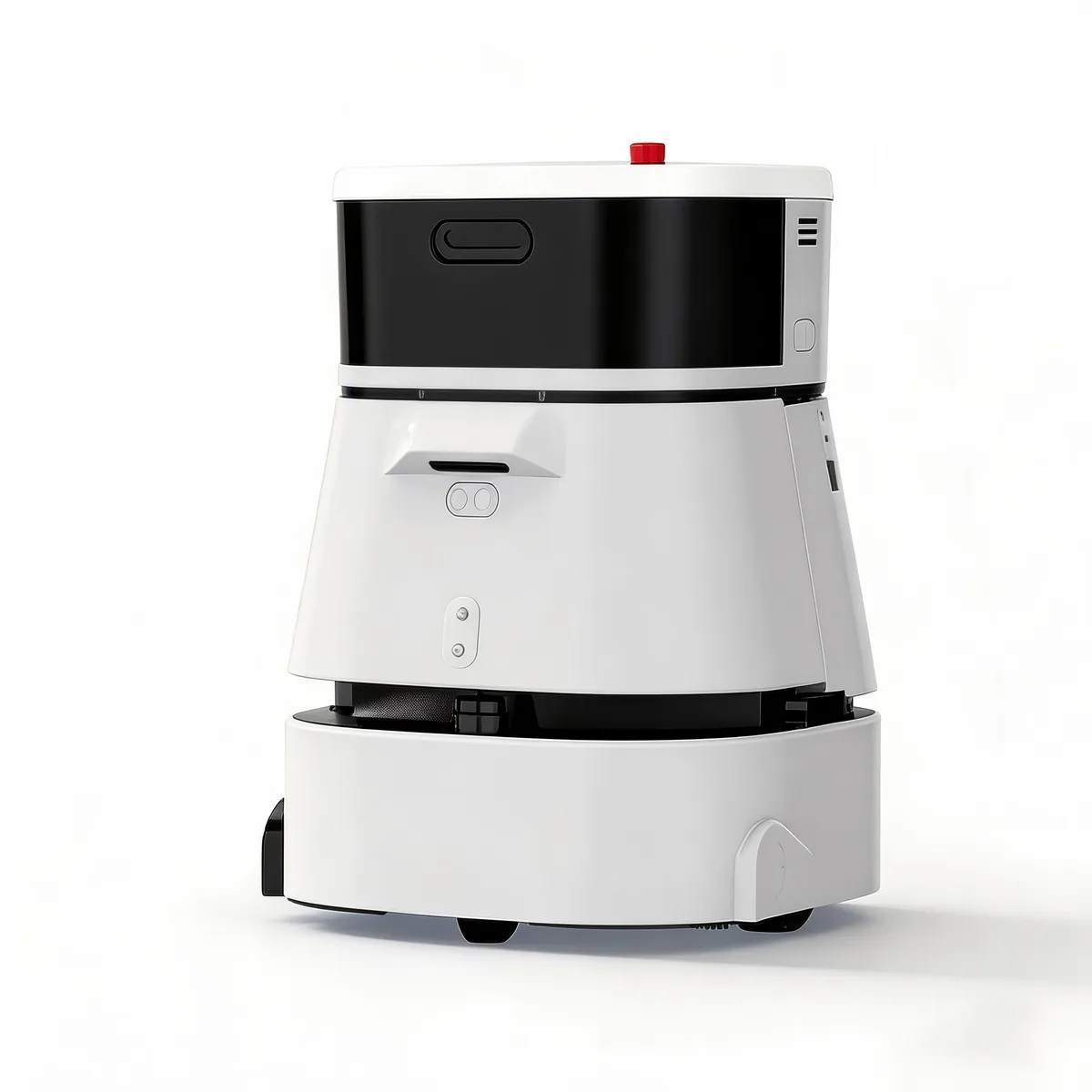
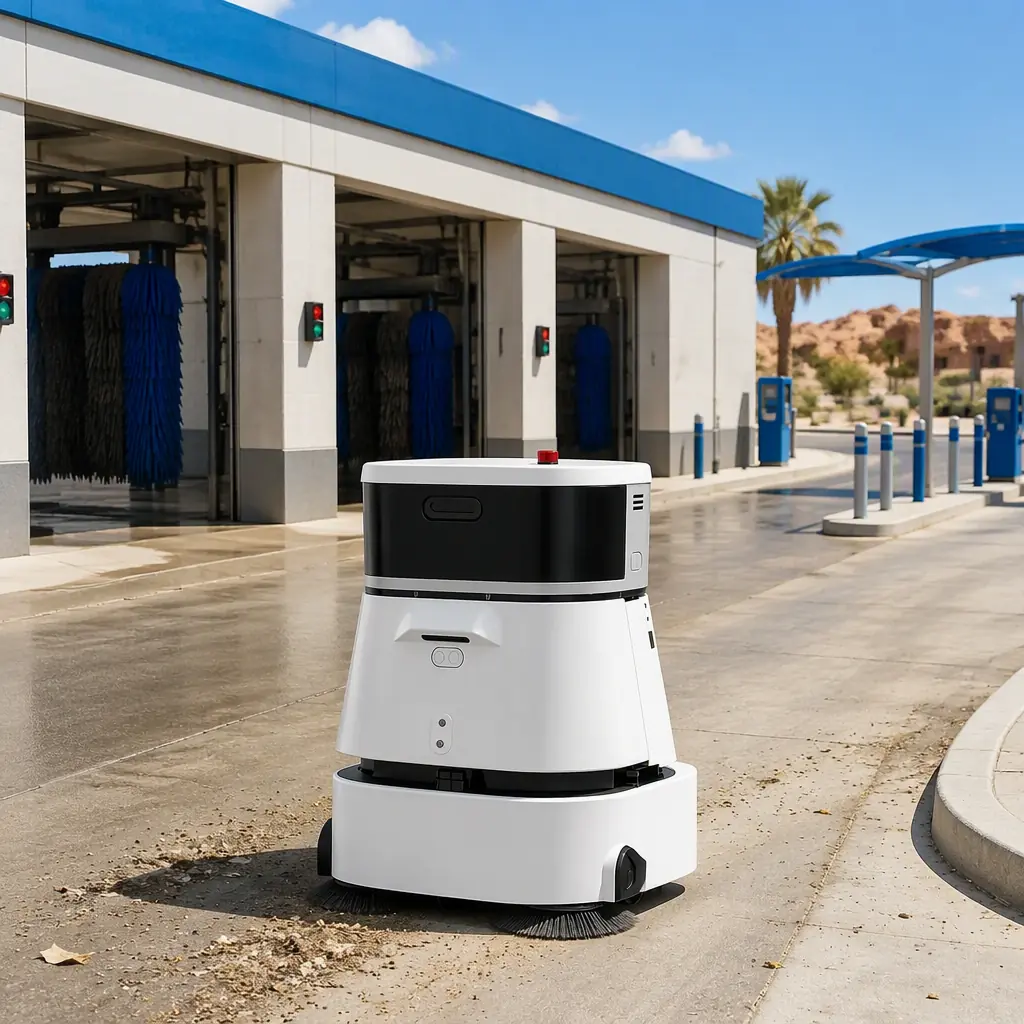
The lot is where a car wash's quality signal lives. Leaves, gravel, trash and standing water at the bay entrance tell a customer the wash is run down before the tunnel does anything, and the debris problem is continuous: trees drop litter on a daily schedule, and the queue lane collects gravel tracked out of the tunnel. The CLEINBOT CC201 outdoor sweeper holds the ring: a 1,020 mm sweeping width at 3,000 m²/h, a 130L dust container that auto-empties into an 800L station for full-shift unattended operation, and IP67 sealing with a rain sensor that reroutes around puddles instead of pushing them — the water-handling rule that matters most at a wash, where the lot is wet by design. Its GPS + LiDAR + IMU navigation covers the open lot and the queue lane, its 10-hour battery runs the overnight program, and its -10°C to 50°C operating range covers Phoenix summers and northern winters alike.
The Phoenix operator's math: two lot sweeps per week at 3.5 hours each was 364 labor-hours a year at $15/hour — about $5,500 of labor — and the sweep still slipped a third of the time. The CC201 runs the same program daily on a documented log, and the same pattern the parking facilities guide documents for underground garages applies above ground: the robot works the off-hours loop, and the lot crew goes back to what they were hired for — drying cars and managing the queue.
Drying Bay & Lounge Floor Care: Water Is the Hazard
Inside the wash, the floor-care problem is water: drying bays hold a permanent sheen of rinse water and detergent film, the customer lounge tracks in tire rubber and moisture, and detailing bays need dust- and grit-free floors to protect wet paint. The CLEINBOT C2 Pro handles the interior loop: 20 kPa of suction lifts the water sheen and detergent film in a single vacuum-first pass (the design rule that matters in a wet environment — wet-scrub-first machines turn rinse water into slurry), a 440 mm cleaning width fits the tight detailing bays and the gap between the tunnel exit and the lounge, and its 500–800 m²/h rate covers a 4,000–8,000 sq ft interior in under an hour, runnable between customer rushes at ≤65 dB. The commercial cleaning robot buyers guide covers the specification framework; the wash-specific rule is to verify the vacuum-first sequence and the water-tank capacity before piloting, because a floor robot that has to empty mid-rush becomes part of the problem.
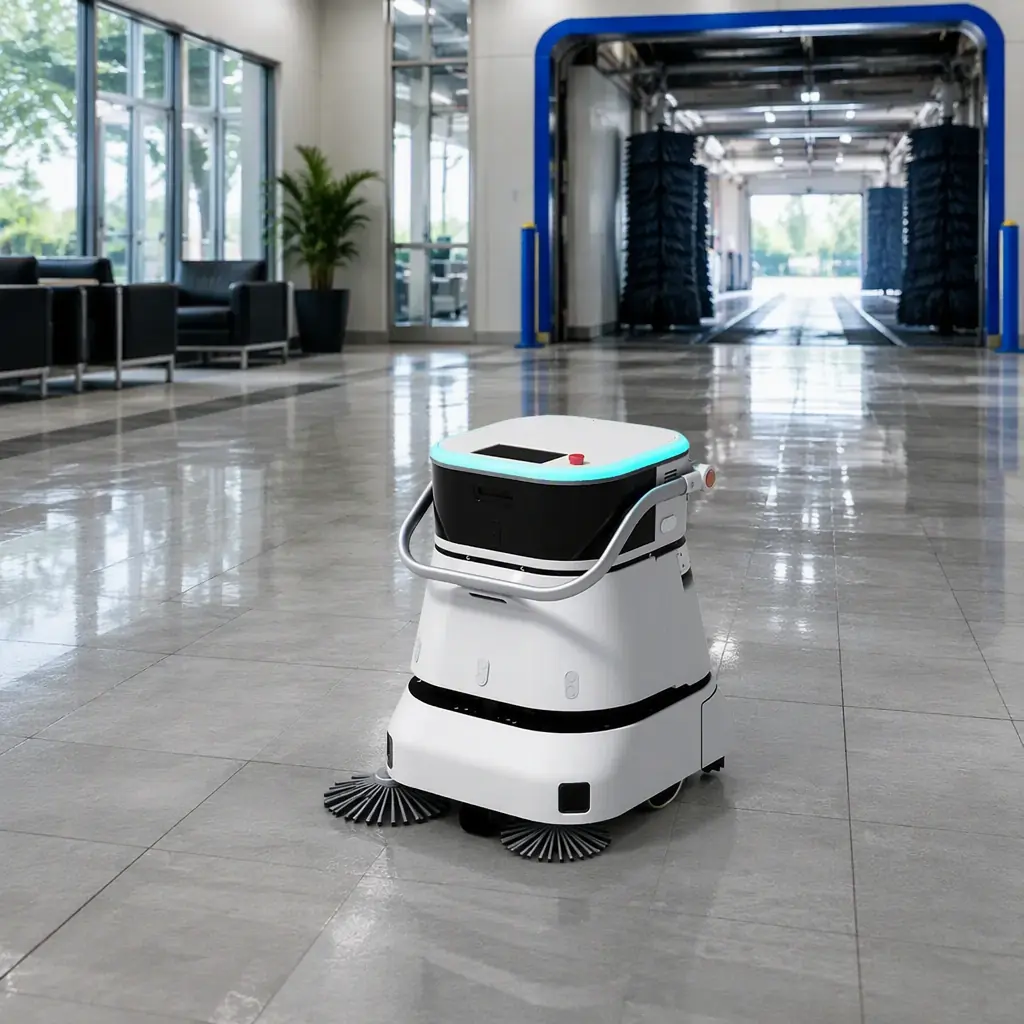
The automotive dealership guide documents the same interior pattern for showroom floors; the wash version adds the water load and the slip-liability ledger, where the C2 Pro's documented nightly program becomes the first exhibit in a workers' comp or customer-claims defense.
Membership & Upsell at the Counter
The membership counter is where a wash makes its margin — the Phoenix site's 82% counter-signup rate is typical, and every minute of counter staff time spent answering "how long is the wait" is a minute not spent pitching the unlimited package. The CRUZR concierge robot works the counter loop: 50+ languages for the tourist traffic, a 14-inch facial LED array for queue engagement, and 0.3-second face recognition that lets a returning member start a loyalty lookup without a card. It answers the wait-time questions, shows the package comparison on its chest screen, and hands off to counter staff at the moment of signature — the same engagement pattern documented in the reception and concierge guide, applied to a retail upsell.
Multi-Site Chains: One Dashboard, Dozens of Lots
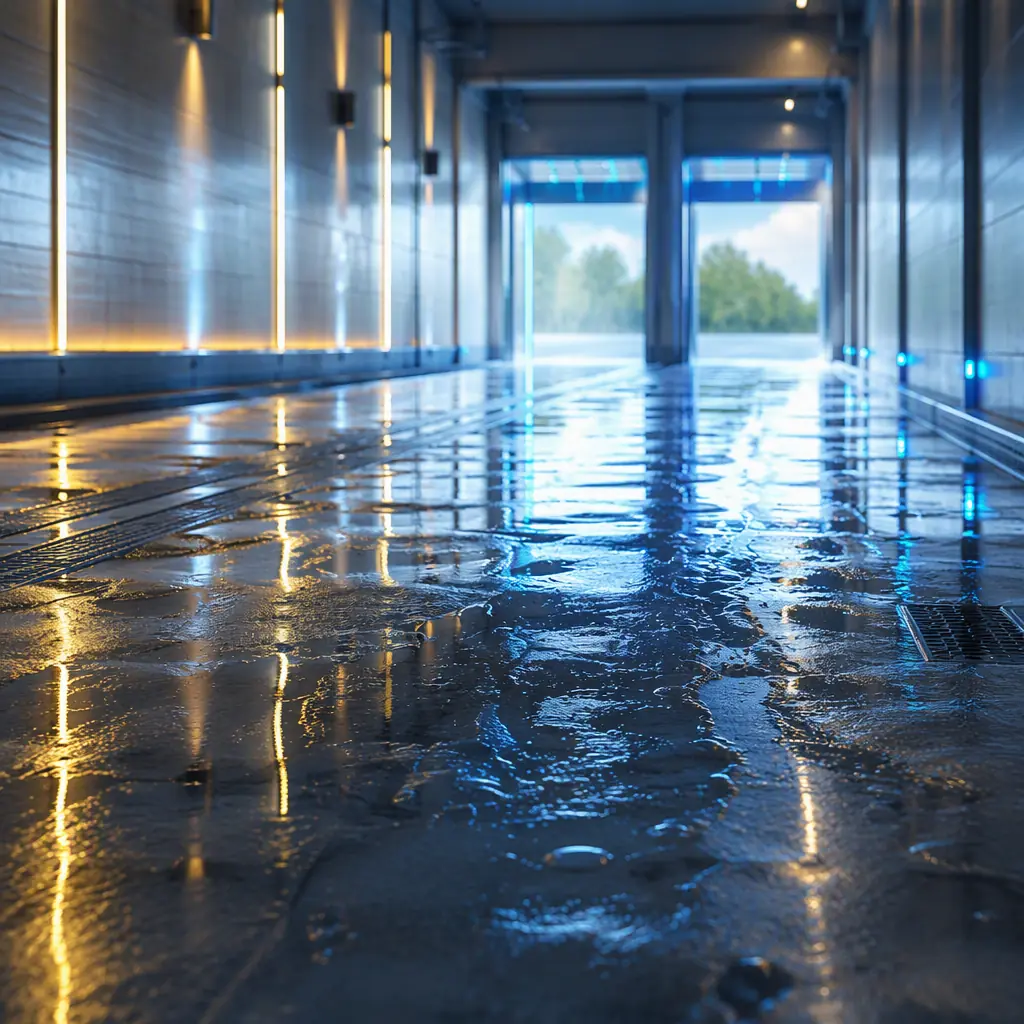
Car wash brands scale by cloning sites, and the multi-site deployment guide documents the fleet pattern: every CC201, C2 Pro and CRUZR reports to one cloud dashboard, routes and schedules are configured remotely, and a chain with 20 sites runs the same lot program everywhere — with the fleet management guide covering the operational layer. The RaaS financing guide covers the subscription structure that fits franchise cash flow: most washes start with one CC201 on the lot and one C2 Pro on the interior, measure the lot-condition delta in their own walk-around, and add the counter robot when the membership pitch becomes the bottleneck.
Deployment Table for Wash Formats
| Wash format | Outdoor fleet | Interior fleet | Monthly cost (RaaS) | Labor hours returned |
|---|---|---|---|---|
| Self-serve site (4–6 bays) | 1 × CC201 (shared loop) | 1 × C2 Pro | $1,500–2,300 | 300–450/year |
| Express tunnel (single site) | 1 × CC201 | 1 × C2 Pro + 1 × CRUZR | $2,600–3,900 | 700–1,100/year |
| Multi-site chain (10+ locations) | 1–2 × CC201 per site | 1 × C2 Pro per site + CRUZR at flagship | $28,000–45,000 | 7,000–12,000/year |
A car wash's margin lives in throughput and membership attach. The CC201 holds the lot that sells the first wash, the C2 Pro holds the floors that prevent the slip claim, and the CRUZR turns wait time into memberships — all on documented schedules that become part of the site's operating file. That is the automation pattern that fits a wash P&L, and it starts with the same step every successful deployment starts with: a walk-around audit of where the debris, the water and the unanswered questions actually are.