A food-service operation bought a floor-scrubbing robot on the strength of labor savings, then spent the first year in a running disagreement about who pays for brushes. The robot was not the problem — the budget was never built for the consumables. Brushes, scrub pads, tires and batteries are not an afterthought; they are the recurring cost that quietly decides whether your ROI math actually closes. Here is how to plan for them properly.
Why Consumables Are the Hidden Cost in Your TCO
The sticker price and even the maintenance plan rarely make consumables visible. Yet a commercial cleaning robot runs every shift it is deployed, and every hour of scrubbing wears a brush, every pass wears a pad, and every recharge cycle ages the battery. By year two, consumables can be a meaningful slice of the total cost of ownership — and they are exactly the kind of per-unit cost that scales with the fleet sizing decision.
The trap is budgeting a fixed number and treating wear as a surprise. That is backwards. Consumables should be the predictable line item, computed from your coverage area and run time.
Consumables by Robot Type
Different robots wear different things. Map your fleet to the parts that actually consume.
| Robot type | Consumables | What drives wear |
|---|---|---|
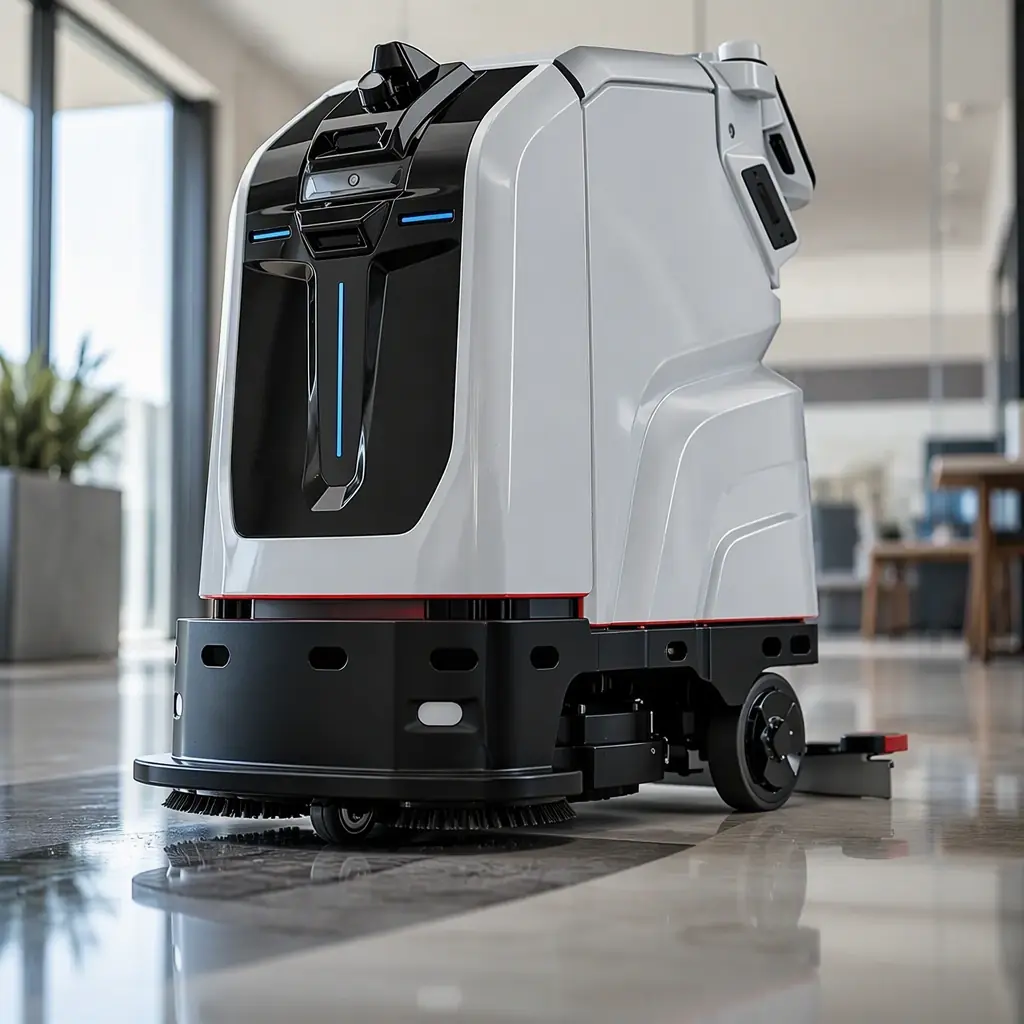
| Floor scrubber (CLEINBOT M79, C2 Pro) | Brush deck, scrub pads, squeegee blade, water-strainer filter | m² cleaned per shift and floor aggression |
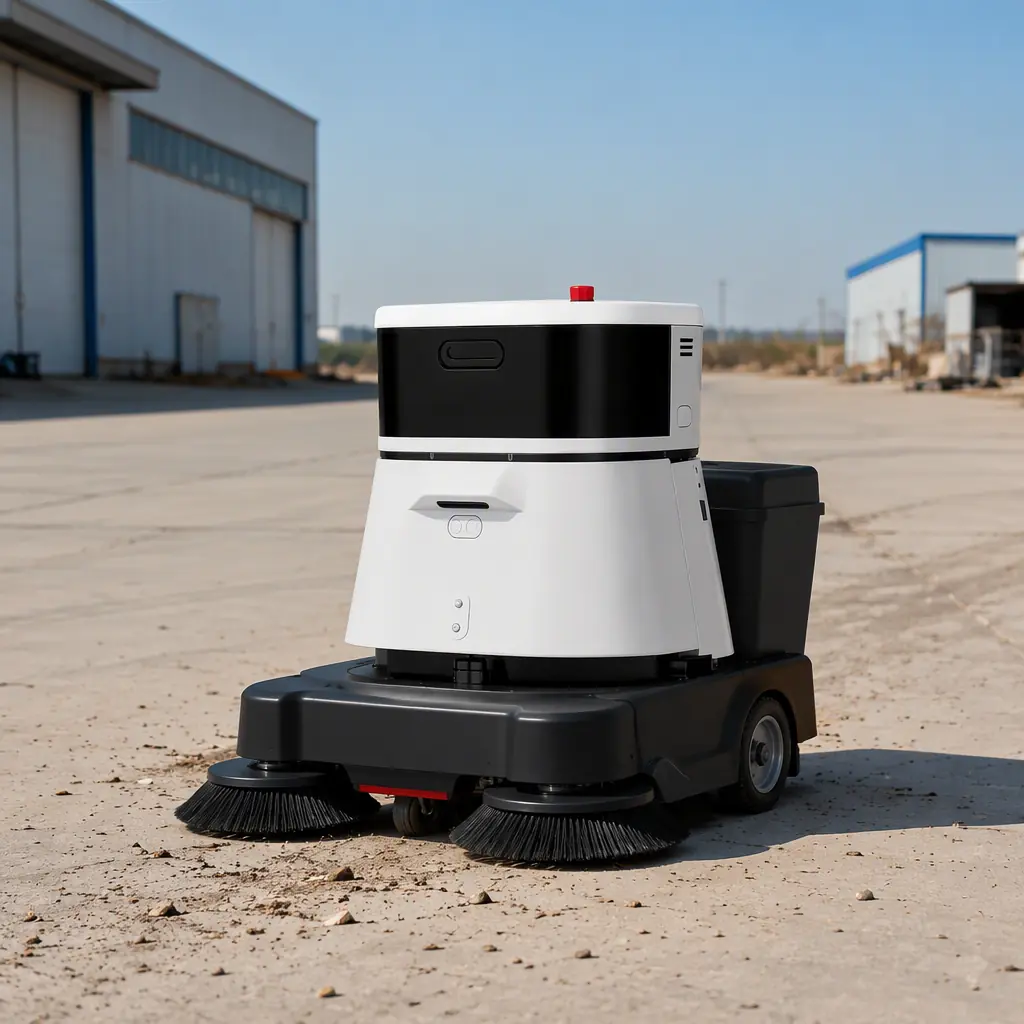
| Outdoor sweeper (CLEINBOT CC201) | Sweeper bristles, main & side brushes, dust filter, PM2.5 filter | m² swept and dust load |
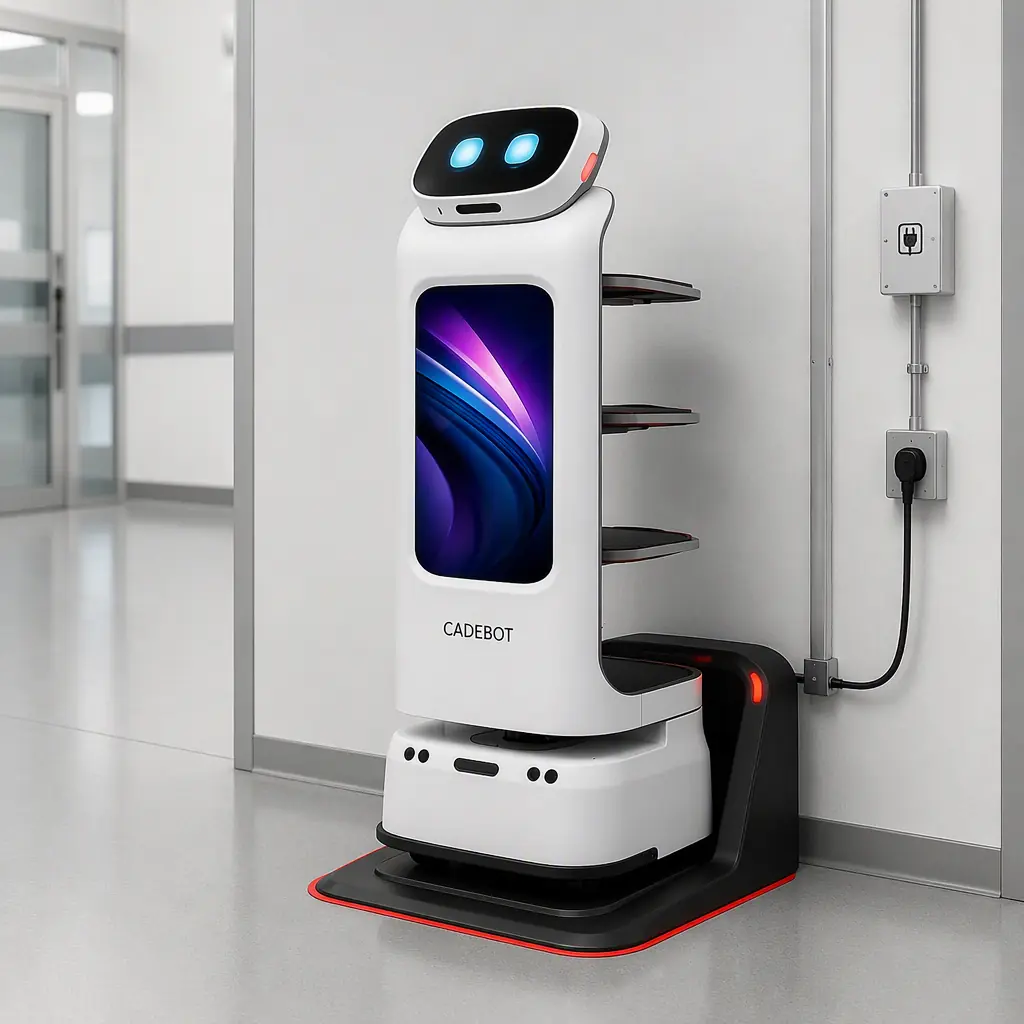
| Delivery robot (CADEBOT L100, AOMAN DOUBLE) | Drive wheels/tires, tray liners, cabin seals, UV lamp (if fitted) | km driven per day and tray cycle |
| Humanoid reception (CRUZR) | LED face array, screen, touch surfaces, display housing | usage hours and load |

Battery and Charging Wear
The battery is the largest single spare, and it is the one most buyers forget even though it is not a consumable in the small sense — it is a cycle-rated component. The CLEINBOT C2 Pro uses a LiFePO4 battery (25.6 V, 36 Ah); the CLEINBOT M79 runs a 48 V/120 Ah pack with an 8 h runtime; the outdoor CC201 has a 72 V/150 Ah pack for 10 h. The battery technology guide explains the chemistry, but for budgeting what matters is the charge-cycle rating and the replacement price.
Two wear points to budget:
- Battery pack — rated in charge cycles. After a few thousand cycles it loses capacity, and replacement is a four-figure per-unit event.
- Dock charging contacts — daily docking wears the dock and the robot's charging contacts. They are cheap parts but they fail on a schedule, and a corroded contact silently kills charging and drops your uptime.
How to Build a Parts & Consumables Supply Plan
A consumables supply plan is a simple three-tier stocking model:
| Tier | What | Where |
|---|---|---|
| 1. Sustaining | Brushes, pads, squeegees, filters — the high-turnover parts | On site, enough for 4-8 weeks |
| 2. Critical sparing | Battery, drive assembly, dock contacts, main brush motor | Vendor depot or near-site cache |
| 3. Planned replacement | Battery replacement, major assemblies, cosmetic panels | Scheduled on a PM calendar |
The rule: the faster a part wears and the more it matters, the closer it sits. For a multi-site operation, centralize critical sparing and distribute sustaining consumables. Hold outs through a vendor who offers a parts cache — the vendor evaluation framework scores this.
The Real Numbers: Cost per Square Meter / Per Pass
The most useful way to budget consumables is to normalize to your workload. If you know your robot's efficiency, the math is straightforward:
- A CLEINBOT M79 cleans ~2,000 m²/h on a 720 mm deck. At 8 h/day on a 5-day week, that is roughly 80,000 m²/week — so your brush/pad budget is a function of that weekly area, not a guess.
- An outdoor CC201 sweeps ~3,000 m²/h with a 1,020 mm deck and auto-empties a 130 L bin; the dust filter replaces on a schedule set by the dust load.
Ask your vendor for a consumables cost-per-m² or cost-per-pass figure. It converts an abstract TCO into an auditable operating number and exposes which robots are genuinely cheap to run versus expensive to feed.
How This Changes Fleet Sizing and ROI
Consumables are a marginal cost in your fleet sizing decision. A robot you run lighter has lower consumables cost; a robot you run to full capacity maximizes labor savings but also maximizes wear. The break-even point shifts depending on whether the vendor prices consumables per-wear or bundles them into a service plan. Before you scale a fleet, model three years of consumables against the labor saved — see the budget planning guide for the calculation.
The Bottom Line
A robot that returns its sticker price in labor savings can still lose money if the consumables were never planned. Build a three-tier stocking plan based on your actual weekly area or km, price the battery replacement and dock contacts up front, and demand a cost-per-pass figure from the vendor. That is what turns a clever ROI story into a defensible operating budget. Explore the solutions page to align a robot and its consumables plan to your workload.