
Robot Parcel Locker Handoff: Latency, Chain of Custody and the Failures That Strand a Delivery
At a glance: A delivery robot that reaches the lobby has solved the easy half of the problem. The handoff — opening a compartment, proving the parcel was delivered, and releasing the machine to the next drop — is where routes lose their schedule and where disputes get settled. Here is the latency budget, the four ways to integrate a locker, and the failure modes that strand a delivery with nobody there to fix it.
Last-metre delivery robots are usually justified on the hard part: navigating a lobby, riding a lift, finding the right door. Those are solved problems and they are well documented. The part that is not solved, and that quietly determines whether a route is profitable, is the thirty seconds at the end of every drop, when the parcel has to leave the robot's custody and enter someone else's. Do it badly and a six-drop route becomes a four-drop route without anyone changing the robot.
This article treats the handoff as an engineering problem with a latency budget, a custody requirement and a known list of failure modes. It is written for the people specifying the deployment — building operations, fleet planning, and the integrator wiring a robot API to a locker controller.
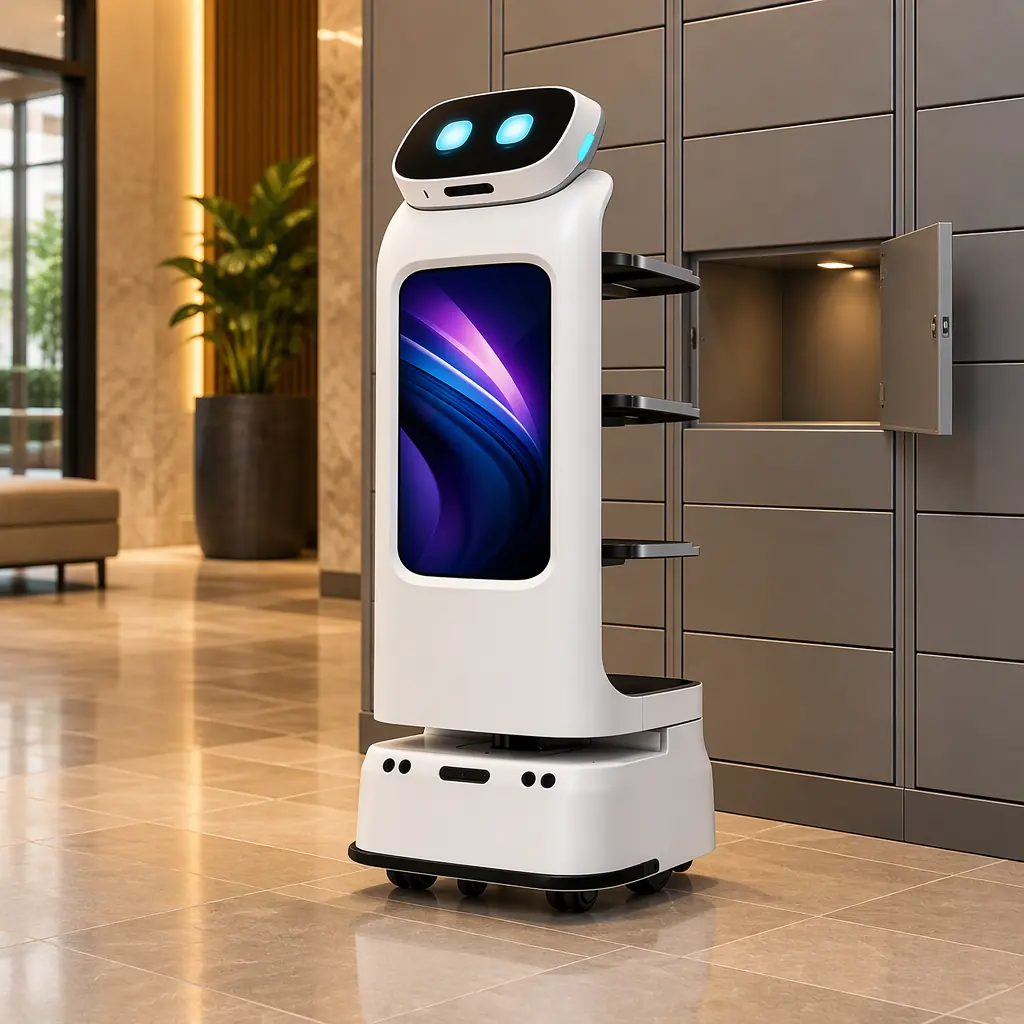
Where Last-Metre Delivery Actually Stops
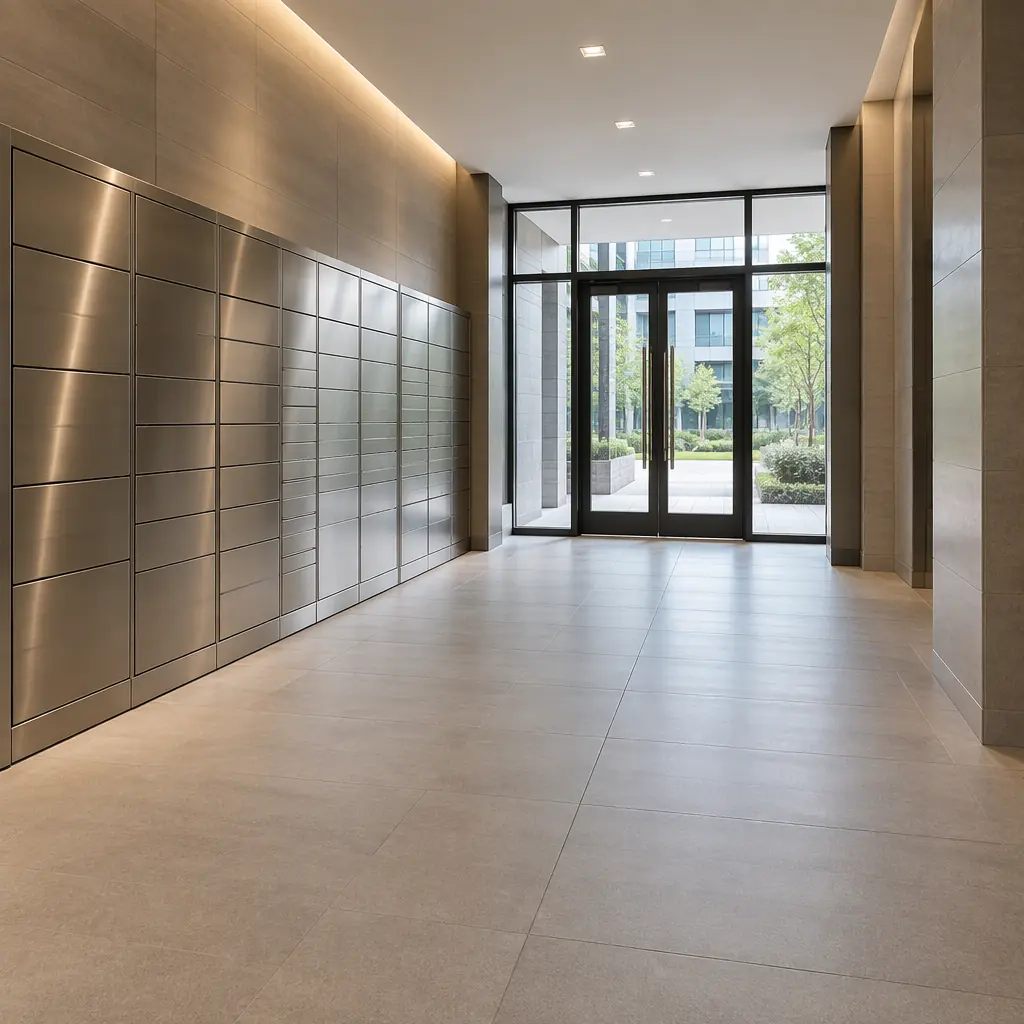
A residential delivery robot typically completes the physical journey and stops at one of three points: a locker bank in the lobby, a concierge or mailroom, or the resident's door. Each is a different handoff problem and each has a different economic ceiling.
Door handoff has the highest service value and the worst throughput, because it depends on the resident being present. A robot that waits three minutes per drop at 20 drops in a shift has spent an hour standing still.
Concierge handoff is fast and human, and it scales only as far as the staff's attention does. It also puts a person in the custody chain, which is good for disputes and bad for cost.
Locker handoff is the only one that is both unattended and bounded in time. It is also the only one where the software integration is the whole deployment — the robot can already reach the locker; making the two systems agree is the project.
The reason to care about the distinction is that the failure modes are different. Door handoffs fail when nobody answers. Locker handoffs fail when the systems disagree, and system disagreements are the ones that strand a parcel on a robot with nowhere to put it.
The Handoff Latency Budget
Break a locker handoff into steps and assign a budget to each. The numbers below are typical of production deployments and are worth using as a specification starting point.
| Step | Typical | 95th percentile | What pushes it out |
|---|---|---|---|
| Approach and fine positioning at the locker face | 8–15 s | 30 s | Reflective floor, queue of people, a trolley parked at the bank |
| Identify: read locker ID / present credential | 1–3 s | 8 s | QR worn, BLE re-pair, network round trip to a cloud API |
| Authorise and open compartment | 1–2 s | 12 s | Cloud API latency, credential expiry, per-door solenoid fault |
| Transfer parcel into compartment | 6–12 s | 25 s | Compartment height mismatch, oversize parcel, robot's own handling limits |
| Confirm close and capture evidence | 2–4 s | 10 s | Presence sensor settling, camera upload on a weak link |
| Depart and clear the locker face | 3–6 s | 15 s | Waiting for a person to step aside, replan around them |
| Total per drop | 21–42 s | ~100 s |
Now put that against route capacity. A delivery robot with a six-parcel payload and a 60-minute productive window per charge, including travel between stops of 90 seconds, completes six drops in about 14 minutes if handoffs average 25 seconds. Stretch handoffs to 60 seconds — still within the typical range — and the same six drops take 17.5 minutes. That looks trivial until the shift has a fixed number of charge windows, at which point the difference between 25 s and 60 s per handoff is the difference between four and five full rounds per shift, or 24 versus 30 parcels.
This is the arithmetic that should drive the integration choice. The 95th percentile matters more than the mean, because a route plan built on averages strands a robot when two consecutive drops take 100 seconds each.
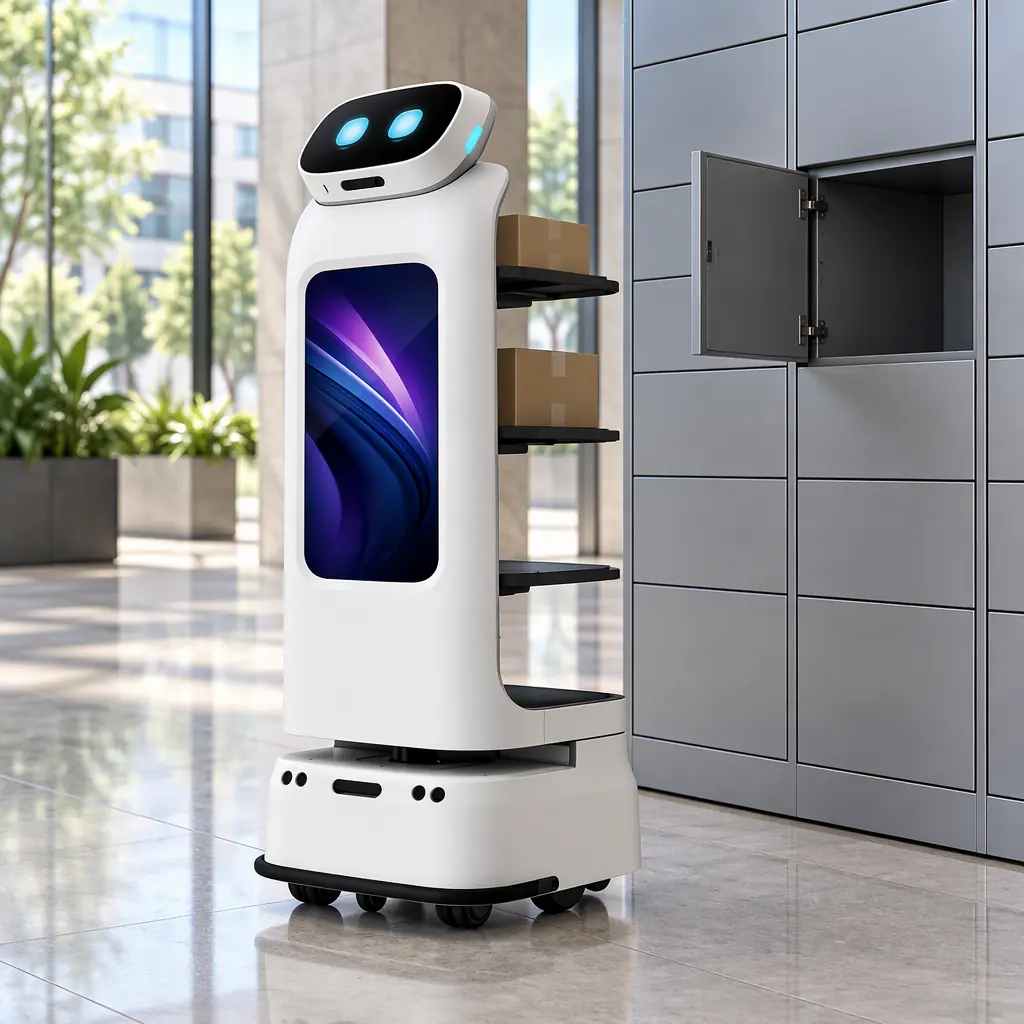
Four Ways to Integrate a Locker
The integration choice determines latency, failure blast radius, and who you call at 7 pm when it stops working. There are four credible architectures and they sit on a spectrum from clever to robust.
| Architecture | Latency | Credential model | Failure blast radius | Maintenance owner |
|---|---|---|---|---|
| Vendor cloud API | 1–3 s, 10 s+ tail | OAuth token, per-building tenant | Internet or vendor outage stops all sites | Locker vendor |
| On-prem SDK / local controller | 0.2–1 s | Local key store | One building | Building IT + vendor |
| Dry contact / relay | < 1 s | Physical key or per-door override | One door | Facilities |
| Courier assisted | 60–180 s | Human credential | None | Operations |
Vendor cloud API is the default because it is the only option most locker vendors document publicly, and it is the right answer for a single building with reliable connectivity and a support contract. Its weakness is the tail: a subscription call that normally takes 1.5 seconds can take twelve when the vendor's region is slow or a token refresh is in flight. Design the robot's timeout to fail into a retry rather than into an abort, or the tail becomes stranded parcels.
On-prem SDK or direct local controller removes the internet from the critical path. Latency drops by an order of magnitude and the failure mode becomes local. The cost is that someone has to maintain software inside the building, patch it, and keep the locker firmware in a compatible state — which is a real obligation in a 20-building portfolio.
Dry contact is unfashionable and often correct. A relay input on the locker controller that opens a designated compartment on a signal from the robot is crude, fast and diagnosable with a multimeter. It cannot express which parcel goes where, so it works only with a fixed compartment-per-tenant assignment, but for a residential building where each flat has one compartment, that constraint is free.
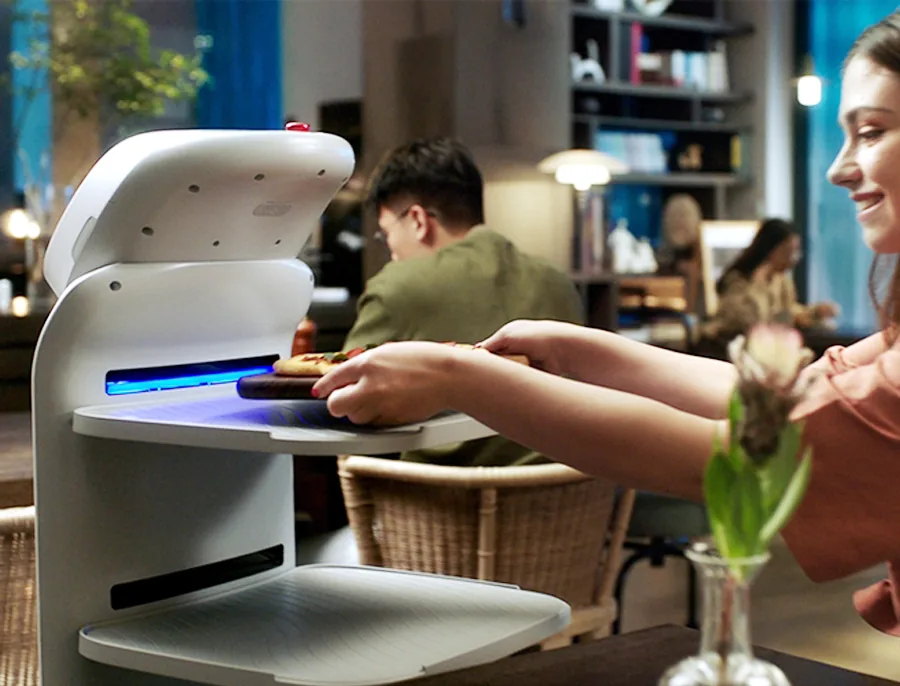
Courier assisted is not an integration at all, and it is the correct fallback for lift-served or secure areas where no locker controller is accessible. It converts an unattended handoff into a staffed one at a defined cost per drop. Any deployment without a staffed fallback will eventually have a robot holding a parcel it cannot deposit.
Chain of Custody When Nobody Is There
A locker handoff removes the two humans who would otherwise settle a dispute. In their place the system needs to produce a record that is convincing to a resident, a building manager and, if it comes to it, an insurer. Four data points do most of the work.
Compartment and timestamp, from the locker not the robot. The locker controller's own log is the stronger evidence, because it is a separate system that neither the robot nor the recipient controls. Where the architecture allows it, capture the locker's confirmation rather than the robot's assumption that the door opened.
A presence or weight confirmation. Either a compartment sensor detecting an object or the robot's own load cell reporting the parcel leaving its bay. The two together prove the parcel moved between them; either alone leaves a gap.
A photograph at close, if the policy permits. The image should frame the compartment, not the resident. This is the point where GDPR becomes concrete: an image of the lobby taken to prove a drop will contain people, and it needs a lawful basis and a retention limit. The defensible pattern is a short retention window on locker-camera evidence, with residents informed in the building's delivery policy, and no images retained beyond the dispute window.
An immutable record of the credential used. Which token or PIN authorised the compartment, issued to whom, and when it expired. This is what answers the question “who collected it” without needing any footage at all.
The related handoff at a hotel guest-room door has the same custody question with a different privacy posture; see hotel guest room delivery handoff for that case.
The Failure Modes That Strand Deliveries
Five situations account for nearly all stuck parcels. Each has a cheap mitigation and an expensive non-mitigation.
Locker full. The bank has no free compartment of the right size when the robot arrives. Without a reservation, the robot has already loaded the parcel and now has to carry it back. Mitigation is a capacity reservation at dispatch: the fleet layer reserves a compartment before the parcel is loaded, and releases it on completion. This one change removes the most common stranding cause.
Expired or revoked credential. The resident moved out, or the token expired between dispatch and delivery. The compartment opens for nobody and the parcel has nowhere to go. Mitigation is a re-validation at approach, plus a defined diversion: the concierge, or a return to depot flagged for same-day re-dispatch. A robot with no diversion rule will wait indefinitely.
Power loss mid-handoff. The locker controller reboots with a compartment open and a parcel half in. On restart it must not treat the compartment as empty, or the next reservation double-books it. Mitigation is a controller that latches state across a power cycle and reports it on recovery — a question worth asking of the locker vendor directly.
Height or access mismatch. The robot can reach the bank but the free compartment is above its transfer height, or the bank is behind a door that closed. Mitigation is a dispatch-time filter on compartment geometry, not a recovery procedure. The fleet layer should only be offered compartments the robot can physically serve.
Network partition between robot and locker. The most confusing failure because both systems report normal operation. The robot believes it never got a response; the locker believes it was never asked. Mitigation is a local fallback path — the dry contact or a local PIN pad — and an operator alert on the mismatch rather than a silent retry loop.
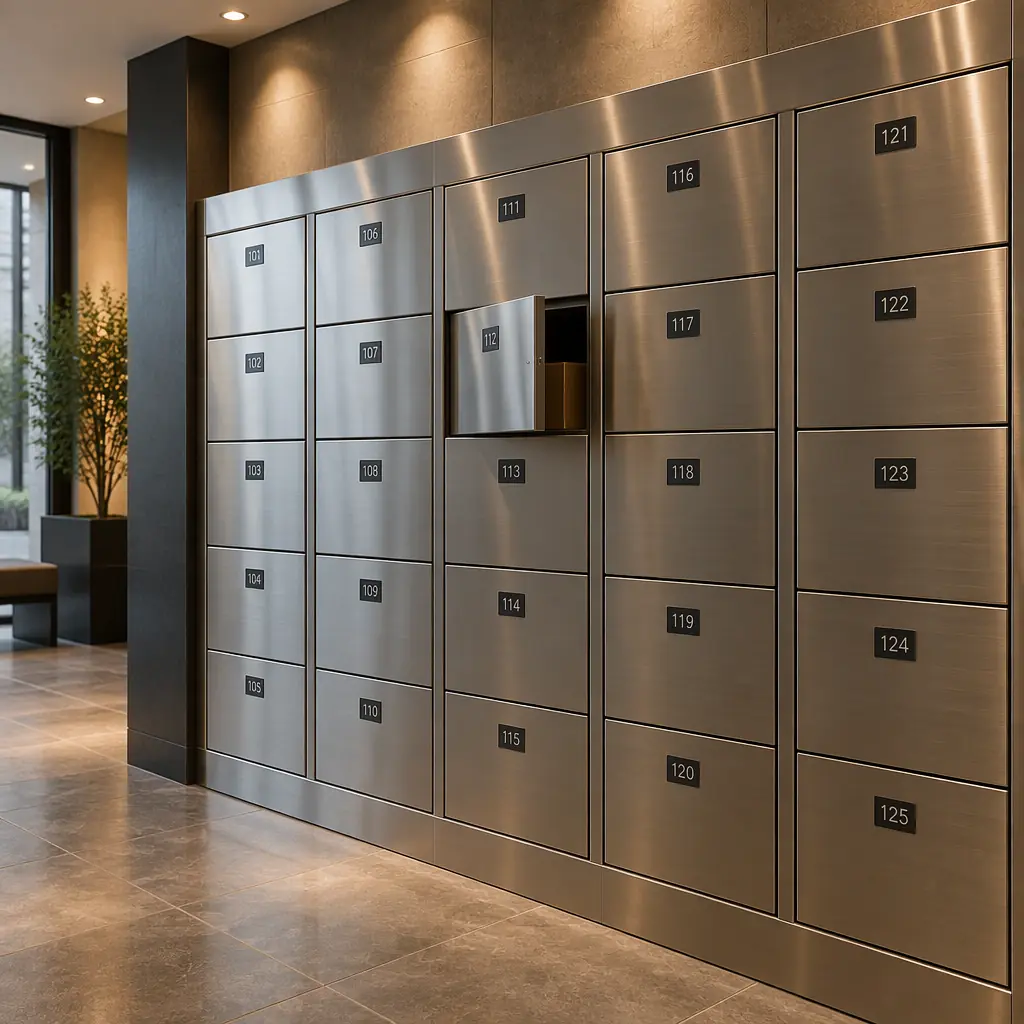
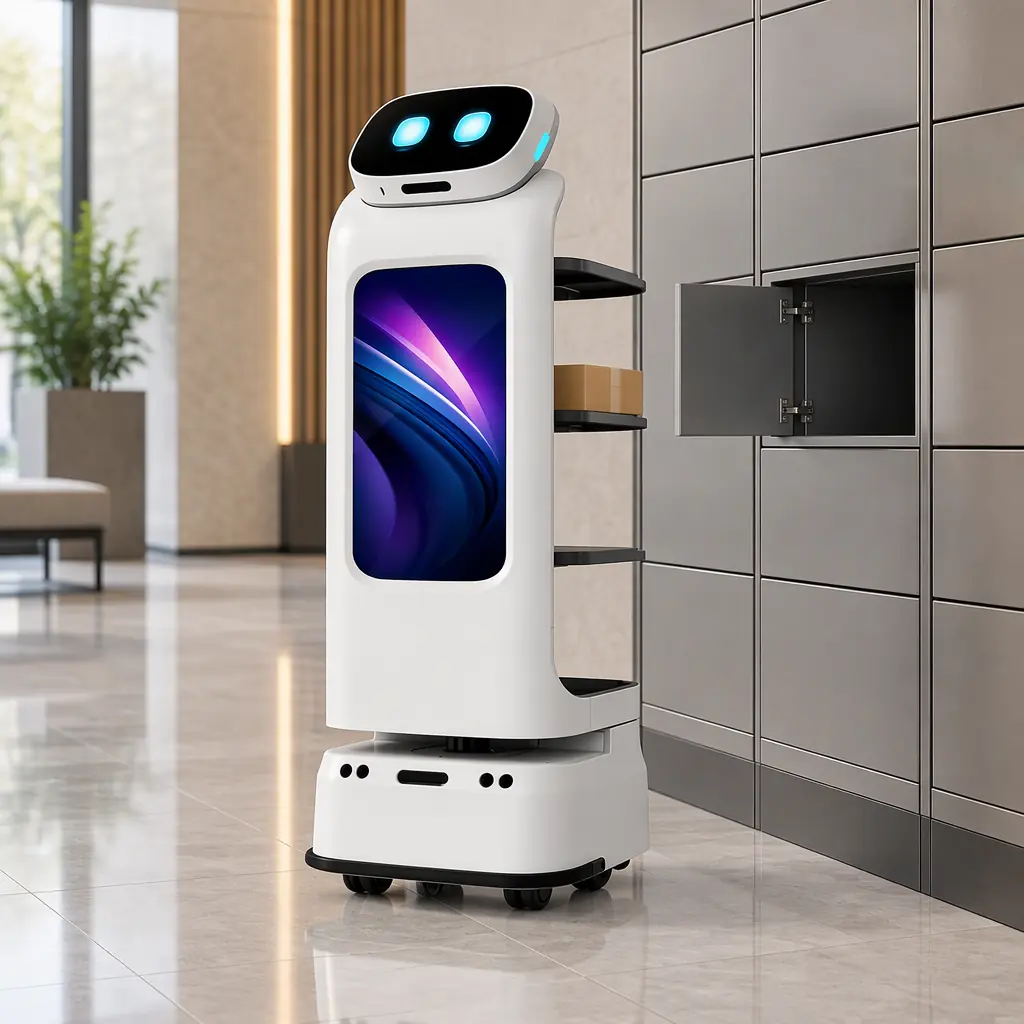
Sizing Lockers to the Route
Locker capacity is usually sized to residents rather than to the robot, which is why banks are full at the wrong times. The useful ratio is compartments per resident, with a peak-window rule.
For a residential building, a working starting point is one compartment per 2.5–3 flats, weighted toward the small size, with a peak rule that the bank must have at least two free compartments of the robot's supported size during the delivery window. For an office building the ratio is much looser, because most parcels are collected the same day; the constraint becomes lobby throughput rather than storage.
The overflow rule needs to exist on paper before it is needed: when the reservation cannot be satisfied, what happens to the parcel? Return to depot, hold for next round, or divert to staffed reception. A route plan without an overflow rule is a plan that assumes every drop succeeds, which is a plan that fails on its first busy Monday.
The multi-tenant version of this — who pays for the locker bank, and how the cost is recovered — is a separate question with its own arithmetic, covered in robot service charge allocation in multi-tenant buildings. The wider context of parcel operations, including hub sortation rather than last-metre, is in service robots in distribution centres and parcel hubs.
What to Specify Before the Pilot
Four requirements separate a pilot that scales from one that works in one building and never again.
First, a reservation API. The fleet layer must be able to reserve a compartment of a given size at a given bank before the parcel is loaded, and release it explicitly. Everything else follows from having this primitive.
Second, a stated latency commitment from the locker integration, not an average but a tail figure the vendor will stand behind. If the vendor cannot quote a 95th percentile, the integration will be measured in production, and the measurement will be unpleasant.
Third, a local fallback path that does not depend on the internet. The fallback can be a relay, a local controller, or a staffed reception, but it has to exist and it has to be exercised during commissioning, not discovered during an outage.
Fourth, a defined evidence set with a retention period. Decide before the first drop what will be recorded, where it is stored, how long it is kept and who can see it. Deciding afterward means retrofitting privacy notices and reconstructing records that were never made.
The handoff is the part of a delivery robot deployment that looks like a small detail and behaves like the whole system. Get the reservation, the latency tail and the fallback right and the route arithmetic holds; get them wrong and every other investment in navigation and payload is spent waiting in a lobby. For the robot side of the same integration, see AOMAN D1 multi-scene delivery robot.
Get a Quote
Tell us about your space and workload, we reply within 24 hours.