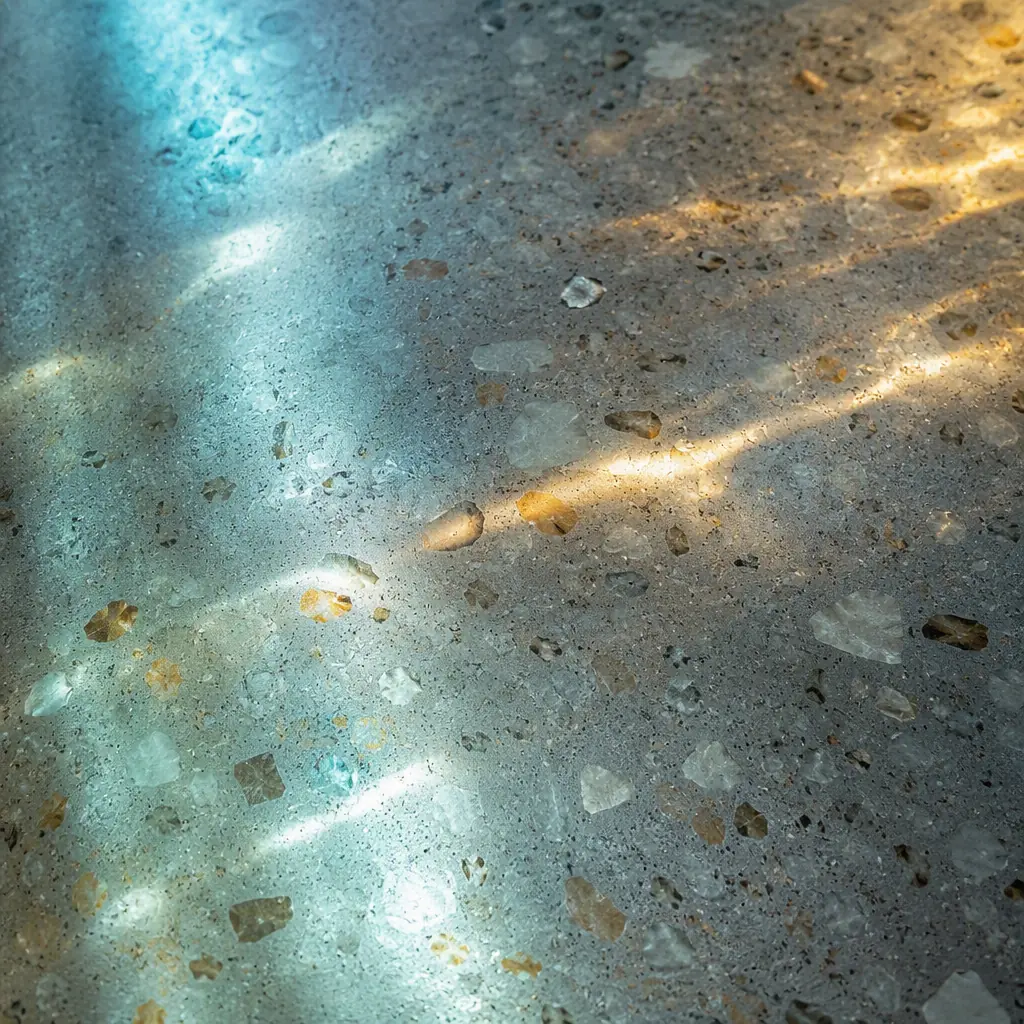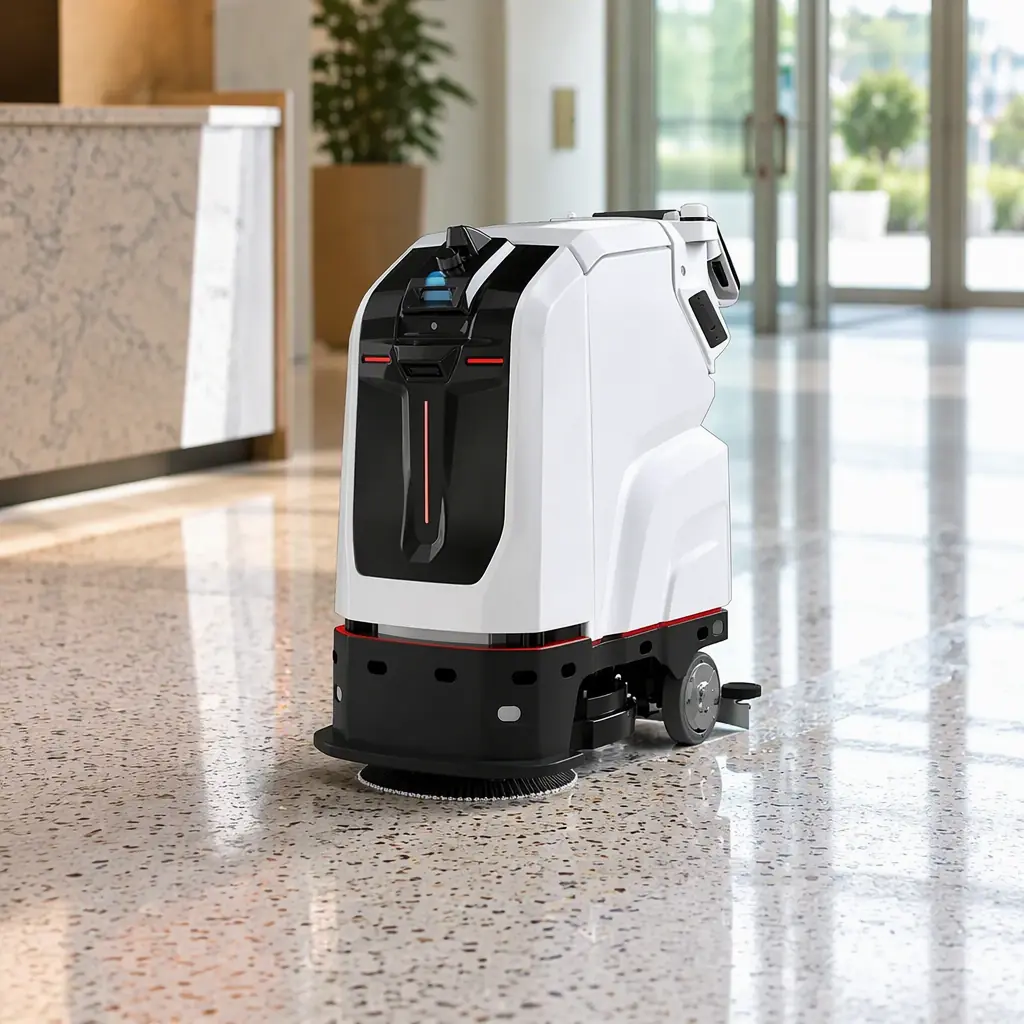
A shopping mall in Shenzhen bought an autonomous scrubber, ran it once across the atrium, and immediately flagged a problem the salespeople never mentioned: the machine's brush deck was fine on the polished terrazzo, but the moment it crossed the decorative stone inlay and the carpeted carpet at the edge, the result went from spotless to streaked and wet. The mistake was not the machine — the CLEINBOT M79 is a capable scrubber. The mistake was assuming one floor-clean setting works on every surface. Floor compatibility is the first feasibility check any commercial cleaning robot buyer should run, and it is the one most often skipped.
This guide is the surface-by-surface truth. It tells you what an autonomous scrubber cleans superbly, what it cleans with adjustments, what it should never touch, and the floor conditions that will break the machine or the finish before you even get ROI. No vendor gives you this list honestly; here it is.
How an Autonomous Scrubber Actually Works
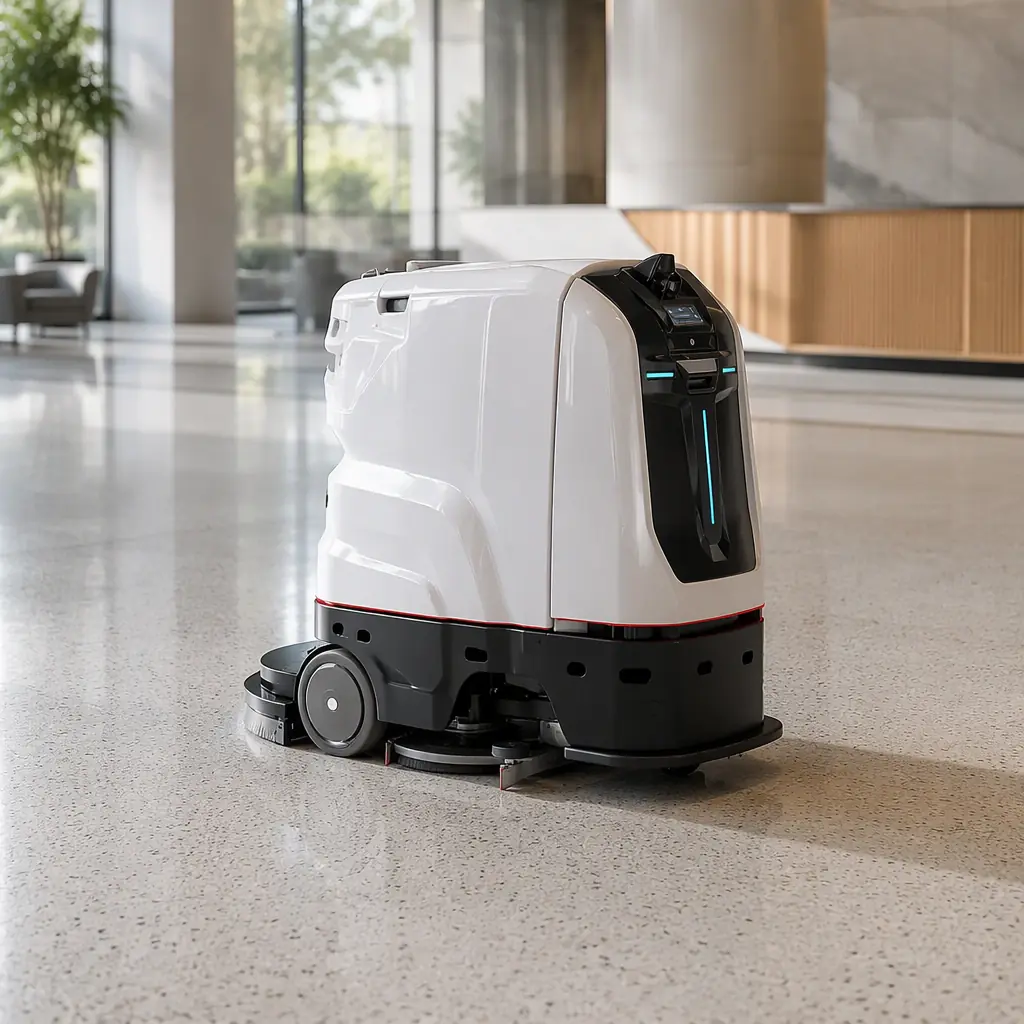
To understand compatibility, understand the machine. A robotic scrubber-dryer lays down solution, mechanically agitates it with a rotating brush deck, and vacuums the slurry back up in a single pass — the "scrub and dry" cycle. The CLEINBOT M79, for example, does 2,000 m²/h with a 720 mm brush deck. The CLEINBOT C2 Pro is a 42 kg compact doing 500–800 m²/h on a 440 mm deck. The CLEINBOT CC201 — a 310 kg outdoor sweeper — uses 3,000 m²/h with a 1,020 mm deck and a 130 L dust bin.
The physics creates two constraints that determine compatibility:
- Water is the enemy of soft and unfinished surfaces. Porous or unfinished floors absorb the solution, leaving streaks and damaging the finish. Hard, sealed, non-porous surfaces are the sweet spot.
- The brush is the enemy of delicate and fibrous surfaces. A rotating brush that is perfect on concrete will tear carpet fuzz and abrade unsealed hardwood or polished marble.
So compatibility is really: hard + sealed + non-porous for scrubbing, everything else handled differently.
Surface Compatibility Rating: What Scrubbers Can and Can't Take
| Surface | Scrub-safe? | Rating | Notes |
|---|---|---|---|
| Polished concrete | ✅ Excellent | 10/10 | The ideal scrubber floor. Sealed concrete takes solution, dries fast, no marking. |
| Epoxy / coated concrete | ✅ Excellent | 9/10 | Tough, chemical-resistant, great with a scrubber — used in industrial and food plants. |
| Terrazzo | ✅ Excellent | 9/10 | Hard, sealed, polishes nicely with a scrubber. |
| Ceramic tile | ✅ Good | 8/10 | Cleans well; grout lines need the right brush pressure. |
| LVT / vinyl plank | ✅ Good | 7/10 | Scrub-safe; use moderate pressure and the correct pad to avoid haze. |
| Sealed hardwood | ⚠️ Careful | 5/10 | Only with a very low moisture setting and a soft pad; never let water sit. |
| Unsealed hardwood | ❌ Avoid | 1/10 | Water penetrates and warps. Use dry methods only. |
| Carpet | ❌ Don't scrub | 1/10 | Do not run a scrubber on carpet. Use a specialty extractor or a dry-capable unit. |
| Natural stone (marble, limestone) | ⚠️ Careful | 4/10 | Acid-sensitive; needs a neutral, pH-balanced solution and soft brushes. |
| Rubber matting | ❌ Avoid | 2/10 | The brush will grab and smear rubber mats; lift them before scrubbing. |
| Grates, escalators, stairs | ❌ Never | 0/10 | A scrubber cannot climb stairs or brush through escalator teeth. |
| Outdoor asphalt / concrete | ✅ Excellent (CC201) | 9/10 | The outdoor sweeper line handles lots, yards and entrances. |
The two rows to highlight: polished concrete, epoxy, terrazzo, LVT and tile are where scrubbers are at their best, and carpet, unsealed wood, rubber matting and natural stone are the ones that will ruin the result or the floor.
The 3 Floor Conditions That Break a Scrubber Before You Buy
Beyond surface material, three physical conditions decide whether an autonomous scrubber works in your facility at all. Test these on the floor plan before you commit.
Condition 1: Transitions, thresholds and slopes. A scrubber's mobility is bounded by what its drive system can climb. The CLEINBOT M79 and C2 Pro handle standard thresholds, but steep ramps, expansion joints over 25 mm, or debris on the floor can stop or damage the machine. If your facility has big height changes between zones, verify the machine's hurdle and slope limits. The spec-sheet guide lists exactly which mobility numbers to check.
Condition 2: Loose mats, cables and debris. An autonomous scrubber navigates in strips and needs a clear path. Floor mats on the route (entrance mats, anti-fatigue mats) get grabbed by the brush, and trailing cables get tangled. Your route plan must either lift the mats or program them as avoid zones.
Condition 3: Grout, expansion joints and heavy texture. On tile with deep grout or concrete with expansion joints, a scrubber cleans the surface but can leave residue in the recesses. Deeply textured floors may need a second detail pass, which changes your fleet sizing math.
Matching the Machine to the Surface and the Layout
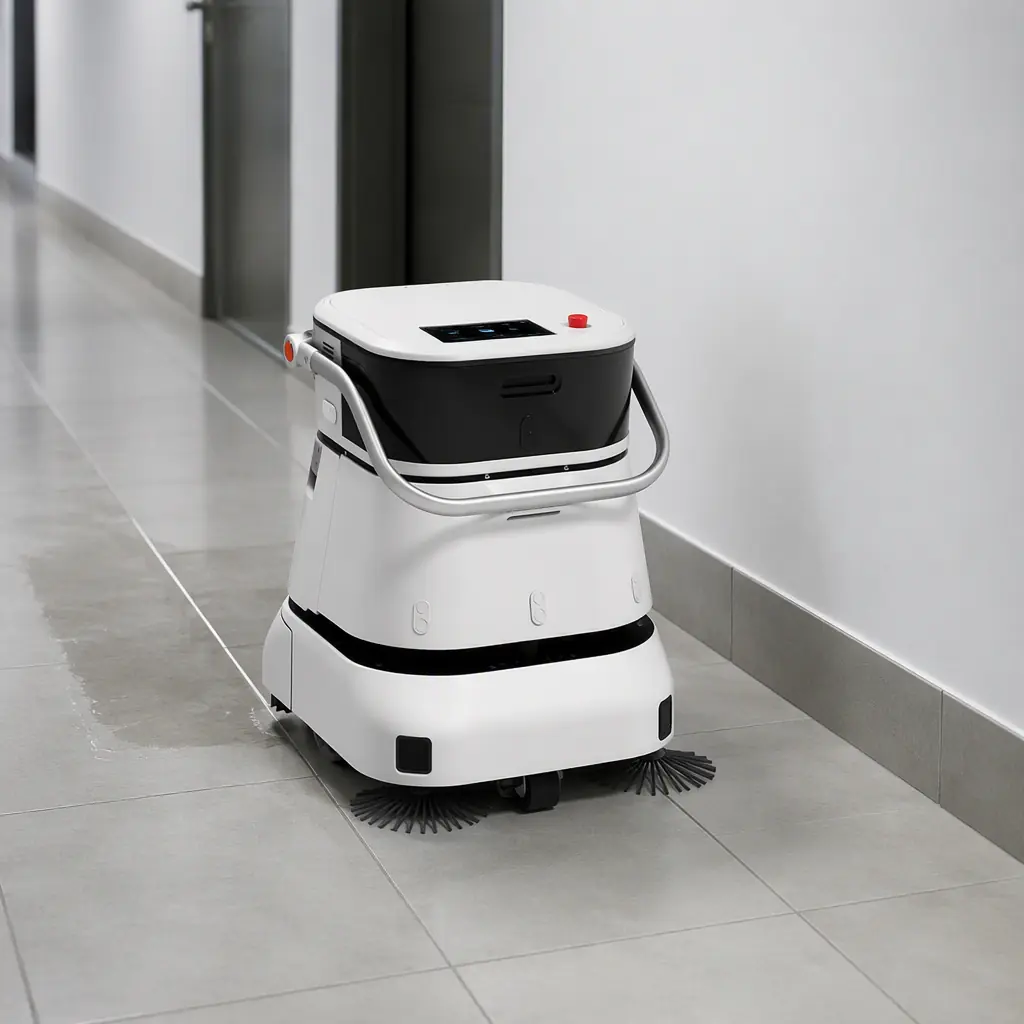
Floor compatibility is not just "is it safe" — it is also "which machine fits." The CLEINBOT cleaning line is built as three machines for a reason, and surface plus layout should drive your pick:
- CLEINBOT M79 — the 2,000 m²/h workhorse. Best on large open hard floors: lobbies, atria, concourses, open-plan offices, polished concrete and terrazzo.
- CLEINBOT C2 Pro — the 500–800 m²/h compact. Best on narrower corridors, meeting rooms, break rooms and back-of-house where the deck needs to fit between furniture. Its IP54 sealing handles wet-zone loads.
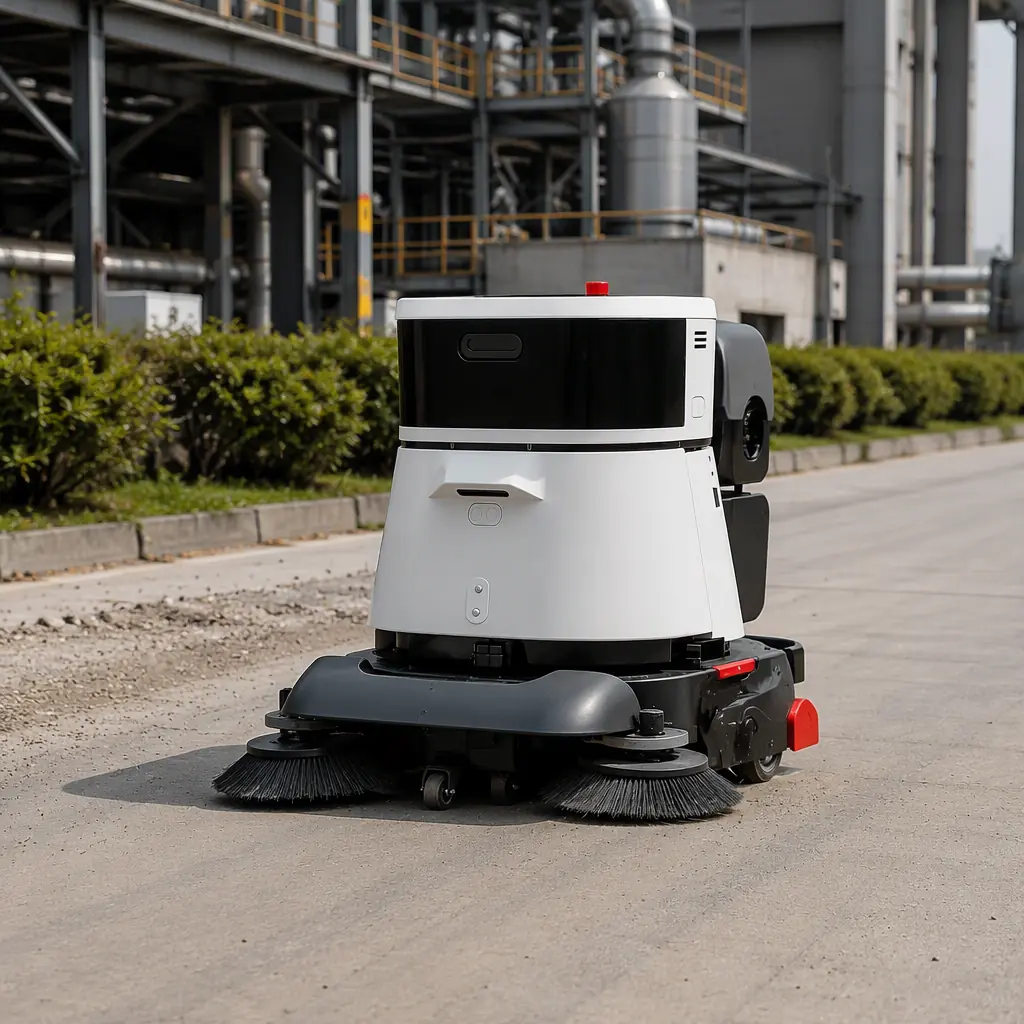
- CLEINBOT CC201 — the 3,000 m²/h outdoor sweeper with IP67 sealing and GPS navigation. This one is for asphalt lots, industrial yards, loading docks and outdoor walkways — it sweeps and dust-collects, which is the right tool for exterior concrete, not the indoor scrubber.
If you are deciding between the three, the CLEINBOT comparison guide walks through machine-by-machine selection based on deck width, coverage and surface.
Cleaning Carpet, Wood and Delicate Stone Without a Scrubber
If your facility is mostly carpet, unsealed wood, or acid-sensitive marble, a scrubber is not the primary tool — but a cleaning robot can still add value with the right configuration.
- Carpet: use a dry-capable unit or a specialty carpet extractor. Some platforms support a dry brush or a carpet-specific attachment; verify the machine's mode before assuming it can handle fiber.
- Hardwood: sealed hardwood can take a very low-moisture scrub with a soft pad, but never a standard wet pass. Test one small area first.
- Natural stone: a neutral, pH-balanced solution and soft brushes only — acid cleaners will etch marble and limestone.
The occupancy-triggered cleaning model can help you schedule around sensitive surfaces and high-traffic windows, and the outdoor cleaning guide covers exterior surfaces that tolerate much rougher treatment.
Running a Floor Audit Before You Buy
Before signing off on any cleaning robot, run a five-minute floor audit:
- Map your floor-by-floor surface types and mark the scrub-safe areas in green, "careful" in yellow, "never" in red.
- Check transitions, thresholds and slopes against the machine's mobility limits.
- Identify loose mats, cables and obstacles on the intended route.
- Decide which zones need the M79 (large open), C2 Pro (narrow), or CC201 (outdoor).
- Confirm the deck width fits your narrowest corridor and doorway.
Then request a demo pass on a representative worst-case section of your floor — not the showroom floor. A machine that impresses on polished concrete in a demo can underperform on your carpet edge or textured grout.
The Bottom Line
An autonomous scrubber is one of the highest-ROI investments in facility cleanliness — but only on floors that can take it. Polished concrete, epoxy, terrazzo, LVT and ceramic tile are where scrubbers are superb. Carpet, unsealed wood, rubber matting and natural stone need different tools and lower-moisture settings. And the physical envelope — thresholds, slopes, mats, obstacles — is what actually decides whether the machine can run the route at all.
Map your surfaces, match the machine to the layout, and test on a real worst-case patch before you buy. That is the difference between a cleaning robot that pays for itself in a few months and one that sits docked because it cannot handle your floor. Explore the full cleaning line and the solutions page to match a machine to your exact surface mix.