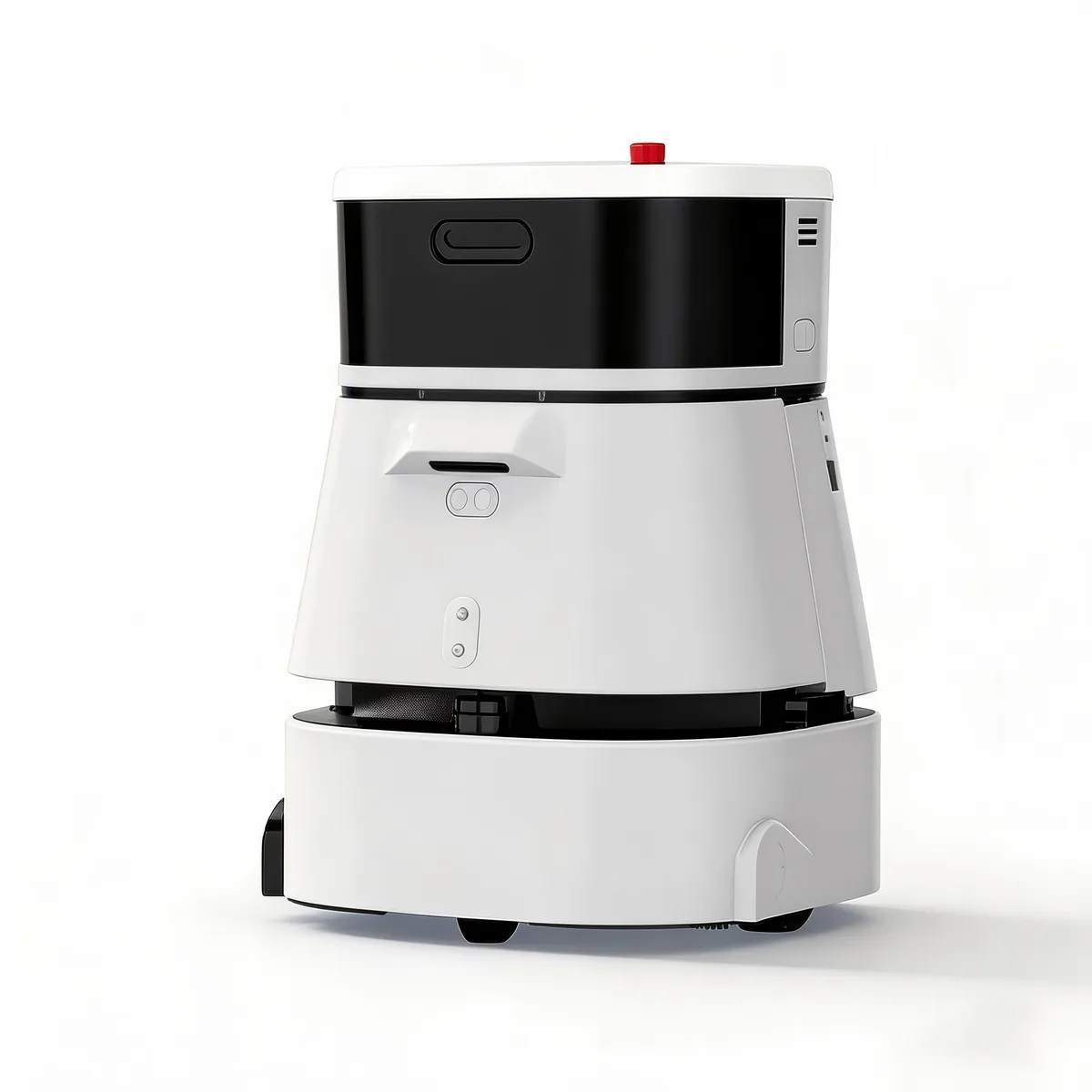
A 24-bay highway charging plaza ran its 2025 operations review and found the problem was not the chargers — it was everything around them. The lot accumulated windblown debris, cigarette litter, mud from the adjacent construction road and the leaf load of four seasons, and with no on-site staff the plaza relied on a contracted cleaning crew that visited twice a week and left the lot looking tired between visits. The second finding was the dwell-time gap: drivers waiting 20–40 minutes for a DC fast charge had nowhere to buy a coffee or a phone charger — the nearest convenience store was 1.6 km away — and the plaza operator was leaving that revenue on the table. The third was the scale: the operator ran 14 sites across three states, and every site had the same debris pattern, the same unattended-hours problem and the same untapped convenience demand.
EV charging sites are an unattended-infrastructure business with a hospitality layer, and the petrol stations & highway service areas guide documents the adjacent fuel-retail pattern; this guide covers the charging-specific version, where 24/7 lot sweeping, driver convenience delivery and network-wide fleet operations are the three highest-value robot roles — the outdoor loop that keeps the site presentable without staff, the delivery loop that monetizes the dwell time, and the dashboard that lets a multi-state network run the same pattern on every site.
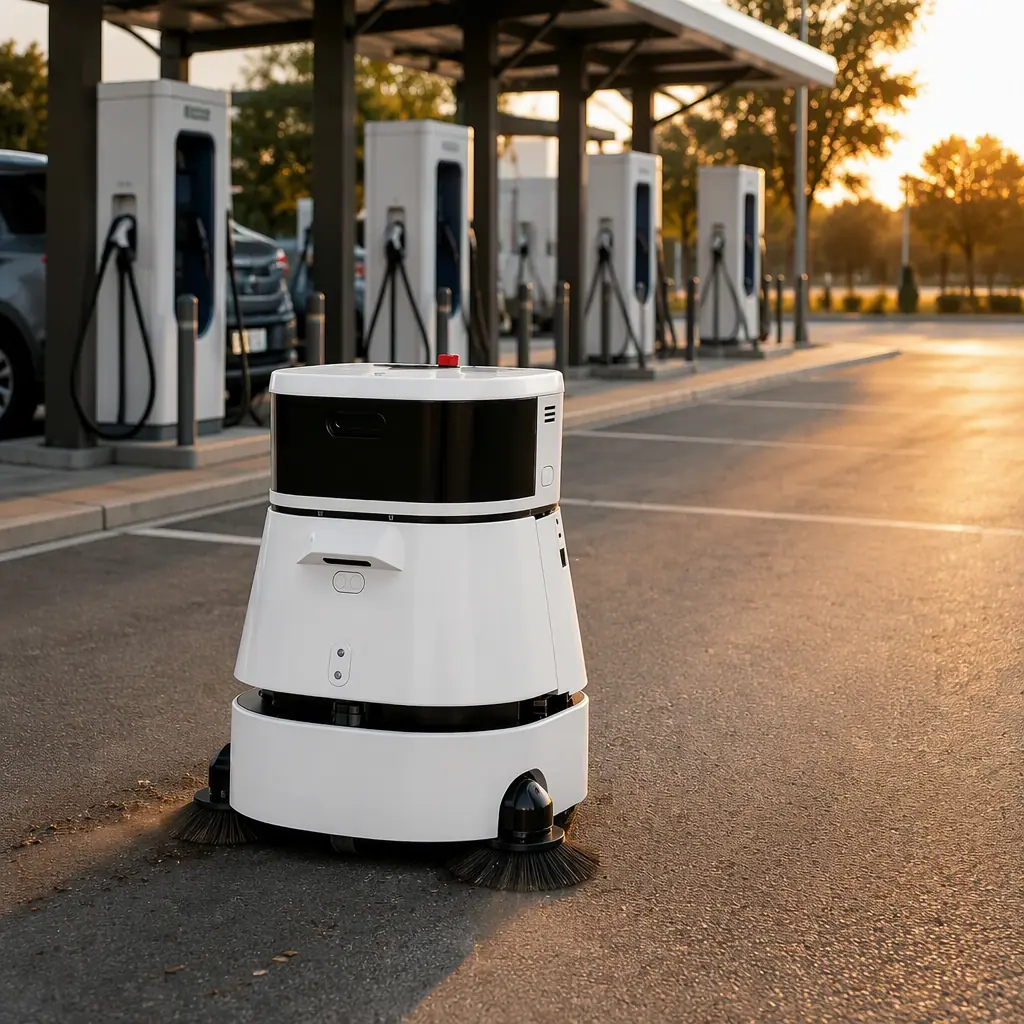
The 24/7 Unattended Site: Debris Never Takes a Break
Charging plazas are open all night, and the debris load follows the weather and the traffic, not the cleaning schedule. The CLEINBOT CC201 outdoor sweeper covers the lot loop: a 1,020 mm sweeping width at 3,000 m²/h — a 5,000 m² plaza in under two hours — with a 130L dust container that auto-empties into an 800L docking station, IP67 sealing with a rain sensor for all-weather duty, and GPS + LiDAR + IMU navigation that follows the approved lot loop between charging bays. Its 10-hour battery runs the off-peak program against the night and early-morning schedules, and its -10°C to 50°C range covers both northern winter plazas and desert summer sites. The outdoor pattern the outdoor autonomous cleaning guide documents for parking lots and public spaces applies directly: the charging bays are swept first so debris does not get dragged across the lot, the drive aisles run on the off-peak schedule, and the site's curb appeal — the surface that decides whether a driver pulls in or drives past — is maintained without a contracted crew.
The electrified-zone design rule is the question charging operators ask first: the CC201's navigation map marks the charging bays and cable zones as no-go or reduced-speed areas, and the rain sensor pauses outdoor passes during active storms — the same "keep the robot away from the hazard zone" logic the EV battery gigafactory guide documents for contamination-controlled production floors, applied to cable management and energized equipment instead of particulates.
Driver Convenience Delivery: Monetizing the Dwell Time
The 20–40 minute DC fast-charge dwell is a retail opportunity the site operator currently forfeits. The CADEBOT L100 covers the convenience loop: a 400 mm platform with four trays rated for 15 kg each and a 40 kg total payload that carries drinks, snacks and charging accessories from a small on-site kiosk or vending corner to the vehicle waiting at the stall — 6–8 deliveries per hour across the plaza, including the phone-charger run that used to require a 1.6 km trip to the convenience store. The same pattern the delivery robot selection guide documents for matching robot form factor to the environment applies: the L100's clearance and tray layout fit the gap between parked vehicles and charging cabinets, and the delivery log ties every transaction to the fleet dashboard for the site operator's revenue accounting. Plazas that pilot the convenience loop typically pair the L100 with a QR-order flow — the driver scans, the kiosk loads, the robot delivers to the vehicle — which the fleet management guide covers on the operational side.
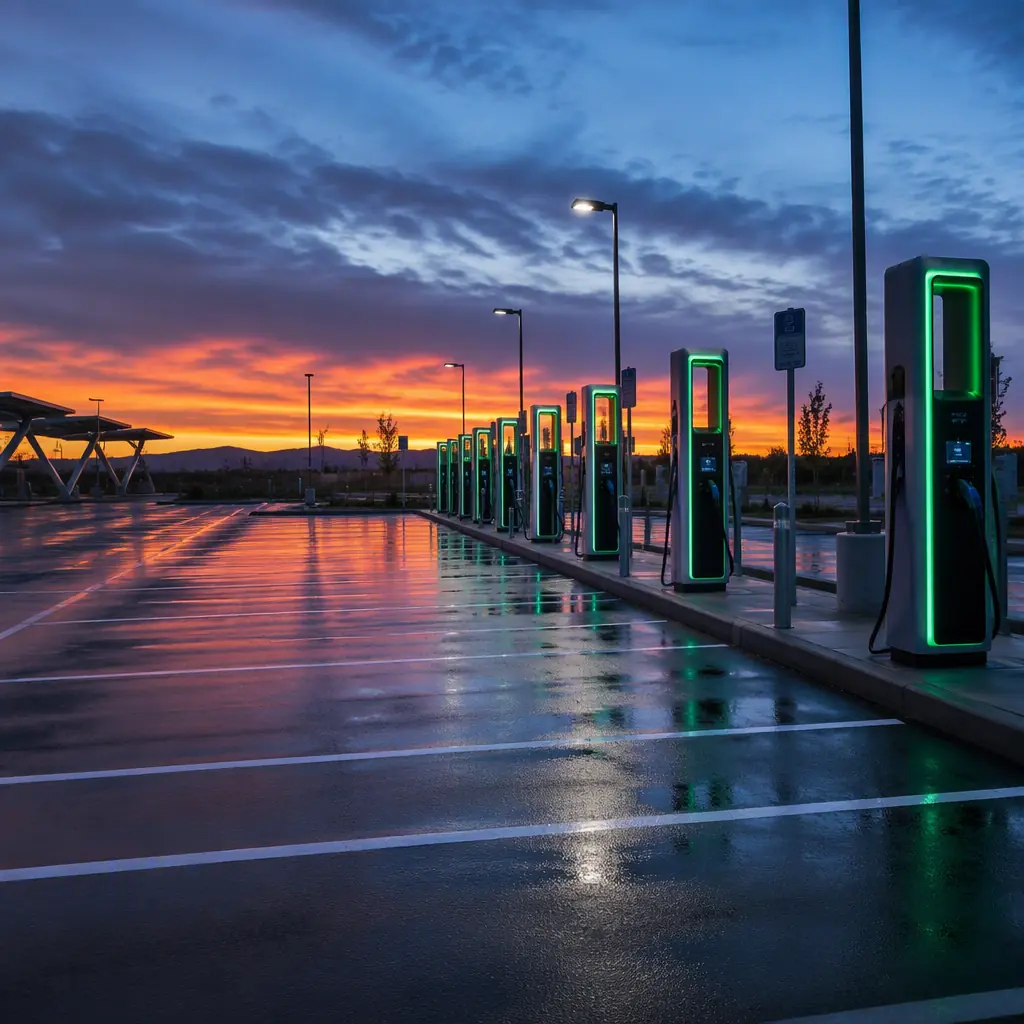
Network-Wide Operations: One Dashboard, Every Site
Charging networks are the textbook multi-site robot customer: identical site layouts, identical debris patterns, identical dwell-time economics, spread across states. The multi-site deployment guide documents the fleet pattern: every CC201 and L100 reports to one cloud dashboard, routes and schedules are configured remotely by the network operations center, and an operator with 14 sites runs the same lot loop, the same convenience delivery and the same documentation trail everywhere — with the solar & renewable energy facilities guide documenting the adjacent unattended-site pattern for energy infrastructure and the RaaS financing guide covering the subscription structure that fits charging-network budgets: most operators start with one CC201 per site on the lot loop, pilot the L100 convenience delivery at the highest-traffic plazas, and scale the fleet as the dwell-time revenue data comes in.
Deployment Table for Site Types
| Site type | Outdoor fleet | Convenience fleet | Monthly cost (RaaS) | Staff hours returned |
|---|---|---|---|---|
| Urban DC fast-charging station (6–12 stalls) | 1 × CC201 (lot loop) | 1 × L100 (kiosk delivery) | $1,500–2,400 | 80–140/month |
| Highway charging plaza (16–24 stalls) | 1–2 × CC201 (lot + aisles) | 1–2 × L100 (dwell delivery) | $3,200–5,400 | 200–350/month |
| Fleet depot (20+ chargers) | 1 × CC201 (yard + bays) | — | $1,600–2,600 | 90–160/month |
| Multi-state network (10+ sites) | 1–2 × CC201 per site | 1 × L100 per high-traffic site | $22,000–45,000 | 1,800–3,800/month |
A charging plaza's reputation is measured in uptime and curb appeal, not square footage. The CC201 keeps the lot clean on a 24/7 schedule no contracted crew can match, the L100 turns the dwell-time wait into a revenue loop, and the dashboard keeps a 14-site network running the same documented pattern everywhere — the automation fit for an unattended business, and it starts with the same step every successful deployment starts with: a walk-around audit of where the debris accumulates, the dwell minutes sit and the convenience demand goes unmet.