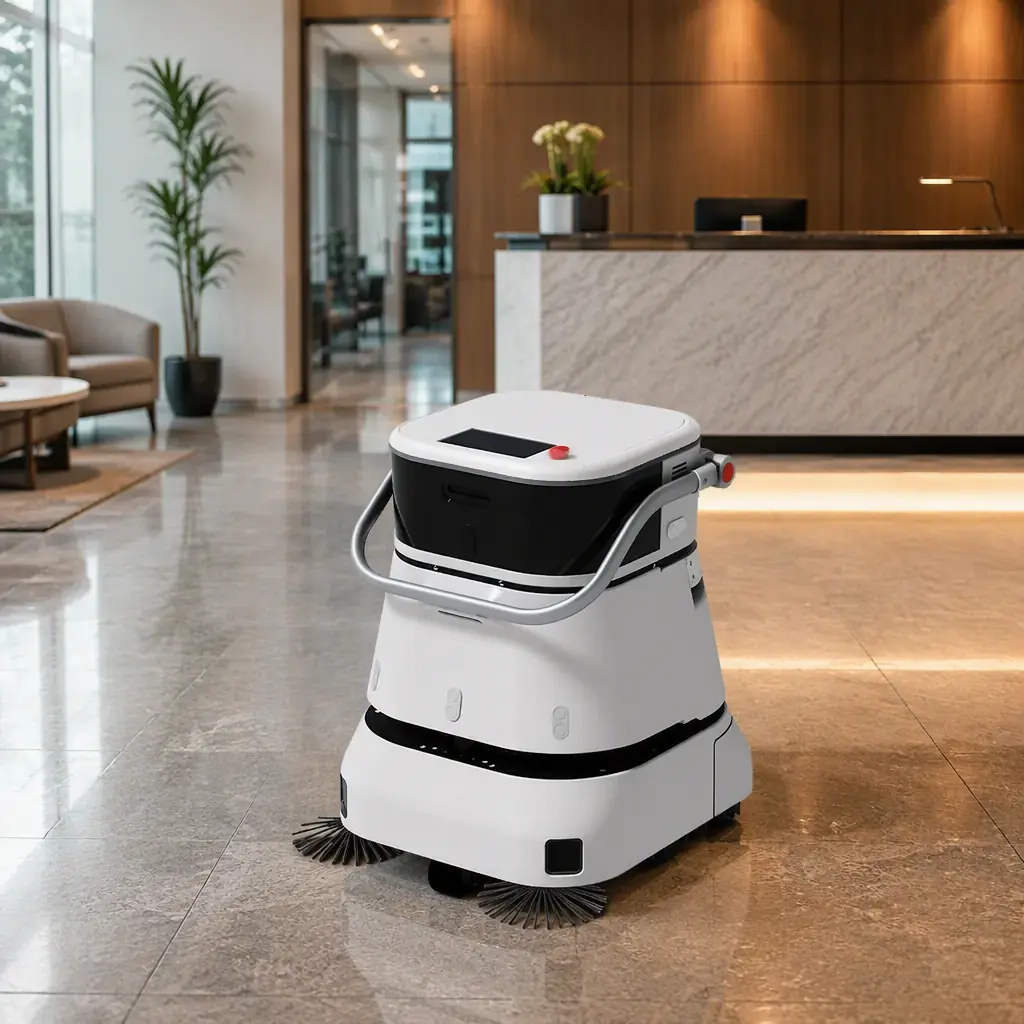
Most buyers choose a robot on the spec sheet and price, then discover six months later that the contract is where the real cost lives — exactly the way buyers miss the recurring consumables in a TCO analysis. A service robot warranty and service-level agreement (SLA) is not fine print; it is the operating agreement that decides whether a breakdown is a fix-you-pay-for event or a clause-you-negotiate. Here is what to push on before you sign.
What a Typical Service Robot Warranty Covers (and Doesn't)
A standard commercial robot warranty covers manufacturing defects in the core hardware: the chassis, drive motors, sensors, battery (subject to cycle-life limits), and the charging dock. It is essentially a "we stand by the build" agreement.
What it typically excludes is where buyers get burned:
- Consumables — brushes, scrub pads, sweeper bristles, dust filter, tires, and mopping pads. These wear out by design and are never under the standard warranty.
- Misuse and physical damage — dropping the unit, water ingress beyond the rated IP rating, running it into a wall because someone bypassed the safety field.
- Environment extremes — operating outside the rated temperature window (e.g., the CLEINBOT M79 is rated 5°C–45°C; the outdoor CC201 runs −10°C–50°C).
- Third-party integrations — an elevator or security API that changes after installation.
The vendor evaluation framework is the place to get these exclusions in writing before you commit.
The Standard Warranty Terms You Should Expect
Across the six robots in the AOMAN FUTURE line, the warranty structure is a useful baseline — and it is not uniform, which is itself informative:
| Product | Warranty | Support model |
|---|---|---|
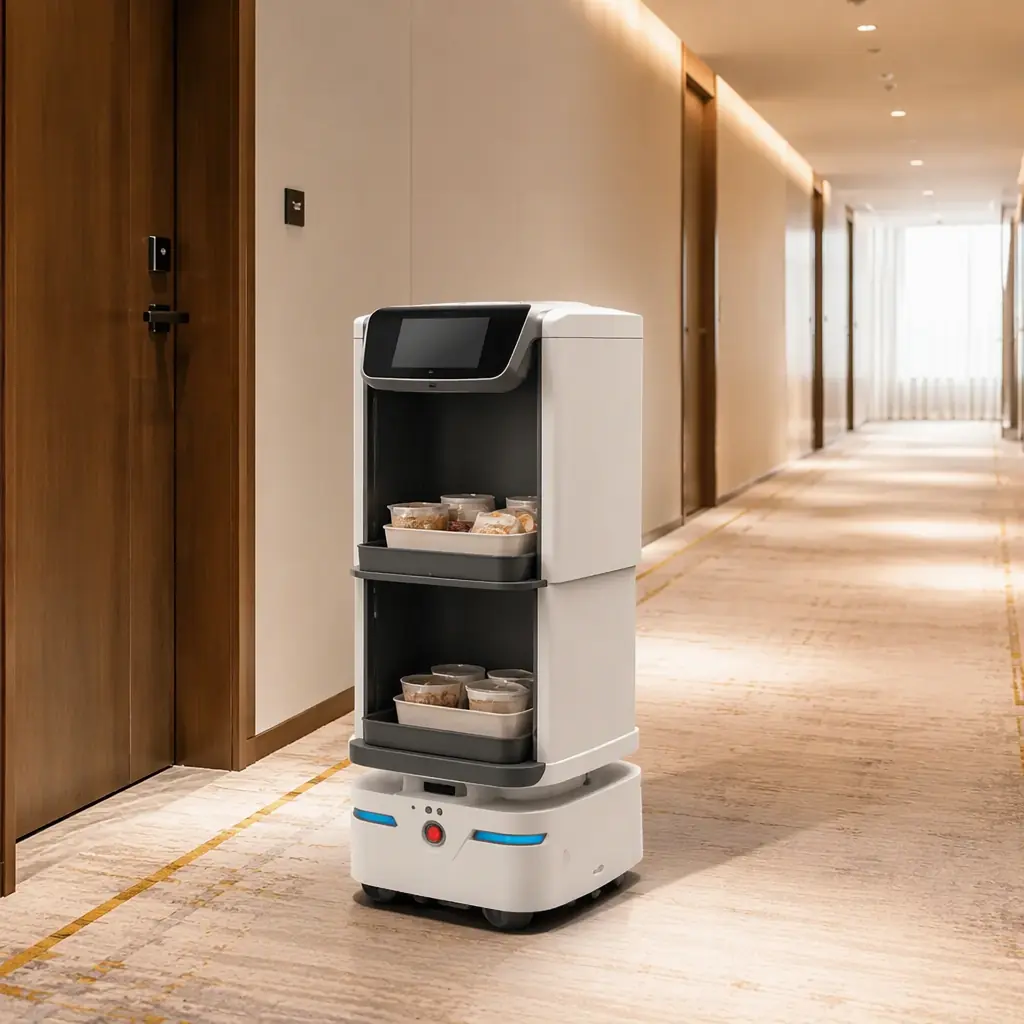
| CADEBOT L100 (delivery) | 2 years | Lifetime support |
| CLEINBOT M79 (scrubber) | 2 years | Fleet support |
| CLEINBOT CC201 (outdoor sweeper) | 2 years | Fleet support |
| CLEINBOT C2 Pro (indoor) | 2 years | Software updates |
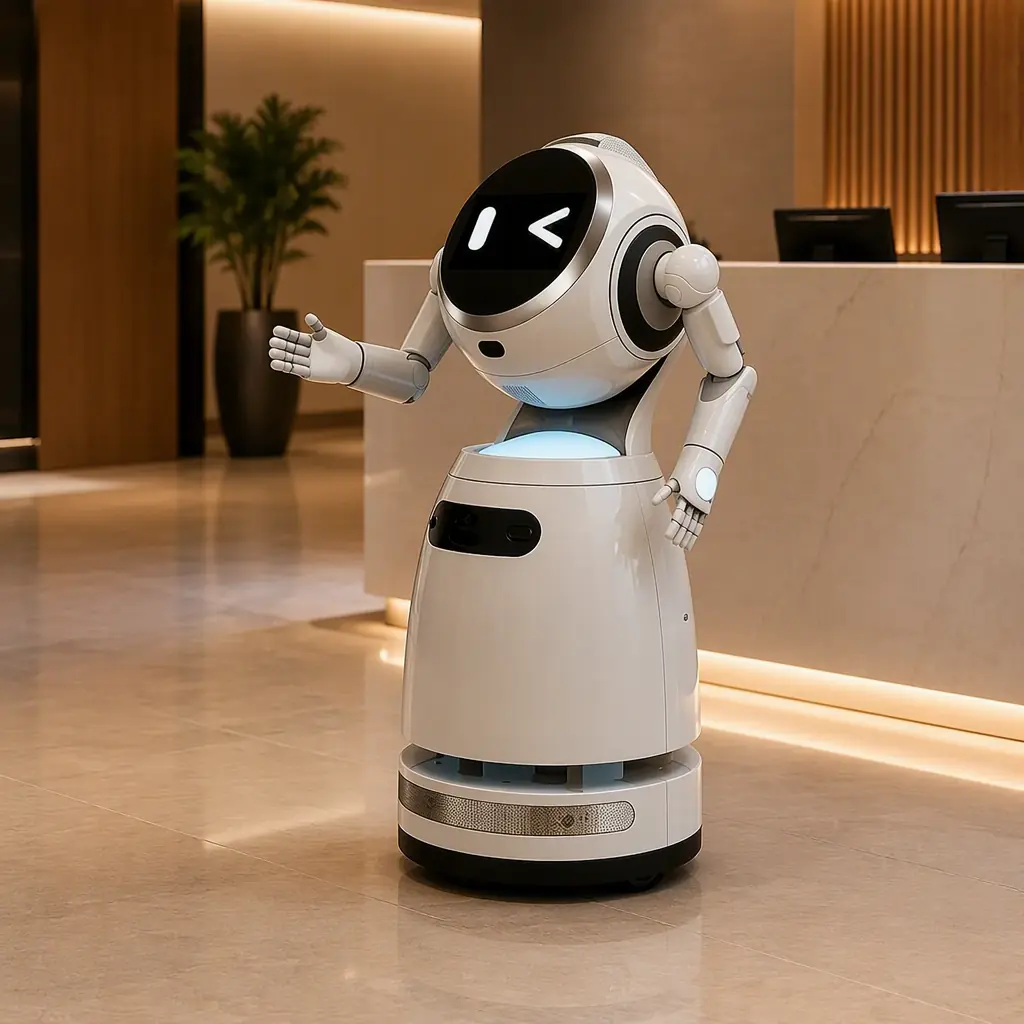
| CRUZR (humanoid reception) | 2 years | Software updates |
Two years is the current market norm for commercial robots, and the model behind the warranty — lifetime support vs fleet support vs software updates — reveals what the vendor considers core. A humanoid reception robot like CRUZR leans on software updates because its value is conversational; a fleet of CC201 outdoor sweepers leans on fleet support because the value is uptime across many units.
The SLA Metrics That Actually Matter
The warranty covers defects; the SLA covers service performance. Most robot contracts quote an SLA, but almost none define it in measurable terms. Push for these four:
- Uptime — the percentage of scheduled operating time the robot is available. Negotiate a target (e.g., 98%+) and a convention for how you measure it (hours docked vs hours scheduled).
- Mean time to repair (MTTR) — for a dispatched robot, how fast is a technician on site or a unit swapped? A 24-48 h MTTR on a cleaning robot that covers a lobby is very different from one that supports a cold-chain operation.
- Response window — how quickly the vendor acknowledges a support ticket. For mission-critical facilities like data centers, a 24/7 response window is worth negotiating.
- Parts sparing — does the vendor hold spare parts, and where? An on-site or near-site parts cache is the difference between a 24 h and a 2-week repair.
The maintenance and TCO guide shows how SLA terms compound into total cost over a multi-year deployment.
Consumables & Exclusion Clauses
Consumables are the single most negotiated-but-understood clause. There are two ways a vendor prices them, and you should know which:
- Excluded, pay-per-wear — you buy brushes, pads and tires as they wear. Simple, but the total is unbounded.
- Included with a service plan — a monthly fee covers consumables and preventive maintenance. Predictable, but only worth it if you actually consume at the planned rate.
Battery replacement deserves its own line. Lithium-iron-phosphate batteries (as in the CLEINBOT C2 Pro) are rated in charge cycles, and a replacement battery is often the largest single spare you will buy. Clarify the cycle-life guarantee and the replacement price up front — see the battery technology guide for the breakdown.

Extended Warranties & RaaS: Buy vs Lease vs Subscribe
If you are weighing an extended warranty against a subscription, the framing is the cost of certainty. With RaaS and financing models, the vendor absorbs the maintenance and uptime risk into the monthly fee — which is why a comparison against a buy-and-extend-warranty path is essential. Extended warranties typically buy 1-2 extra years of defect cover; a service agreement buys a set level of uptime and consumables. Match the structure to your budget planning and the criticality of the operation.
How to Compare Warranty Terms Across Vendors
Layer the warranty terms into the vendor evaluation framework as a scored line item, not an afterthought. Weigh: warranty length, coverage breadth (hardware + software), consumables policy, SLA uptime/MTTR, parts sparing, and extended-warranty pricing. A robot that is 8% cheaper but has a 5-day MTTR and no parts cache is more expensive in year one than a nominally pricier unit with a 24 h swap.
The Bottom Line
The failure-modes guide is blunt: every robot fails eventually; the contract decides if the failure is routine or catastrophic. Before you sign, get the warranty exclusions in writing, define the SLA in measurable terms, price the consumables and battery replacement, and know your support model. Then compare across vendors on total uptime cost, not sticker price. See the solutions page and product line to map a warranty structure to your use case.