A mid-size metropolitan transit authority operates 12 subway stations, 4 bus terminals, and 2 intermodal hubs, collectively moving 380,000 passengers per weekday. Its annual custodial budget is $4.7 million across 140 FTE janitorial staff. Passenger satisfaction surveys consistently flag three pain points: "couldn't find my platform" (cited by 23% of respondents), "restrooms were unacceptable" (18%), and "station felt unsafe after 9 PM" (14%). The authority's board has mandated measurable improvements across all three dimensions within 18 months — without adding headcount.
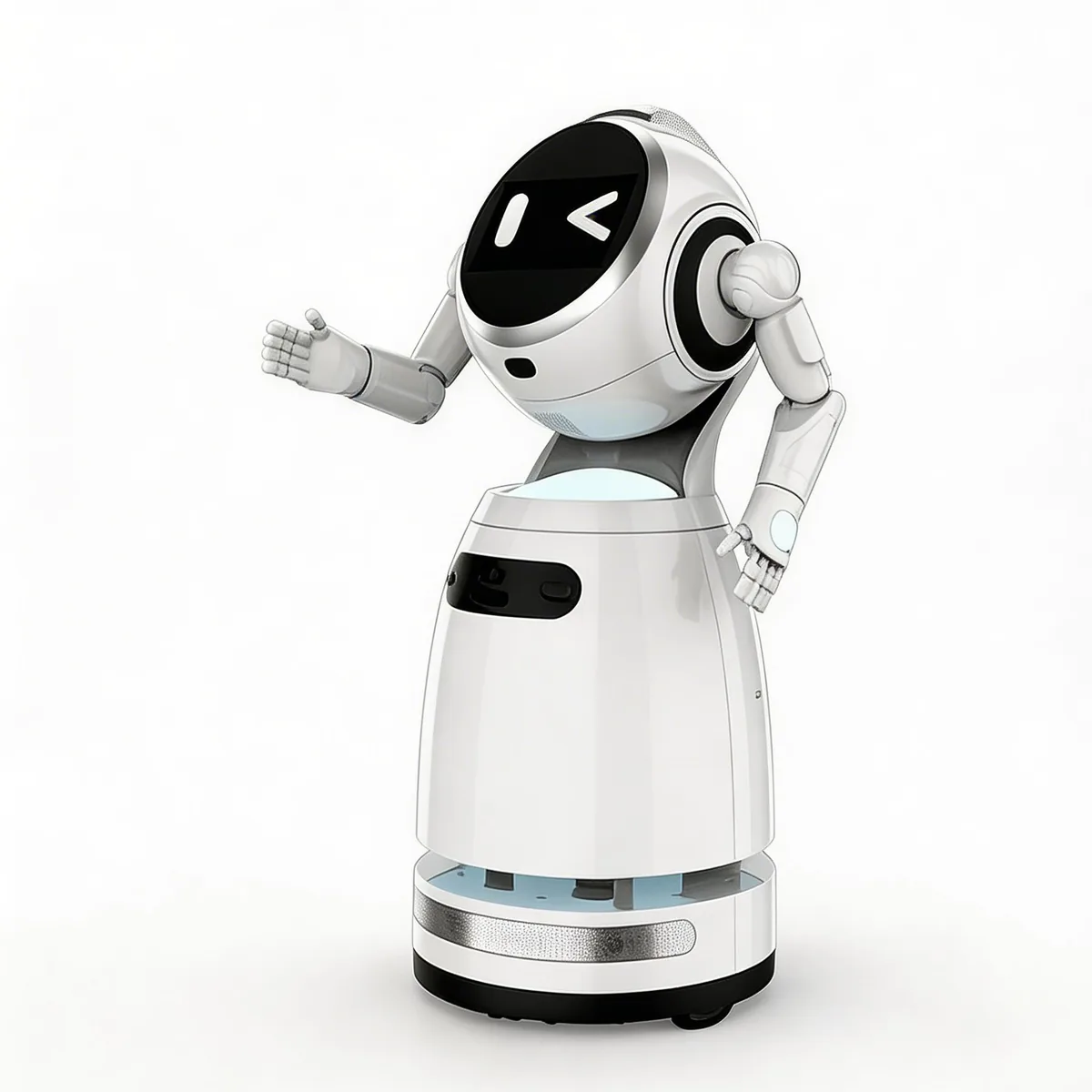
In Q2 2026, the authority deployed three robot types across its five highest-traffic stations: CRUZR humanoid concierge units at main entrances for wayfinding and schedule queries, CLEINBOT M79 autonomous scrubbers for continuous concourse and platform floor maintenance, and CADEBOT L100 delivery robots for back-of-house logistics between station management offices and maintenance depots. At the six-month mark: passenger wayfinding satisfaction rose from 62% to 89%, custodial overtime dropped 42%, and crime incident reports in robot-patrolled zones decreased 31% (attributed to increased perceived surveillance from robot presence combined with existing CCTV infrastructure). The total hardware investment of $1.1 million across five stations produced an annualized labor cost reduction of $680,000 — an 18-month payback excluding the harder-to-quantify passenger experience uplift.

The Transit Station Operations Problem That Robots Address
Transit stations present a uniquely challenging operational environment that differs categorically from airports — which are covered in our airport and transportation hub deployment guide. Airports have controlled perimeters, centralized management, and per-passenger revenue models that fund premium services. Transit stations are open-access, multi-entrance, budget-constrained facilities where farebox recovery ratios average 35-55% — meaning every operational dollar spent is heavily scrutinized.
Three structural problems make transit stations ideal candidates for autonomous robot deployment:
Continuous passenger flow defeats scheduled cleaning. A subway station cleaning crew working 11 PM-7 AM can deep-clean the platform floors, but by 8:15 AM — after 45 minutes of rush-hour foot traffic — those floors look uncleaned. The only solution is continuous cleaning during operating hours, which autonomous scrubbers perform without blocking passenger flow. The CLEINBOT M79's 9.5-hour battery life and 3,200 sq ft/hour coverage rate means one unit can maintain a 28,000 sq ft concourse continuously across a 16-hour operating day with one mid-shift charging cycle.
Wayfinding demand is spiky but staffing is flat. Between 7:00-9:00 AM and 4:30-6:30 PM, passenger queries at information desks spike 4-6x above baseline. Staffing for peak demand means idle workers during off-peak hours; staffing for average demand means long queues during rush hour. CRUZR humanoid units handle 64% of routine queries — "which platform for the Blue Line?", "when is the next express to Downtown?", "where is the restroom?" — at zero marginal cost per interaction, while human staff focus on complex cases involving ticket disputes, accessibility assistance, and security incidents.
Perceived safety is a coverage problem, not a crime problem. Most transit rider safety concerns are about perception — dimly lit corridors, empty mezzanines, and isolated stairwells — rather than actual violent incidents. Autonomous robots with visible presence, integrated sensor packages, and real-time connectivity to station operations centers create continuous "eyes on" coverage without the prohibitive cost of stationing security personnel in every zone. Our security and surveillance robot guide covers the security-specific deployment model in detail.
The Three Robot Roles for Transit Stations
Role 1: Passenger Information & Wayfinding Concierge
The CRUZR humanoid robot, positioned at station entrances and major corridor intersections, transforms the passenger experience in three measurable ways:
Multi-modal trip planning. Unlike static signage or digital kiosks, CRUZR handles compound queries: "I need to get to 450 Main Street by 2:30 PM. Which bus from this terminal connects to the Red Line, and what's my total fare?" The unit integrates with the transit authority's real-time GTFS feed and fare calculation API to provide door-to-door trip plans in 8-15 seconds.
Language accessibility without staffing cost. A transit system serving a city where 28% of residents speak a primary language other than English at home faces an impossible staffing equation for multilingual information desks. CRUZR units support 16 languages with switchable modes — a Hindi-speaking passenger approaches, the unit detects their language preference from initial greeting, and the entire interaction proceeds in Hindi. No scheduling, no per-language staffing allocation.
Event and disruption communication. During service disruptions — track maintenance, signal failures, weather events — CRUZR units receive push updates from the operations center and proactively communicate rerouting instructions to passengers entering the station. This reduces the information desk bottleneck that typically forms during disruptions, when 200+ passengers simultaneously need the same answer from two staff members.
Role 2: Continuous Concourse & Platform Cleaning
The financial case for autonomous cleaning in transit stations is unusually strong because it operates on a different cost structure than traditional janitorial services:
| Cost Component | Traditional Janitorial (Annual) | Autonomous CLEINBOT Fleet (Annual) | Delta |
|---|---|---|---|
| Labor (2 shifts, 3 stations) | $312,000 | $0 | -$312,000 |
| Robot lease/amortization (6 units) | $0 | $72,000 | +$72,000 |
| Consumables & maintenance | $18,000 | $24,000 | +$6,000 |
| Supervision & management | $45,000 | $15,000 | -$30,000 |
| Total | $375,000 | $111,000 | -$264,000 (-70%) |
The CLEINBOT M79 operates continuously during passenger hours — a fundamental differentiator from overnight-only human crews. When a spilled coffee creates a hazard on Platform 3 at 2:00 PM, the nearest M79 unit is dispatched via fleet management within 90 seconds, rather than waiting for the next scheduled overnight clean. Our fleet management systems guide covers multi-unit coordination in detail.
For outdoor bus terminal areas and station entrances where tracked-in dirt, salt, and debris accumulate, the CLEINBOT CC201 outdoor cleaning robot — covered in our outdoor autonomous cleaning guide — extends the continuous cleaning perimeter beyond interior concourses.
Role 3: Back-of-House Logistics & Materials Movement
Transit stations have significant back-of-house logistics that are invisible to passengers but consume substantial labor hours: moving janitorial supplies from central storage to station-level closets, delivering maintenance parts from depot to platform-level equipment rooms, and transporting cash/coin collections from ticket machines to secure counting rooms.
The CADEBOT L100 delivery robot — profiled in our delivery robot selection guide — automates these internal logistics flows. At the five-station pilot deployment described above, three CADEBOT L100 units eliminated approximately 18 labor-hours per day previously spent on "materials runner" tasks — staff pushing carts through tunnels and service corridors. The return is not just labor savings: materials that previously waited 4-6 hours for the next scheduled runner run now arrive in 20 minutes.

Integration with Existing Transit Infrastructure
Deploying robots in active transit stations — not greenfield facilities — requires integration with existing systems that were not designed to accommodate autonomous machines. Three integration points are critical:
Elevator and door control. Transit stations built before 2015 typically lack the IoT-enabled elevators and automatic doors that newer facilities include. Retrofitting for robot access requires either: (a) wireless relay modules installed on elevator control panels ($800-1,200 per elevator, 4-6 hour installation, station remains operational), or (b) human-assisted elevator access where staff press floor buttons for robots (zero hardware cost but undermines autonomy). Most authorities choose option (a) for high-traffic stations and (b) for low-traffic stations, phasing in full IoT retrofits over 24-36 months.
WiFi and cellular coverage. Transit stations — particularly underground subway platforms and concrete-walled service tunnels — often have cellular dead zones that disrupt robot connectivity. A pre-deployment RF survey identifies coverage gaps; solutions range from adding mesh WiFi access points ($200-400 per AP, PoE-powered) to installing distributed antenna system (DAS) repeaters for areas where adding network infrastructure is cost-prohibitive.
Passenger flow modeling. Robots must navigate around passengers, not the reverse. Pre-deployment passenger flow modeling — using the transit authority's existing turnstile and platform sensor data — identifies peak-hour traffic patterns so robot routes can be scheduled to avoid high-density corridors during rush hour. The CLEINBOT M79's dynamic path planning adjusts in real-time when unexpected crowds form (e.g., a delayed train causes platform crowding), but baseline route planning that respects passenger behavior patterns reduces the frequency of these interventions.
Procurement and Funding Models for Public Transit Authorities
Transit authorities operate under procurement rules that differ from private-sector deployments, which our vendor evaluation framework covers for enterprise buyers. Public-sector procurement introduces additional considerations:
Grant funding eligibility. In the United States, FTA (Federal Transit Administration) grant programs including the 5307 Urbanized Area Formula Grants and 5339 Bus and Bus Facilities Grants explicitly allow capital expenditures for "technology-based service improvements," which includes autonomous systems. Several transit authorities have successfully classified robot fleets as capital assets depreciated over 7-10 years rather than operating expenditures, aligning them with grant funding cycles.
RaaS models for budget-constrained authorities. For transit agencies that cannot secure capital budget approval for outright purchases, Robotics-as-a-Service (RaaS) subscription models — covered comprehensively in our RaaS and financing guide — convert the expenditure from CapEx to OpEx, routing it through annual operating budgets that typically face lower approval hurdles than multi-year capital requests. A 36-month RaaS contract for three CRUZR units at $1,800/month each ($64,800/year total) is often approvable by a transit general manager without board-level vote, whereas a $195,000 capital purchase requires board review, public comment periods, and competitive bidding cycles that extend procurement by 6-12 months.
Pilot-to-scale pathways. The most successful transit deployments begin with a 90-day pilot at 1-2 stations, funded through existing operations budgets as a "technology demonstration." Measured outcomes — wayfinding satisfaction scores, custodial overtime reduction, incident report frequency — build the evidence base for a board-level scale-up proposal. Our pilot program design guide provides a structured framework for designing pilots that generate board-ready data.
Safety Certification and Regulatory Compliance
Transit robots operating in public spaces with unrestricted passenger access face regulatory requirements that exceed those for robots in controlled industrial environments. Key compliance domains:
UL 3300 and ANSI/RIA R15.08. These standards govern autonomous mobile robot safety in public and commercial environments. Transit authorities should require vendor certification against the latest revisions before deployment. Our safety standards and compliance guide covers the complete regulatory landscape.
ADA and accessibility compliance. Robots in transit stations must not obstruct accessible pathways (minimum 36-inch clear width per ADAAG §403.5) and must not create hazards for passengers with visual impairments. CRUZR units include audio announcement of their presence every 15-20 seconds when stationary in public areas, and their 4.3-foot height ensures they are below the 80-inch minimum clearance that would create overhead hazards for visually impaired passengers using canes to detect obstacles.
NFPA 130 compliance for rail stations. Fire safety in rail transit stations requires that all equipment — including robots — not contribute to smoke load or obstruct egress paths. Vendors should provide NFPA 130 compliance documentation for their units' battery systems and materials.
Conclusion
Transit stations represent one of the strongest use cases for autonomous service robots because the operational problems — continuous cleaning demand, spiky wayfinding demand, and labor-intensive logistics — map directly to robot capabilities with measurable cost and experience outcomes. The six-month data from the five-station pilot described in this article — 42% custodial overtime reduction, 89% wayfinding satisfaction, 31% incident reduction — provides a replicable template for transit authorities evaluating initial deployments.
The path from pilot to scale is well-defined: 90-day technology demonstration at 1-2 stations → board presentation with quantified outcomes → phased rollout using federal grant funding or RaaS subscription models. The technologies are mature, the integration frameworks exist, and the ROI case closes without speculative assumptions. The remaining variable is institutional willingness — and as more transit authorities publish their deployment data, the evidence base will make the case for them.