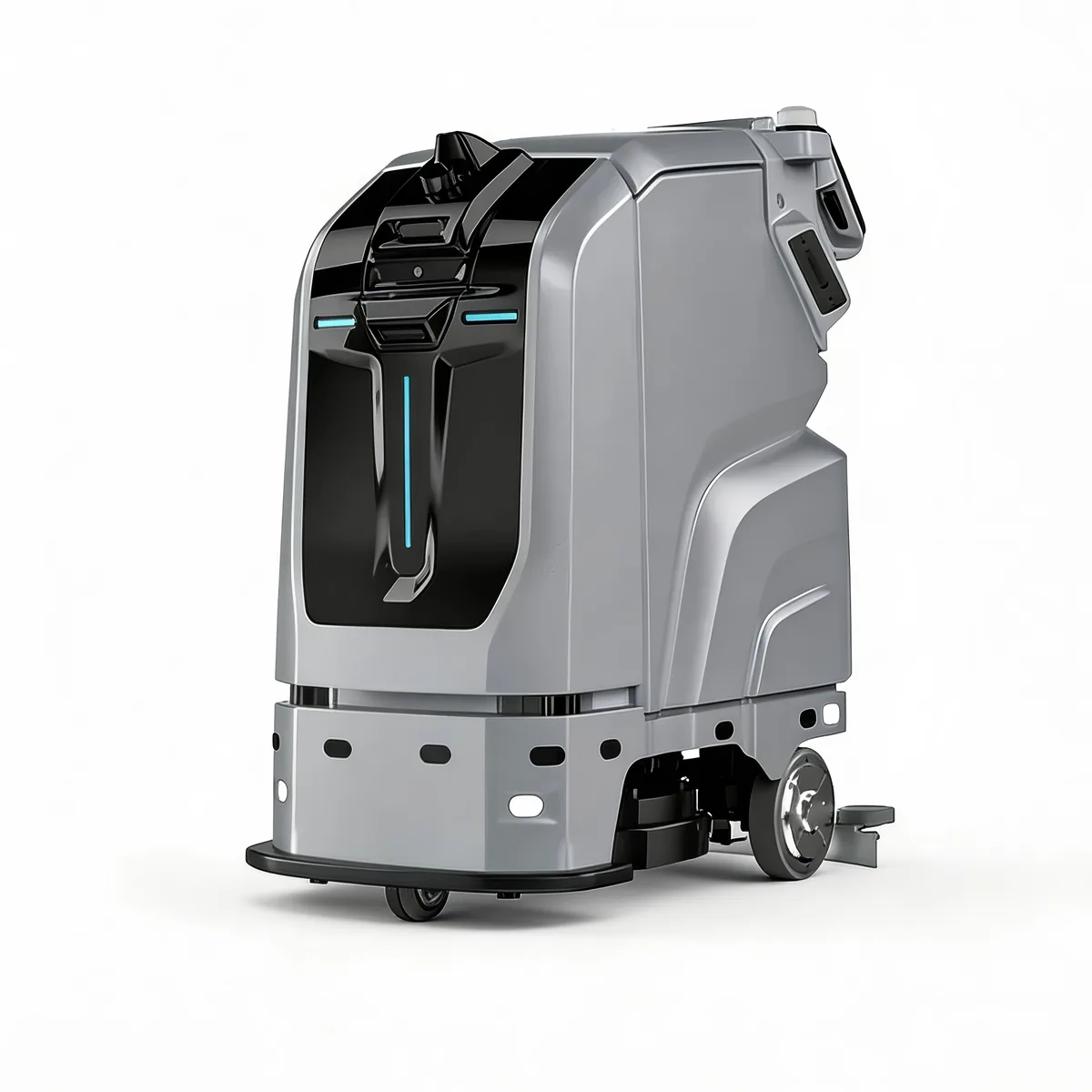
A hotel chain with 12 delivery robots across three properties needs to add eight more units for a newly acquired property. The procurement team gets a CapEx quote: $22,000 per robot, $176,000 total. Their finance director pushes back — the budget for fleet expansion was $120,000.
Meanwhile, a robotics leasing company 300 miles away is sitting on 14 off-lease delivery robots returned at the end of 36-month contracts. The units have 4,200–5,800 operating hours each, battery health ranging from 78% to 91%, and full maintenance records. The leasing company will sell them for $11,000 to $14,000 per unit — 36–50% below new-unit pricing.
These two parties should be doing business. In most industries they would be. But the service robot secondary market in 2026 is opaque, unstandardized, and dominated by informal broker networks that most buyers don't know exist. There is no Kelley Blue Book for robots. There is no certified pre-owned program with standardized inspection criteria. There is no centralized marketplace.
This guide maps the secondary market as it actually operates — where the inventory is, what to inspect before buying, when the savings are real and when they evaporate into repair costs, and how refurbished robots fit into a fleet expansion or multi-site deployment strategy.

Where the Secondary Market Inventory Actually Comes From
The used service robot supply chain has three distinct channels, each with different risk profiles, pricing, and documentation standards.
Channel 1: Off-Lease Returns (Lowest Risk, Moderate Discount)
The most reliable source of used service robots is the RaaS leasing ecosystem itself. When a hotel or hospital finishes a 36-month Robot-as-a-Service contract, the leasing company takes the units back — inspected, refurbished to a defined standard, and resold or re-leased. These units have known histories: every maintenance event is logged in the fleet management platform, every battery cycle is tracked, and the operating environment (floors, hours, task types) is documented in the service contract.
Off-lease inventory tends to be 2–4 years old with 3,000–8,000 operating hours. The discount vs. new is typically 30–40% for units in good cosmetic condition with verified maintenance history. Leasing companies are motivated sellers — a unit sitting in a warehouse generates zero revenue — which gives buyers negotiating leverage, particularly on multi-unit purchases.
Where to find them: Direct inquiry to RaaS providers. Most do not publicly list off-lease inventory, but every major RaaS provider has an asset disposition process and will quote on request. Ask for "refresh-cycle inventory" or "end-of-lease returns" — those terms signal you understand the channel.
Channel 2: Vendor-Certified Pre-Owned (Moderate Risk, Variable Discount)
A small but growing number of manufacturers have launched certified pre-owned (CPO) programs. A vendor-refurbished unit has been returned to the manufacturer, run through a standardized inspection and reconditioning process, updated to the latest stable firmware, and resold with a limited warranty — typically 6–12 months covering major components (motors, LiDAR, battery above 80% capacity).
Vendor CPO pricing typically runs 25–35% below new. The discount is smaller than off-lease because the vendor has invested labor and parts in reconditioning and is standing behind the unit with a warranty. The trade-off is lower risk: a vendor-refurbished unit from a manufacturer with a mature vendor evaluation profile — documented spare parts supply chain, trained service partner within 200 km of your site, and a published refurbishment standard — is the closest thing to a new-unit experience at a discount.
When CPO makes sense: When you're expanding a fleet with the same robot model you already operate. Standardization on one model means your staff already knows the maintenance routine, your spare parts inventory covers the new units, and your fleet management platform integrates without modification. The 25–35% savings is pure margin improvement on an expansion that would otherwise cost full retail.
Channel 3: Broker Marketplaces and Direct Resale (Highest Risk, Deepest Discount)
The third channel is the wild west: brokers who aggregate returned, repossessed, and decommissioned units from multiple sources and resell them as-is or with minimal refurbishment. Pricing here can hit 40–55% below new — but the buyer assumes substantially more risk.
Broker-sourced units rarely come with complete maintenance histories. The broker may not know whether the robot was operated in a clean hotel corridor or an abrasive warehouse floor. Battery health data may be unavailable or — worse — reset to appear healthier than it is. Firmware versions may be outdated or locked to a specific fleet management platform that isn't transferable.
Some brokers are reputable, maintain relationships with major leasing companies, and provide inspection reports from third-party technicians. Others are liquidators who bought a pallet of returned robots at auction and are reselling them individually with a "powers on, moves forward" standard of testing. When sourcing from brokers, treat the purchase inquiry like a mini-RFP: require a written response covering the inspection checklist below, warranty terms, and software transferability. The RFP procurement template provides a structured vendor-qualification framework that adapts directly to secondary-market seller evaluation. The difference between the two is the difference between a 40% discount that saves $30,000 on fleet expansion and a 40% discount that generates $45,000 in unbudgeted repairs. For guidance on evaluating which vendors and sellers are worth engaging, the vendor evaluation framework applies as much to secondary-market sellers as it does to original manufacturers.
Price Benchmarks: What Used Service Robots Actually Cost in 2026
The table below reflects actual transactions — not asking prices — across the three channels, based on data from leasing companies, CPO programs, and broker networks serving the hospitality, healthcare, and retail sectors.
| Robot Type | New Price | Off-Lease (30-40% off) | Vendor CPO (25-35% off) | Broker (40-55% off) |
|---|---|---|---|---|
| Delivery robot (single cabin) | $12,000–$18,000 | $7,200–$12,600 | $7,800–$13,500 | $5,400–$10,800 |
| Delivery robot (dual cabin) | $18,000–$28,000 | $10,800–$19,600 | $11,700–$21,000 | $8,100–$16,800 |
| Indoor cleaning robot | $22,000–$38,000 | $13,200–$26,600 | $14,300–$28,500 | $9,900–$22,800 |
| Outdoor cleaning robot | $28,000–$45,000 | $16,800–$31,500 | $18,200–$33,750 | $12,600–$27,000 |
| Humanoid reception robot | $25,000–$50,000 | $15,000–$35,000 | $16,250–$37,500 | $11,250–$30,000 |
The ranges are wide because robot condition and operating history vary dramatically. A delivery robot with 3,200 hours in a luxury hotel corridor will price at the high end of the off-lease range. An identical model with 7,800 hours in a warehouse with abrasive concrete flooring will price at the broker range — and that price may still be too high, given the accelerated wear on motors and wheels.
For procurement teams building a budget model, the service robot budget planning guide covers the full Year 1 cost structure — deployment, facility modifications, training — which applies to used units nearly identically as to new. The savings come from the hardware line item; the integration costs are largely the same.

The Pre-Purchase Inspection Checklist: 8 Things to Verify Before You Buy
No standardized grading system exists for used service robots. You are your own inspector. These eight items separate a $14,000 refurbished unit that runs productively for 4 years from a $14,000 unit that needs a $6,000 repair in month three.
1. Battery Health and Cycle Count
This is the single most important number on a used robot. Lithium-ion and LiFePO4 batteries degrade predictably with charge cycles. A delivery robot with 1,500+ cycles on its original battery has lost 15–30% of its runtime — meaning it may need a mid-shift recharge where a new unit would run through. Replacement batteries cost $800–$2,500 depending on the model.
What to ask: "Provide the battery management system (BMS) log showing cycle count, current capacity as percentage of design capacity, and date of last full discharge test." Acceptable: ≥80% of design capacity with ≤600 cycles. Negotiate: 70–79% capacity — factor battery replacement into your offer. Walk away: <70% capacity or seller can't produce BMS data.
2. Motor Hours and Current Draw
Drive motors have a finite service life. A motor approaching the end of its rated hours draws more current to produce the same torque — a warning sign visible in telemetry data before the motor audibly fails. Motor replacement costs $400–$1,200 per motor (most service robots have 2–4 drive motors).
What to ask: "Provide motor hour meters for all drive motors and the last current-draw test under load." A healthy motor draws within 10% of its spec at rated load. A motor drawing 15%+ above spec is wearing and should be budgeted for replacement. The maintenance and TCO guide provides component-level replacement intervals and costs.
3. LiDAR and Sensor Calibration Status
LiDAR sensors are precision optical instruments. Over time, vibration, temperature cycling, and minor impacts shift their calibration. A LiDAR unit with a 2-degree angular offset still produces point-cloud data — but the robot's navigation software interprets a wall as being 15 cm from its true position, causing navigation drift, slower path planning, and increased collision-avoidance interventions that reduce throughput.
What to ask: "When was the last full sensor calibration, performed by whom, and can you provide the calibration report?" A calibration within the last 6 months by a manufacturer-certified technician is acceptable. A calibration performed over 12 months ago, or by an unknown party, means you should budget $500–$1,500 for recalibration after purchase.
4. Software Version and Fleet Management Compatibility
Not all firmware versions are created equal. A robot running firmware v3.2 may not be compatible with your fleet management platform running v4.1 — and the vendor may charge for a major-version upgrade. Worse, some off-lease units are locked to the original lessee's fleet management instance and require a license transfer or new activation.
What to ask: "What firmware version is installed? Is the fleet management license transferable, or do I need a new license? What is the cost to upgrade to the current stable firmware version if it's behind?" A unit on current firmware (within one major version) with a transferable or newly provisioned fleet management license is purchase-ready. A unit two major versions behind with a locked license may need $1,200–$3,000 in software remediation before it can join your fleet.
5. Chassis and Structural Integrity
Look past the cosmetic scuffs to structural issues: hairline cracks in the chassis near motor mounts (indicating impact stress), corrosion on charging contacts (indicating exposure to moisture or cleaning chemicals), and deformation in wheel hubs (indicating curb impacts or rough-terrain operation beyond design spec). Cosmetic wear is priced into the discount. Structural damage is not — it affects safety and component lifespan.
6. Maintenance History Completeness
A unit with a full digital maintenance log — every preventive service, every component replacement, every software update — is worth a 10–15% premium over an identical unit with no records. The maintenance history proves the robot was operated under a disciplined preventive maintenance program, not run-to-failure.
Minimum acceptable: A service log covering the last 12 months with documented preventive maintenance intervals. Ideal: A complete lifecycle service log from deployment date, including battery replacement dates, motor current-draw trends, and sensor calibration reports.
7. Consumable Wear Status
Wheels, treads, brushes, filters, and mop pads are wear items that should be replaced before a refurbished unit enters service. If the seller hasn't replaced them, budget $300–$800 for a full consumable refresh. This is not a reason to reject a unit — it's a cost to factor into the purchase offer.
8. Compliance Certification Currency
Safety certifications (CE marking, FCC compliance, ISO 13482 conformity) must be current. A robot originally certified under a previous revision of a standard may require re-certification if the standard has updated — particularly for healthcare deployments where regulatory scrutiny is higher. The safety standards compliance guide covers the certification landscape. Ask: "Does this unit's safety certification remain valid under the current regulatory framework for our intended deployment environment?"
Warranty on Refurbished Units: What's Available and What's Not
The warranty landscape for used service robots breaks into four tiers:
| Warranty Tier | Duration | What It Covers | Typical Cost | Availability |
|---|---|---|---|---|
| As-Is / No Warranty | N/A | Nothing | $0 | Broker channel standard |
| Limited Functional | 30–90 days | Major component failure (motor, LiDAR, mainboard) | Included in price | Quality brokers, some off-lease sellers |
| Refurbished Standard | 6–12 months | Hardware defects, battery ≥80% capacity, sensor calibration | 5–10% of unit price | Vendor CPO programs, premium off-lease |
| Extended Refurbished | 12–24 months | All of the above + on-site service labor, software updates | 12–18% of unit price | Select vendor CPO, negotiable with leasing companies |
The limited functional warranty is the most common in the broker channel — and the most deceptive. "Covers major component failure" sounds meaningful, but it typically excludes the gradual degradation that actually kills robots: battery capacity fade, sensor drift, and motor bearing wear. None of those are "failures" — they're performance degradations that fall outside warranty scope.
If you're buying more than two units, negotiate for the refurbished standard tier. The 5–10% premium is cheap insurance against buying a unit whose battery drops below 70% capacity in month four. For a fleet expansion of 5+ units, the math becomes even more compelling — one battery replacement across the fleet covers the warranty premium on all units.
When NOT to Buy a Used Service Robot
The secondary market is not a universal solution. There are deployment scenarios where buying used is false economy:
When the robot model has been discontinued. A discontinued model with no active spare parts supply chain is a liability, not an asset. If the manufacturer no longer stocks motors, LiDAR units, or mainboards for that model, a component failure means scrapping the unit — and the savings evaporate in a single incident.
When you're deploying in a 24/7 critical environment. A hospital that relies on delivery robots for STAT lab sample transport cannot tolerate the 1–2% higher failure rate that used units carry. In uptime-critical deployments, the reliability premium of new units — with full warranty and known component age — justifies the price difference. The pilot program guide covers how to validate reliability requirements before committing to a procurement model.
When the firmware is locked to a proprietary ecosystem. Some manufacturers tie firmware to the original purchaser's cloud account, making it impossible for a secondary buyer to receive updates, access fleet management features, or integrate with building systems. Before buying used, confirm — in writing — that the firmware license is transferable and that you will have full access to the fleet management platform.
When the discount is less than 25%. Between 25% off and new-unit pricing, the risk-adjusted economics favor buying new. A 20% discount sounds appealing until you factor in the absence of a full warranty, the unknown remaining component life, and the time your team spends inspecting and validating the unit. At 30%+ the math shifts; below 25%, it generally doesn't.
When you're deploying your first robot. A first-time deployer benefits from the vendor's full deployment support, training, and handholding that comes with a new-unit purchase. Buying a used robot as your first unit means troubleshooting integration issues without the vendor relationship that smooths the learning curve. Once you have 3+ robots operating and in-house expertise, the secondary market becomes a viable expansion channel. For the first deployment, see the delivery robot selection guide for new-unit procurement.
How Refurbished Robots Fit Into Fleet Expansion Strategy
The most sophisticated fleet operators — hotel chains with 20+ robots, hospital systems with multi-site deployments — use the secondary market strategically, not tactically. They don't buy used robots to save money on one-off purchases. They use the secondary market to:
Accelerate expansion without CapEx spikes. A new-property acquisition that requires 8 delivery robots can either wait for the next budget cycle (6–12 months) or deploy immediately with 4 new units and 4 refurbished units. The blended cost is within the existing budget envelope, the property opens with full automation capability from day one, and the 4 refurbished units are progressively replaced with new units over 3 years as they reach end of service life.
Standardize on a single model across a growing fleet. When a fleet operator commits to a specific robot platform, the secondary market becomes a source of additional units of the same model — eliminating the training and spare-parts fragmentation that comes with multi-vendor fleets. A hotel running 14 CADEBOT L100s can add 3 off-lease L100s for less than the cost of adding 2 new units of a different model.
Buffer peak-demand periods without permanent headcount. Seasonal hotels that scale from 5 robots in the off-season to 15 in peak can buy 5 refurbished units for seasonal surge capacity at a cost that doesn't require year-round ROI justification. The RaaS financing guide covers the subscription equivalent; used-unit purchase is the CapEx version of the same seasonal-flexibility strategy.
Test new deployment environments with reduced capital exposure. A hospital system considering cleaning robots in a new wing can deploy 2 refurbished units for a 6-month operational test at roughly half the capital cost of new — and if the test succeeds, the refurbished units stay in service while new units are ordered for the full rollout.

Tax and Depreciation Treatment of Used Service Robot Assets
The tax treatment of used capital equipment differs from new in ways that affect the real cost of refurbished robots. In most jurisdictions:
Accelerated depreciation still applies. Under MACRS (U.S.) and equivalent accelerated depreciation schedules in other developed markets, used equipment generally qualifies for the same asset class treatment as new equipment. Service robots typically fall under 5-year or 7-year property classes. The key difference: you depreciate the purchase price you paid, not the original retail price — so your depreciation deduction is smaller in absolute terms, but the invested capital is proportionally smaller as well.
Section 179 and bonus depreciation eligibility. Used equipment generally qualifies for Section 179 expensing (up to the annual limit) and bonus depreciation in the U.S. under current tax code, provided the equipment is new to your business and placed in service during the tax year. This means a $14,000 refurbished robot may be fully expensable in Year 1, just as a $22,000 new robot would be — but with $8,000 less capital deployed.
Sales tax and import duties. Refurbished robots purchased domestically avoid the import duties (typically 5–25% depending on country of origin and trade classification) that apply to new imported units. In jurisdictions with high import duties, this can add 5–15 percentage points to the effective discount vs. new.
Lease accounting treatment. If you acquire used robots through a lease (off-lease units re-leased to a new customer), the lease accounting treatment under ASC 842 / IFRS 16 applies identically to new-unit leases. The lower asset value means lower right-of-use asset and lease liability on the balance sheet.
Consult your tax advisor for jurisdiction-specific treatment. The above describes general principles; your depreciation schedule, eligibility for accelerated deductions, and sales tax treatment depend on your specific tax position and jurisdiction.
The Bottom Line
The service robot secondary market is not mature. It lacks the infrastructure — standardized grading, centralized marketplaces, certified inspection protocols, title guarantees — that used-car buyers and refurbished-IT-equipment buyers take for granted. That immaturity creates both the pricing opportunity (30–50% discounts that won't exist once the market institutionalizes) and the risk (you are your own quality assurance).
The operators who buy used robots successfully share three practices: they buy the same model they already operate, they verify battery and motor health from telemetry data before purchase, and they price a full warranty or contingency budget into the acquisition decision. They treat the secondary market not as a way to buy cheap robots but as a sourcing channel that expands their fleet faster and more flexibly than new-unit procurement alone allows.
For teams evaluating their first service robot deployment, start with new units and a structured pilot program. For teams already operating a fleet and planning expansion, the secondary market is the most underutilized procurement lever in service robotics — and the window where 30–50% discounts are achievable won't stay open forever as the market matures.
Contact our procurement team to discuss fleet expansion strategies, including secondary-market sourcing options for your existing robot platform.